
HOW TO CREATE A PLAY SPACE IN ANY ROOM
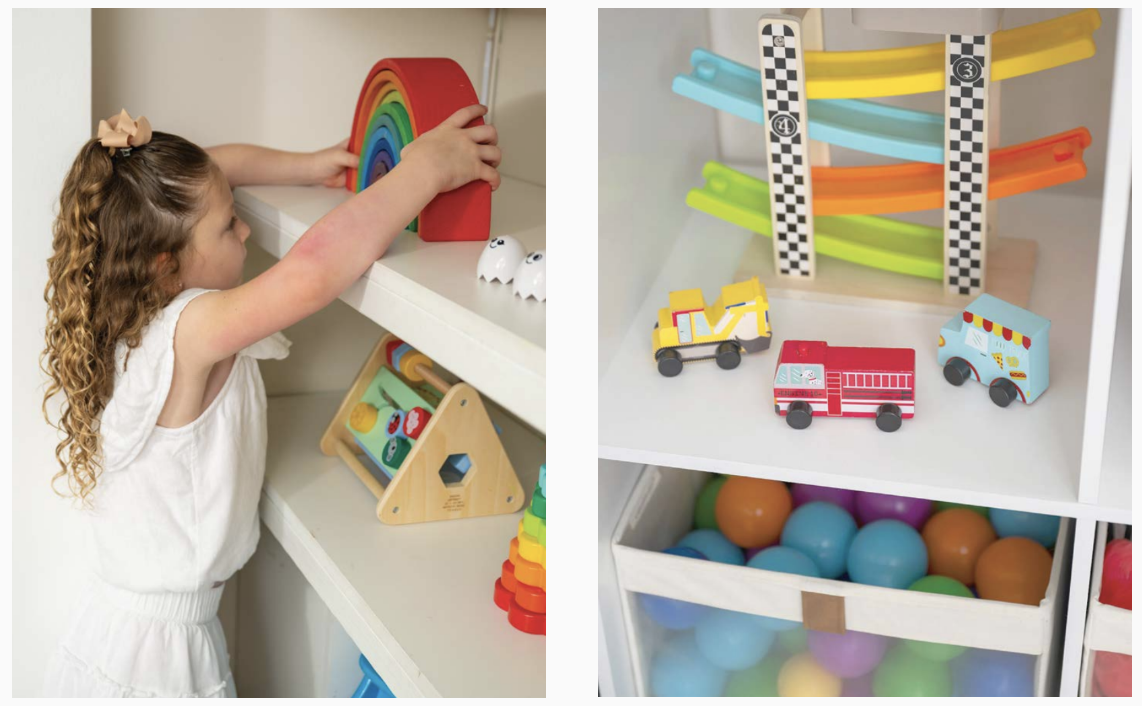
Guess what - it’s okay to love your kids’ playfulness and want them to have fun with toys but also want a beautiful, aesthetically pleasing living room. I know how it can feel to have brightly colored plastic toys taking over your home, constantly tripping over blocks, digging through piles to find a tiny Barbie shoe…and all in the middle of the family room. Let’s talk about how to set up a play space.
You actually don’t need a huge basement or designated play room to create an incredible play space in your home. You just need something that is maintainable that serves everyone! Play can happen anywhere if the environment is set up intentionally to spark creativity and independence, and yes, without the need to take over your home.
Here’s a common playroom design mistake. Most play spaces fail because there’s just too much stuff. When kids see a massive toy box that’s overflowing with toys, they just get overwhelmed, dump everything out, and don’t play with anything at all. Using the concepts from Playful By Design, we will talk through playroom organization ideas and transitioning to purposeful, micro-play zones within your existing living spaces that’ll make play easier for your kids, and help you keep your sanity.
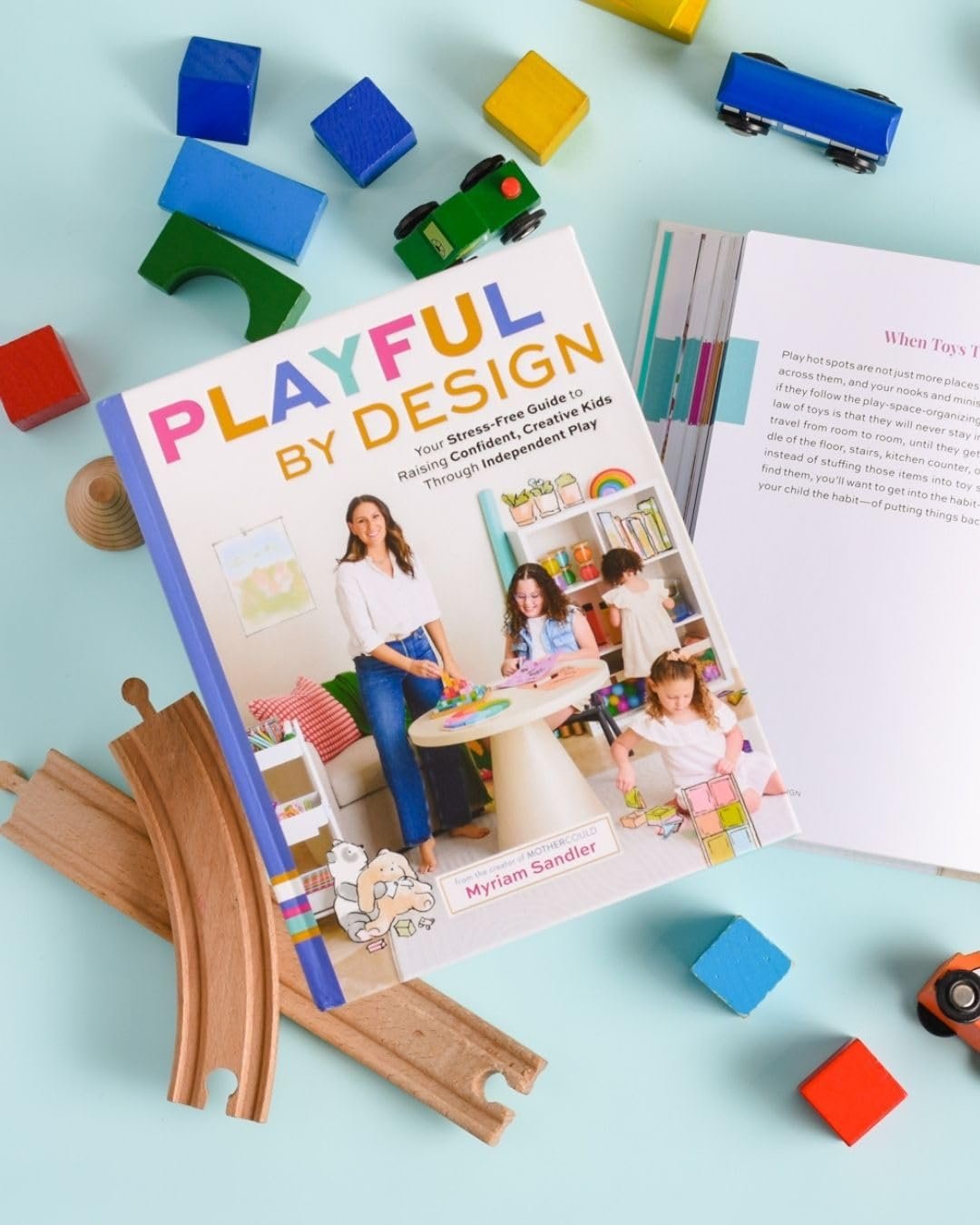
If this all feels daunting or you have no idea where to start, that’s where Playful By Design comes in. It’s a step-by-step guide to creating play spaces that ignite your child’s imagination and nurture their independence. You don’t need to go buy a bunch of extra supplies - the book walks you through how to analyze what spaces and items you already have to curate the play spaces that’ll work best for your home and family.
Let’s jump in to creating a play space that works for your home! Remember, you don’t need a play room to set up the perfect space for your child’s play.
4 Steps to Build a Play Zone in Any Room
Define the Spot - You don’t need a designated play room! You can use a low bookshelf, a corner, a rolling cart, or a small rug to set the play boundary. The size will depend on the room you’re working with, but even a small toy shelf in the living room works great.
Keep Toys at Eye Level - Swap our deep, dark toy bins for open shelving and transparent containers. If a child can’t see a toy, they won’t play with it! If you’re working with a small space, display only a few select toys at a time to make it easy for kids to see and actually play with.
Implement a Toy Rotation System - This sounds more difficult than it is. All you have to do is keep a portion of your children’s toys in a bin, stored away. Every so often (could be once a week, once a month… depends on your child) put away a few of the toys that were out in the play space and pull out a couple from the storage spot. Kids will feel like you just got them a brand new toy, even though it was from their birthday two years ago! Toy rotations keep toys fresh and exciting, limit toy clutter, and help kids stay engaged with what they have.
Design for Accessibility - If the goal is creativity AND independence, let’s show kids how to care for and maintain their play spaces! This looks like having toy bins/containers that kids can open on their own, and clean up on their own. For example, play dough containers are so tricky to open. By transferring the play dough into an easier to open container, kids can have more independence with their play.
Room-By-Room Set Up Hacks
Let’s go through some rooms of the house and talk about how to create a thoughtful play space there!
Bedroom: Use wall space for some book shelves that can hold toys. Hanging storage pouches can hang on closet doors and be easily tucked inside the closet doors when not in use.
Bathroom: A small play space in the bathroom can help with potty time and when your little ones follow you into the bathroom! Use a basket with some books and easily cleaned toys.
Kitchen: Toddlers constantly digging through cabinets in the kitchen and getting under your feet when you’re trying to cook? Choose a bottom drawer to utilize as the kitchen play space! This is the drawer that they can empty out, play with toys, and keep everything in one place.
Living Room: Putting together a play space in a living room can look a lot of different ways depending on your space! Use a space in your TV stand, add a small cube shelf unit to a corner, or fill the bottom space of a bookshelf with toys.
Want step-by-step tips on how to get started, a practical to-do list, and tons of examples so you can find what will work best for your home? Playful By Design is the ultimate resource. It’s not about buying more, rather using what you have to create play spaces that serve the whole family, no matter what kind of space you have. You’ll learn how to create spaces that evolve with your family, catering to every age and interest.
Say goodbye to the constant overwhelm of toys everywhere! Welcome to a more connected family life, full of joy and creativity. Your home can be a sanctuary for the whole family, beautiful and organized, but also set up for a happy, playful child.
Setting up intentional play spaces throughout your home is the perfect way to spark creativity and imagination for your children. Keeping toys organized and contained helps your kids see exactly what they have, ensuring that they actually play with their toys. Toy rotation systems keep toys exciting and feeling new so you get more life out of the activities you have.
Ready for your next parenting win? Order your copy of Playful By Design today, and transform your home into a stress-free haven of creativity and effortless organization!