10 SPAGHETTI SENSORY PLAY IDEAS FOR TACTILE FUN
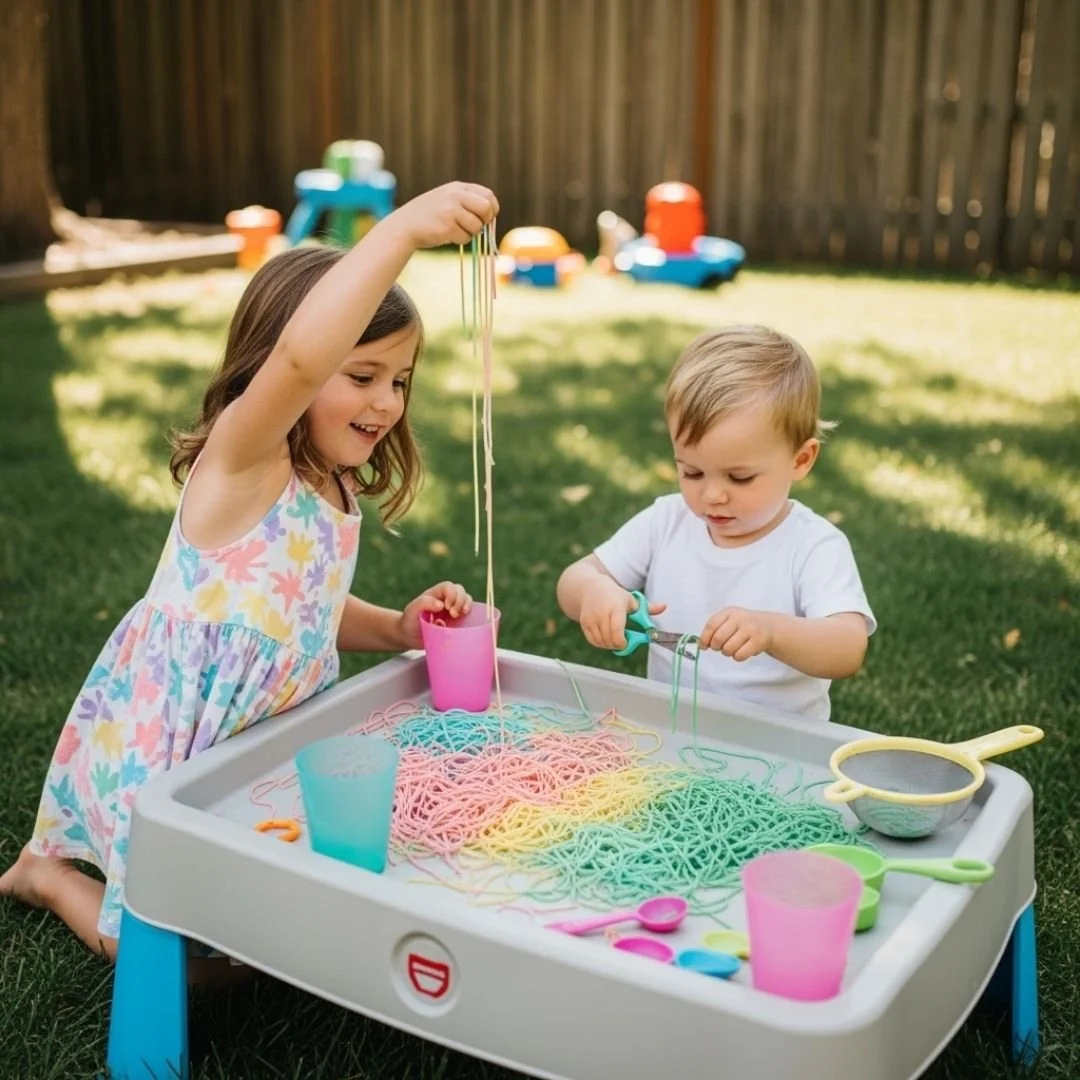
Sensory play isn’t just a temporary tool—it’s a staple for learning, connection, and everyday growth. From overcoming texture sensitivities to learning how to write, these hands-on activities truly help little ones achieve so much. And the best part? It all just feels like playtime to them! While they’re busy mixing colors and scooping slime, you’re watching their fine motor skills grow and their creativity come to life.
However, out of all the household items you can use for sensory play, spaghetti is one of the best. It’s slimy, slippery, squishy, and, with a little food dye, colorful! Plus, it’s also taste-safe—perfect for curious kiddos who love putting everything in their mouths.
That’s why today, I’m sharing my favorite sensory play activities using spaghetti. I’ll also dive into the unique benefits of playing with noodles and provide a quick, easy guide for dyeing them. Whether you want to create the colors of the rainbow or work with children on their scissor skills, this list has something fun for kids of all ages.
10 Spaghetti Sensory Play Ideas for Tactile Fun
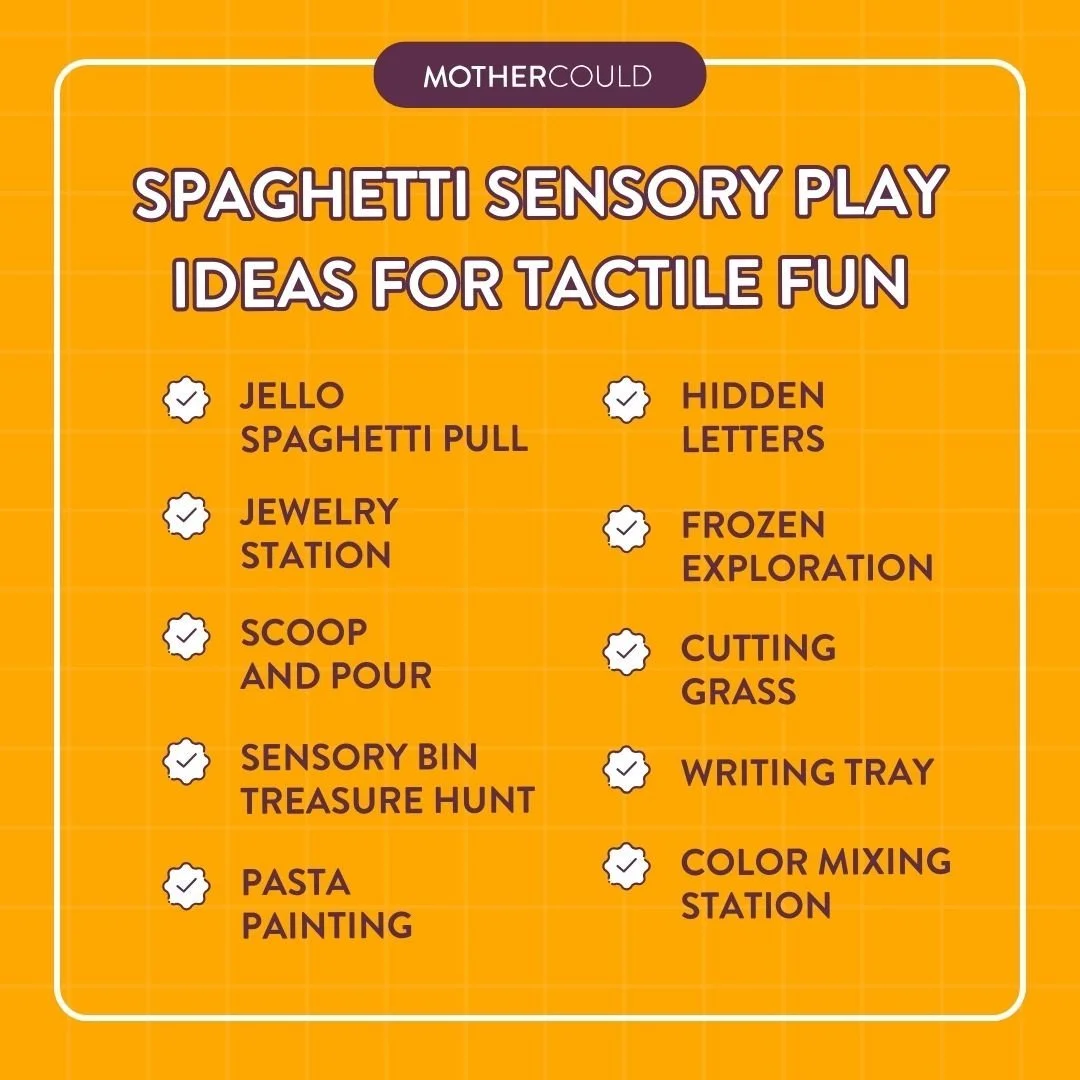
Jell-O Spaghetti Pull: Add colored spaghetti noodles to a bowl of Jell-O and have your kids pull out each strand. Perfect for hand-eye coordination and problem-solving.
Jewelry Station: Use dry colored spaghetti with holes (penne, rigatoni, or rotelle) and thread the noodles onto yarn or string to create jewelry.
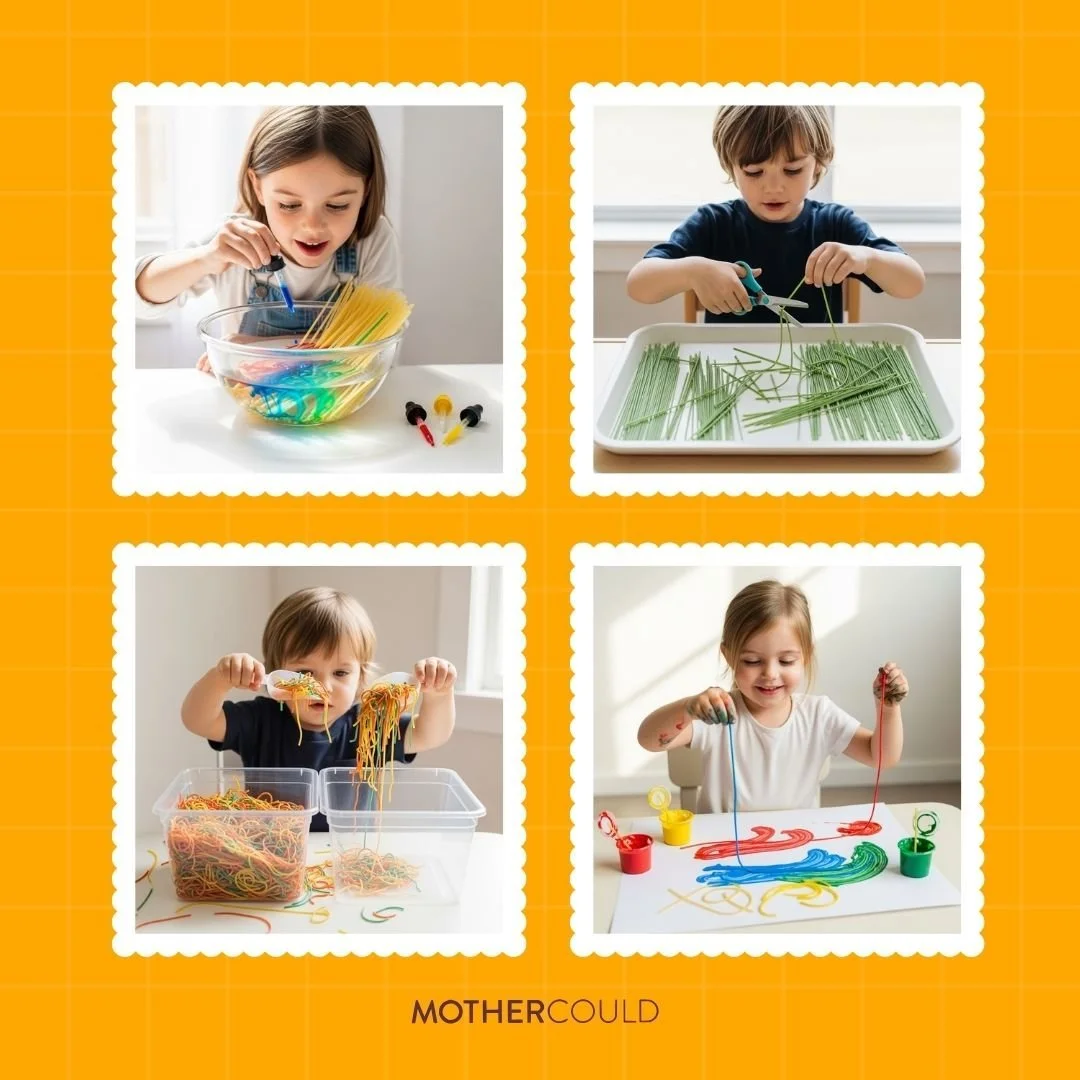
Scoop and Pour: Fill a container with spaghetti noodles and have your children scoop them from one bin and pour them into another. It’s great for fine motor skills and introducing cause and effect.
Sensory Bin Treasure Hunt: Toss cooked spaghetti into a sensory bin and add plastic toys. Let little ones use their hands to sort through and discover hidden treasures.
Pasta Painting: Grab white paper, cooked spaghetti noodles, and a couple of cups of paint. Let your little ones get creative and use noodles as paintbrushes!
Hidden Letters: Working on the alphabet? Throw small plastic letters into a bowl of colorful pasta, and ask your kiddos to identify the letters as they pull them out. For older children, try asking them to practice spelling different words.
Frozen Exploration: For a fun summer activity, freeze cooked noodles in ice cube trays. Give your little ones a dropper of warm water to melt the ice and play with the noodles. It’s a great activity for tactile and temperature exploration!
Cutting Grass: To work on scissor skills, use green colored noodles as “grass” and have your child carefully cut each strand.
Writing Tray: Place cooked noodles on a tray and ask your kids to trace letters. Same idea as the salt dye letter tray, just with a different base!
Color Mixing Station: Place cooked noodles in a bowl of warm water, then let little ones add drops of food coloring to create their own vibrant colors.
What Are Spaghetti Sensory Play Benefits?
Using spaghetti for sensory play isn’t just an exciting material to add to your toolkit because it’s taste-safe and versatile. As fun as it is, playing with spaghetti is also packed with developmental benefits! Here are some of the reasons you should incorporate it into your playtime routine:
Enhances tactile processing: As kids explore different textures, temperatures, and consistencies, they’re actually strengthening neural connections!
Promotes fine motor skills: Daily self-care activities, like writing, brushing teeth, and getting dressed, all require fine motor skills. Playing with spaghetti (can) involve lots of scooping, pinching, threading, and cutting—all of which develop and refine these skills!
Supports language development: As little ones explore their spaghetti activities, they’ll want to tell you all about it. This can encourage expressive communication! You can help them by using words like “slimy,” “squishy,” “soft,” and “crunchy.”
Boosts creativity and imagination: Kids can use their creativity no matter what they play with—spaghetti noodles included! These activities spark storytelling, imagination, and open-ended play.
Encourages sensory regulation: The more a child plays with a material, the more comfortable they become with it. This is particularly beneficial if your kids are experiencing mealtime sensitivities!
Improves cognitive development: When you think of cognitive development, think of skills like problem-solving, perception, and reasoning. Some of these spaghetti sensory activities require a lot of this—like the Jell-O pull or the jewelry station.
Fosters independence: When kids are able to explore on their own terms, they become more comfortable making their own decisions. The pasta painting activity is the perfect example of how to accomplish this!
How to Dye Spaghetti For Sensory Play
If you’ve never tried rainbow spaghetti for sensory play, get ready for your little ones to light up. The bright colors add a fun, unexpected twist that kids always love. And, if you’ve been here for a while, you know my motto: the more color, the better!
If you haven’t yet, check out my post on how to dye pasta for crafts! Here you can find a thorough step-by-step guide for dyeing uncooked pasta. However, if you’ve already seen it, let’s talk about dyeing COOKED pasta! Here are the super simple steps:
Ingredients:
One box of spaghetti noodles (or more, depending on your activity!)
1 tbsp white vinegar
Food coloring
Zip-top bags
Instructions:
Step 1: Cook your pasta according to the instructions on the box. Since you’re not making the pasta to eat, you can skip adding salt, pepper, and additional seasonings. Also, make sure to skip out on any butters or oils!
Step 2: Once you’ve finished cooking the pasta, drain the water and immediately rinse it with cold water. This keeps it from getting sticky.
Step 3: Place the pasta into a resealable bag. If you’re making rainbow pasta, make sure to portion it out accordingly.
Step 4: Add a few drops of food coloring and 1 tbsp of vinegar into the bag. Shake until everything is evenly colored and coated. For a more vibrant hue, add more food coloring or let the pasta sit in the bag for a few extra minutes.
Step 5: Pour the pasta back into a strainer to rinse off any excess color.
Step 6: Lay the noodles on a tray for 10-20 minutes to dry slightly. Then, you’re ready to use them for sensory play!
Spaghetti noodles are the perfect material to add to your sensory play toolkit!
The true beauty of sensory play? You never run out of new, exciting materials to use—from recycled household items to food that’s been sitting in the pantry. Fortunately, not only is spaghetti taste-safe (when prepared the right way), it’s also incredibly versatile and easy to manipulate. It’s a fantastic addition to any activity!
Interested in more ways to transform your home into a place of creativity and connection? Order our new book, Playful by Design! It’s a stress-free guide all about self-directed play and thoughtfully planned spaces that evolve with you and your little ones.
For more exciting sensory activities and easy-to-follow recipes, check out the Mothercould blog! I also cover everything from the benefits of sensory play to kid-friendly meal ideas. And, don’t forget to check out Mothercould In Your Pocket! Become a member for instant access to activity packs, play recipes, and tried-and-true cleaning hacks!