
THE ‘SENSORY REST’ SOLUTION: 5 QUIET, LOW-STIMULATION PLAY IDEAS FOR OVERSTIMULATED KIDS
A long day at school, a family travel day, a birthday party, holidays… we all know what it feels like to be overwhelmed. For kids, it can result in some bigger emotions, even meltdowns and tantrums. Having some ideas ready to go to help your little ones when they become overstimulated will help them in the moment, and it’ll help you be able to keep your sanity and handle the big emotions in a calmer way. (Because you already have a helpful solution ready to go!)
It’s also beneficial to plan for some rest and reset time before you notice your kids reaching the overwhelmed point. If you can catch it earlier and give them a chance for rest before the big emotions come, it can help prevent a meltdown that’s even more difficult to regulate. Let’s talk about “sensory rest” and why it’s important to prepare and plan for it.
What is “Sensory Rest” and Why Do Kids Need It?
We hear the word “overstimulation” thrown around a lot. But it’s important to be able to recognize it in your kids so you can support them when needed. Think post-birthday party, after a full day at school, coming home from travels… a child’s nervous system is often running at high speed. We often think of sensory play as bright colors, splashing water, loud sensory tools, but it can also be “low-stimulation” sensory play - gentle textures, slower moving sensory bases, and muted colors.
“Sensory rest” is just a way to give kids a break from the high-stimulation activities and swap them for some low-stimulation activities that can offer regulation and calm. These activities are designed to give sensory systems a break, while keeping hands busy.
5 Quiet, Low-Stimulation Play Setups for Kids
The Ribbon Pull Box - This is a great one to put together and store away for when it’s needed. Use a tissue box or shoe box and gather some scrap pieces of ribbon, preferably of varying textures and thicknesses. Poke holes in the box and thread the ribbon through. On the inside of the box, tie the ends of the ribbon in knots so the ribbons won’t come all the way out when pulled.
Why it Works -The soft textures of the ribbon offer calming tactile stimulation, and you can encourage slow, rhythmic pulling to help with slowing the body down so it can rest.
The Squishy, No-Mess Sensory Bag - You know I love sensory bags! They’re amazing for all ages, even babies can play with them safely. Grab a ziploc freezer bag, some clear hair gel, packing tape, and buttons, beads, and/or sequins. Add some gel to the bag, add the buttons and sequins (add a couple drops of food coloring if you’d like to color the gel!) and seal the bag, making sure to get out as much air as possible. Seal the bag shut with the packing tape. I like to add a layer of packing tape to cover the full surface of the bag for extra reinforcement. You can tape the bag to a table or window, or place it on the child’s lap and let them squish the items around the bag.
Why it Works - The bag is cool to the touch, offering some calming sensory input. If it’s placed on the lap it can add some gentle weight. Pushing the items around offers some light pressure for little fingers without worrying about noise or mess.
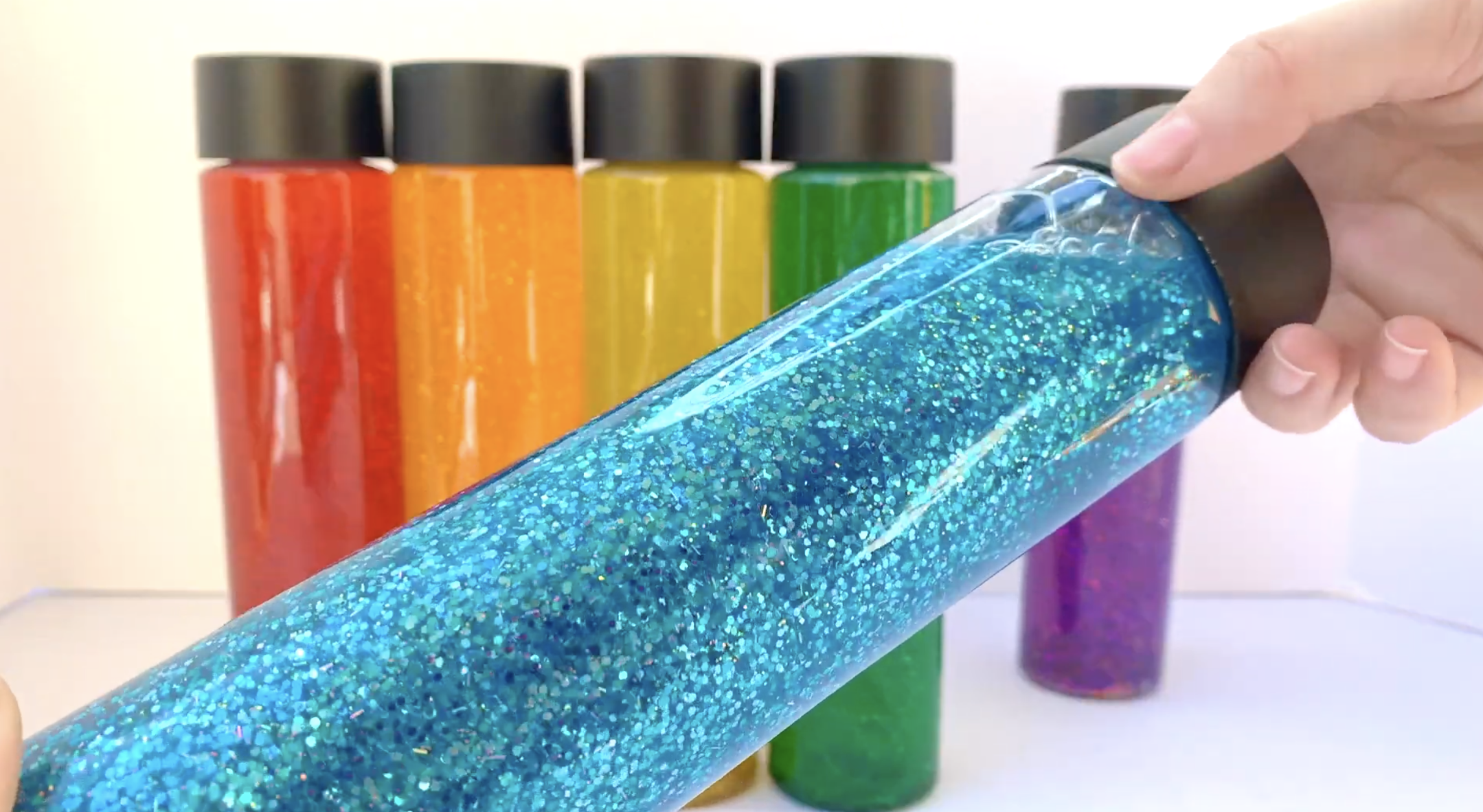
The Glittery Sensory Bottle - This is another amazing mess-free option to have on hand. You’ll need a clear plastic bottle, clear glue or corn syrup, food coloring, glitter, water, and a hot glue gun. Fill the bottle ⅓ of the way with glue, add glitter, a couple drops of food coloring, and fill the rest of the way with water. (Leave a little room!) Add some hot glue to the lid so it’ll be sealed shut. Gently shake the bottle and watch the glitter swirl around!
Why it Works - These sensory bottles provide calming visual stimulation. It can slow the body and heart rate down to watch the glitter slowly move around the bottle.Click here for some more sensory bottle ideas!
The Calming Rice Bin - This is a slightly different take on the dyed rice sensory bins that I love so much! If you know your child would benefit from less visual stimulation, you can skip the dyed part and just keep the rice all white. Dump some dry rice into a plastic bin. Add some tools, like silicone scoops or wooden spoons. (Stay away from metal, as those will be noisier to play with.) Let your little one dump and scoop the rice, as well as plunge their hands into it! (One of the best feelings!)
Why it Works -Pouring rice is an amazing tactile sensation! Letting kids sit calmly and explore the dry rice can offer some great, low-stimulation sensory input.
The Tape Road Line Up - This one is quick to set up and can be played with in so many different ways! Use painters tape, masking tape, or special road tape to make some pathways on the floor. I like to buy colored masking tape and make different colored “parking lots!” Give kids some cars (ones that don’t make noise!) and let then line them up on the road and organize them by color in the garages.
Why it Works -The repetitive movement of lining up and organizing the cars can help calm the nervous system. The simple act of lining up cars in order and organizing by color can help an overstimulated brain reset.
Setting the “Sensory Rest” Environment
Setting up the environment for the activity is just as important as setting up the activity itself. Opt for dim overhead lighting, or just use warm lamps/nightlights. Turn off the TV and any loud background noise. Instead play gentle, ambient sounds or low-volume instrumental music. (Quiet works great too!) As the parent, you can remain close and supportive, but don’t direct play or ask a lot of questions. Let the child lead, and if you’re acting calm and relaxed they’ll feel welcome to do the same.
Sensory rest can easily become a part of your routine. If you know the overstimulation will come after a school day, then make sure you have activities like these prepped and ready to offer your child. They’re also great to utilize right before bedtime to slow down the body and calm the nervous system. Having them prepped means less running around and scrambling for an activity when the meltdown is already on its way!
A great method for storage is a hanging organizer, like this Mothercould Kids Travel Organizer. You can have a dedicated storage solution for all of your calming activities - put the rice in a bag and store it in a pouch, add some cars and tape to another section, and even fit a calming sensory bottle! Having all of your “sensory rest” activities in one place makes it even easier to pull one out when overstimulation happens.
Prep for your next parenting win with these low-stimulation sensory play ideas! We hope you’ll try them and find what works for your little ones.