
HOW TO PUT SUNSCREEN ON KIDS WITHOUT TEARS OR TANTRUMS

Anyone who’s tried to put sunscreen on kids knows exactly what tends to follow: tears, tantrums, and lots of “I don’t want to’s.” The one thing that makes this process easier? What you use to apply the sunscreen, like the Mothercould Premium Sunscreen Brush Set.
Rather than rubbing SPF in with your hands, the brushes make application feel lighter and more controlled. Plus, with a smaller face brush and a larger body brush, it’s easy to cover both big areas and those often-missed spots, like the ears, scalp, and around the lips. When the process feels gentler, quicker, and a little more engaging, kids are much more likely to cooperate—and even start taking part in it themselves!
In this post, I’m sharing how to apply sunscreen to kids with the Mothercould Premium Sunscreen Brush Set. I’ll also talk about why kids need sunscreen, how often to reapply, and share my top kid-friendly sunscreens for safe application. Sounds too good to be true? Stick around to find out how structured systems and parent-created tools truly can make a difference!
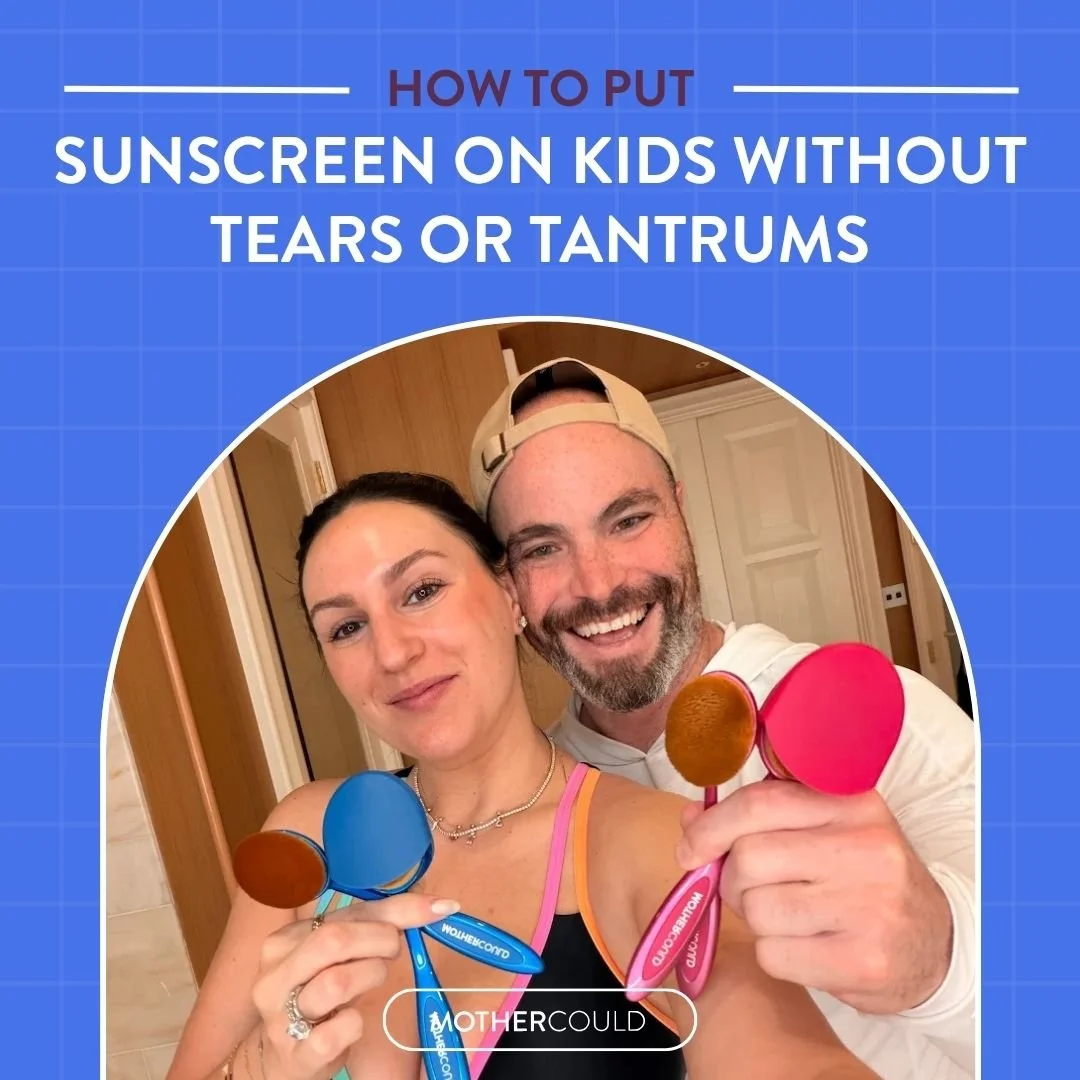
How to Put Sunscreen on Kids: Tips That Actually Work
Children’s skin is significantly more sensitive to sun exposure. It’s thinner, produces less protective melanin, and is less developed! Because of that, sunscreen is essential for preventing burns and long-term damage that may not show up until later. However, it all comes down to two things: consistency and proper application.
The Mothercould Premium Sunscreen Brush Set isn’t just helpful for preventing oily hands and even oilier SPF bottles—though that is a benefit! It’s a thoughtful tool for making sunscreen application less of a struggle and more of something kids can actually be part of. Let’s talk more about how the Sunscreen Brush Set actually makes everyday application easier. Then we’ll talk about my top tips and tricks.
How the Mothercould Premium Sunscreen Brush Set Makes Application Easier
Protecting your kids’ skin from the sun can feel like a never-ending challenge. Sticky formulas, slippery bottles, missed spots that lead to sunburn—you know the drill! That’s why a durable, kid-friendly applicator can make a world of difference.
Built to Last: Crafted from premium zinc alloy, the handles are built to hold up through everyday use—drops, tosses, and all.
Travel-Ready: With a breathable mesh storage pouch, you can keep your brushes with you wherever you are! They fit perfectly in everything from purses to Kids Travel Organizers.
Soft and Kid-Safe: The smooth, soft bristles effortlessly glide across skin, making application feel more like a mini spa treatment rather than a chore! (And as a parent, you know how you frame things for kids goes a long way.)
Easy Clean-Up: Each brush set comes with a silicone mat to make clean-up simple and easy. Just rinse, lather, swirl, and air dry!
Kid-Friendly Size: Designed with little hands in mind, the brushes are easy for kids to hold and use. This makes it simple for them to take part in the process!
Better Coverage: Each set includes a smaller face brush and a larger body brush, so you can easily adjust the coverage based on where you’re applying. The larger brush even has a reflective back that kids can use as a mirror!
Protective Cap: Each Brush Set comes with a protective cap that allows for easy airflow. That means no mold growth over time with frequent use!
Here’s the thing: you don’t need to complicate your routine—you just need the right tools. This concept—creating small systems that support your daily life—is exactly what I discuss in Playful by Design, my book dedicated to making parenting easier. Because when a system is easier to use, it’s easier to stay consistent.
What Is Sunscreen?
Sunscreen is a product designed to protect the skin from harmful UV rays. This isn’t a one-size-fits-all product, though! Companies make sunscreen in a variety of formulas—from gels and lotions to creams and sprays. Ultimately, when it comes to children, finding a formula they’re comfortable with is the first step to seamless application.
I’ll talk about my favorite sunscreen products that pair perfectly with the Mothercould Sunscreen Brushes later. For now, let’s talk about why—and how often—kids need sunscreen:
Do Kids Need Sunscreen?
Kids absolutely need sunscreen! And here’s a common misconception: they don’t just need it on bright, sunny summer days. It’s important to apply sunscreen to your kids' skin whenever they’re exposed to sunlight. That means you should be pulling out your sunscreen brushes even if it’s cloudy, you’re in the car, outside playing in the snow, or flying in a plane!
I know, I know, it sounds a little overdramatic—but it’s realistic. The American Academy of Pediatrics found that approximately 80% of sun exposure occurs before the age of 18. This is why it’s even more important to have a practical, versatile tool for easy, everyday application.
How Long Can Kids Be Outside Without Sunscreen?
According to research, children can develop a sunburn in less than 10 minutes on days with a high UV index. And that risk is even higher for children with fair skin, light hair, or freckles!
In general, aim to reapply sunscreen to children at least every 2 hours. But if your little ones are playing outside and sweating or jumping in and out of the pool, you should really reapply immediately. Water and sweat can both remove sunscreen—even if it says it’s water- and sweat-resistant. (No formula follows the one-and-done rule!)
Let’s talk about how to apply sunscreen to kids without the tantrums, fussing, or fits:
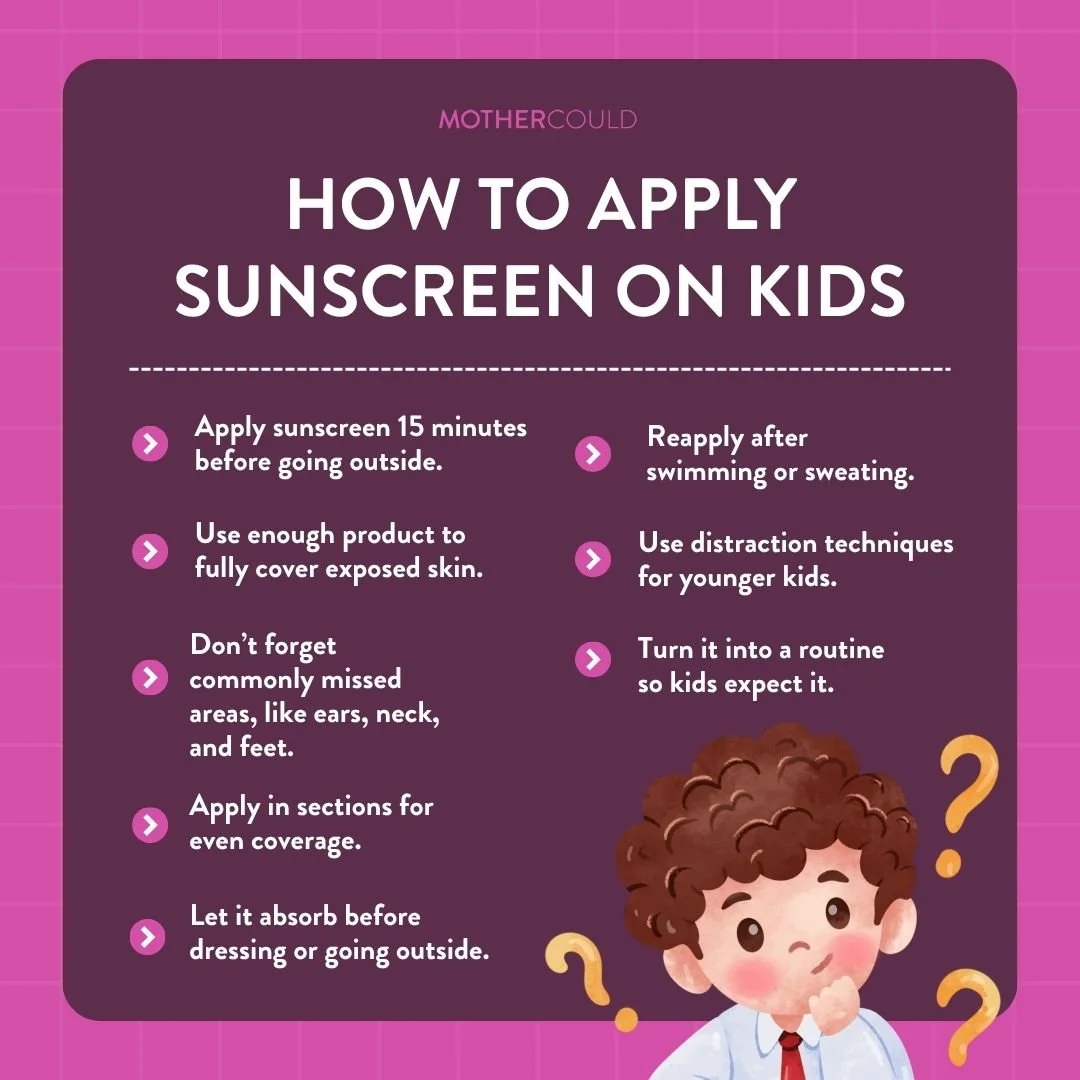
How to Apply Sunscreen on Kids
Apply sunscreen 15 minutes before going outside.
Ideally, you want to apply sunscreen 15–30 minutes before going outside. Doing so ensures the product fully absorbs into the skin, forming a protective layer against harmful rays. Plus, this gives you a little “buffer” time between arriving at the pool and beach or heading outside! AKA, your kids will be more likely to be intentionalwhen using their brushes, making sure they get every spot.
Use enough product to fully cover exposed skin.
Here’s the good thing about sunscreen: there’s no such thing as too much. The only thing you want to be mindful of is overapplication around the eyes and mouth, where too much sunscreen can cause dripping from sweat and water! However, on average, full coverage amounts to about 2 milligrams of sunscreen per square centimeter of skin.
But let’s be honest, that’s not exactly easy to measure in real life. For a more practical approach, squeeze however much you’re comfortable with directly onto the Mothercould Sunscreen Brushes. Then, swirl and glide them across the skin for easy, even coverage.
Don’t forget commonly missed areas, like ears, neck, and feet.
During application, it’s easy to focus on the most “important,” visible body parts: the arms, legs, face, and tummy. However, those easy-to-miss areas actually tend to burn faster—especially when left unprotected! This is where the Mothercould Sunscreen Brushes shine. You can easily use the smaller brush to apply sunscreen behind the ears, down the neck, across the feet, and down the hairline.
Apply in sections for even coverage.
When kids get the wiggles, we often feel like we have to put on their sunscreen as quickly as possible. Hey, I get it! However, a quick application can result in an uneven finish. To avoid this, apply sunscreen in sections. Squeeze sunscreen directly onto your Sunscreen Brush, glide it down each body part, and swirl it around to make sure you really work the product into the skin. Not only does it guarantee more even coverage, but it also lets each section dry evenly.
Let it absorb before dressing or going outside.
Even adults are guilty of this one! Before rubbing the skin, wrapping up in a towel, or heading into direct sunlight, let the sunscreen fully absorb. Most formulas take about 15–30 minutes to absorb into the skin and form a protective barrier. They need time to bind! That means no tapping, rubbing, scratching, or redressing until the product has set.
Reapply after swimming or sweating.
As I mentioned earlier, sweat and water are instant sunscreen removers. It’s not because the product is ineffective! It’s simply because both sweat and water break down and dilute the protective barrier, reducing its effectiveness. Remember: water-resistant doesn’t mean waterproof. But here’s the good news: because the Mothercould Sunscreen Brushes are so easy to clean (and quick to dry!), re-application doesn’t feel like a drawn-out process. Just squeeze, glide, swirl, and you’re good to go.
Use distraction techniques for younger kids.
The younger the kid, the more difficult it is to apply sunscreen. They may let you get away with a few swipes, and then they’re over it. But with the Brush Set, sunscreen application feels more like self-care—even for littles! The soft bristles don’t scratch or irritate their skin, and they can check themselves out in the reflective back of the larger brush once they’re done! Ultimately, the tool becomes the distraction.
And even better: kids can use the sunscreen brushes to apply the product themselves. That means they play a role in the sunscreen process, making them feel a sense of control. (And that instantly means they tolerate it just a little bit more!)
Turn it into a routine so kids expect it.
Consistency is key when it comes to kids—and that goes for everything! However, once you start your daily sunscreen application, make it a routine. Over time, kids won’t dread the process anymore because they’ll know it’s a non-negotiable step in their day, just like brushing their teeth!
I’m all about structured systems, which is what I discuss in my book, Playful by Design. Except in this case, I’m talking about how to raise confident, creative kids through independent play! Think: kid-directed play, thoughtfully planned play spaces, less is more, and toy-rotation systems. Your kids actually stay entertained, and you get a second to catch your breath. Learn more by listening to this conversation I had with Hila Bahari, the face of Mamaguide!
What Is the Best Sunscreen for Kids?
The truth is, formulas matter based on age, application area, and frequency. Of course, kids can use an “adult” or “regular” sunscreen. However, kid-friendly formulas often prioritize gentler, more skin-safe ingredients. With this in mind, here’s a list of the best sunscreens for kids by formula:
Babo Botanicals Sensitive Baby Mineral Sunscreen: This fast-absorbing, lightweight sunblock features zinc for sensitive skin. Plus, it blocks UVA/UVB rays, skips harsh chemicals and ingredients, and is dermatologist-tested! Even better, Babo Botanicals makes this mineral sunscreen with 24 plant-based ingredients, like shea butter and chamomile.
Neutrogena Sheer Zinc Oxide Mineral Sunscreen: Perfect for sensitive skin, this formula offers SPF 50+ to shield against UVA/UVB rays. It’s also formulated with naturally sourced zinc oxide, is free of dyes and parabens, and is dermatologist-recommended.
Thinkbaby SPF 50+: Broad-spectrum UVA and UVB sunscreen that’s water-resistant, vegan-friendly, and free of parabens, petroleum, and phthalates. (And it’s PERFECT for fair skin!)
Thinkkids SPF 50+: Suitable for toddlers and kids, this broad-spectrum sunscreen protects against UVA and UVB rays. It’s water-resistant, fast-absorbing, and gentle enough for daily use.
EltaMD UV Sport Sunscreen Lotion SPF 50: Safe for all skin types, this non-greasy formula is sweat- and water-resistant, delivers UVA and UVB protection, and works for full-body application.
Frequently Asked Questions About Applying Sunscreen on Kids
Can kids use adult sunscreen?
Yes! Children over 6 months of age can safely use adult sunscreen. Just make sure it features a broad-spectrum formula and that it offers at least SPF 30. And if it’s a mineral-based sunscreen with zinc oxide or titanium dioxide, even better.
Is there a difference between kids’ and regular sunscreen?
Generally speaking, no, there isn’t a significant difference between kids and regular sunscreen. However, many brands will prioritize delicate skin-friendly ingredients, like zinc oxide, titanium oxide, and plant-based blends for more sensitive skin.
How long does a kid's water-resistant sunscreen last in the pool?
When formulas claim to be water-resistant, they typically last from 40 to 80 minutes while swimming or sweating. However, remember what I mentioned earlier! No formula is truly “waterproof,” so reapplication is important—especially for kids!
Is chemical sunscreen safe for kids?
Most pediatricians recommend sticking to mineral-based sunscreen for toddlers and younger children. Mineral-based formulas sit on top of the skin, reducing the risk of irritation or allergic reactions.
What age can kids wear sunscreen?
Kids can begin wearing sunscreen after 6 months old. For babies under 6 months, pediatricians recommend avoiding direct sun exposure as much as possible. Their skin is thinner, which means that they can quickly absorb ingredients that their bodies can’t yet metabolize. Better safe than sorry!
How often should kids reapply sunscreen?
If they’re just sitting outside, research highly recommends reapplication after 2 hours. However, always keep a close eye on skin reddening, overheating, or splotchy skin. On days with higher UVs or when your kids are sweating and in and out of the pool, reapply more frequently.
The Mothercould Sunscreen Brush Set makes sunscreen application a breeze!
Applying sunscreen to children is one of those things people don’t talk about enough. Between the tantrums and rubbing it off immediately after application, applying sunscreen is up there with bathtime and eating veggies! However, it doesn’t have to be a complicated, dreaded part of your routine. With the right tools, product, and advice, you can make sunscreen time one of the easiest—and quickest—parts of your day.
Want advice on other parts of parenthood people don’t often talk about? Head to the Mothercould blog! Here, I share kid-friendly recipes, sensory play activities, and all of my favorite products that truly shape parenting. Make sure to also join the Mothercould In Your Pocket resource for printable recipes, guided play tutorials, clean-up hacks, and more!
And for those of you looking to make your entire parenting journey as seamless as possible, grab my book, Playful by Design! Here, I share a step-by-step guide for raising independent children through kid-directed, kid-executed, and kid-enriching play. Available on Kindle, Audiobook, and in hardcover, it’s time to declutter, plan play-spaces, and give yourself a chance to catch your breath again.