SKITTLES RAINBOW EXPERIMENT: SIMPLE SCIENCE FOR KIDS
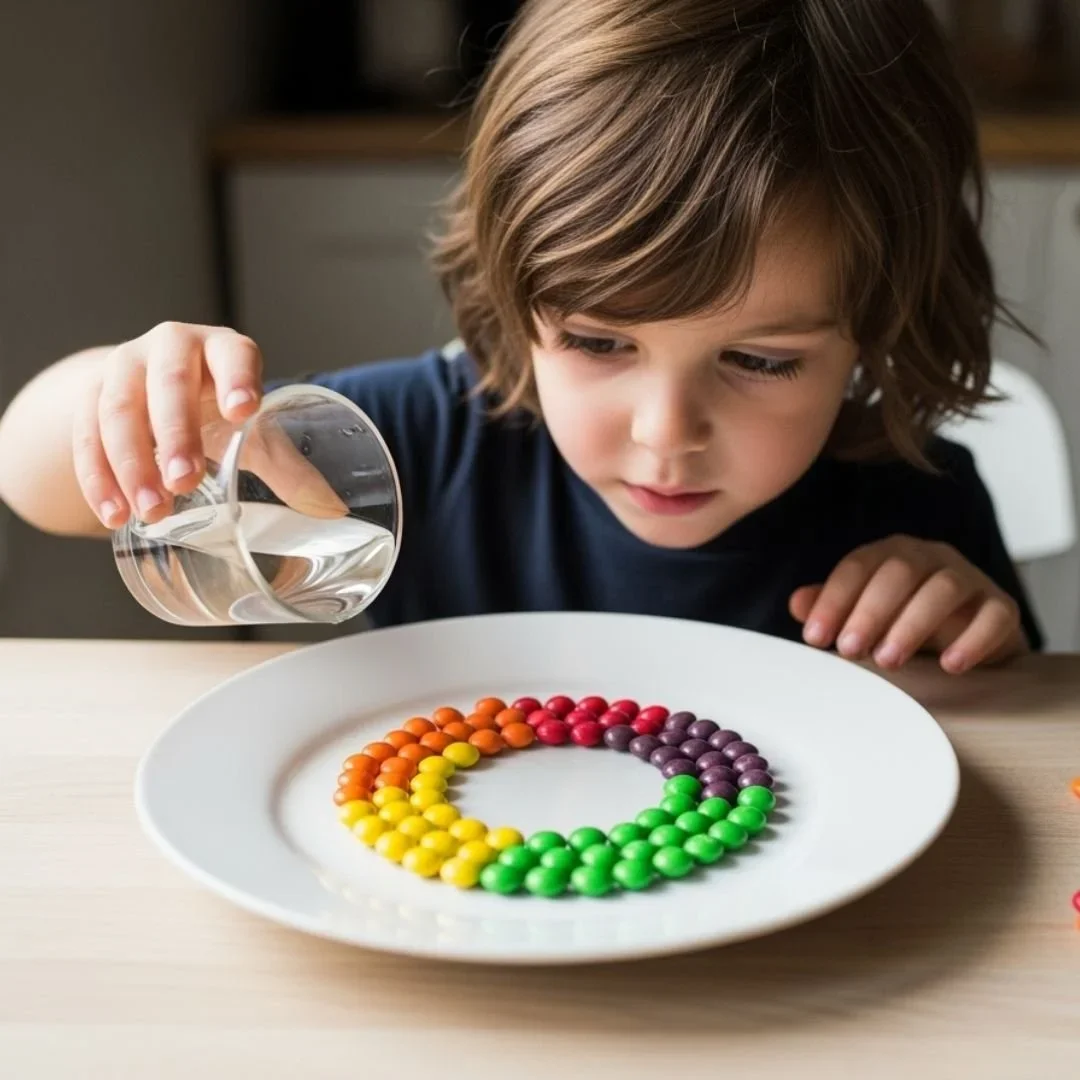
On days when I want to capture my kids' attention (and maybe make them think I’m a little magical), I lean on science experiments. Not the kind where you create a volcanic explosion inside your kitchen—don’t worry! Instead, I love focusing on colorful, mess-free, easy experiments that spark curiosity without the chaos.
Fortunately, it doesn’t take a lab coat or a lesson plan to get your kids interested in science. Sometimes, all it takes is a bag of Skittles and a little water to create something that’s both mesmerizing and developmentally beneficial. Trust me, it really can be this easy!
That’s why in this post, I’m walking you through a step-by-step guide for making a Skittles rainbow science experiment. Before that, though, I’ll tell you what it is, how it works, and why it deserves a spot in your playtime routine. Time to put on your science hats and have some fun!
What Is the Skittles Rainbow Experiment?
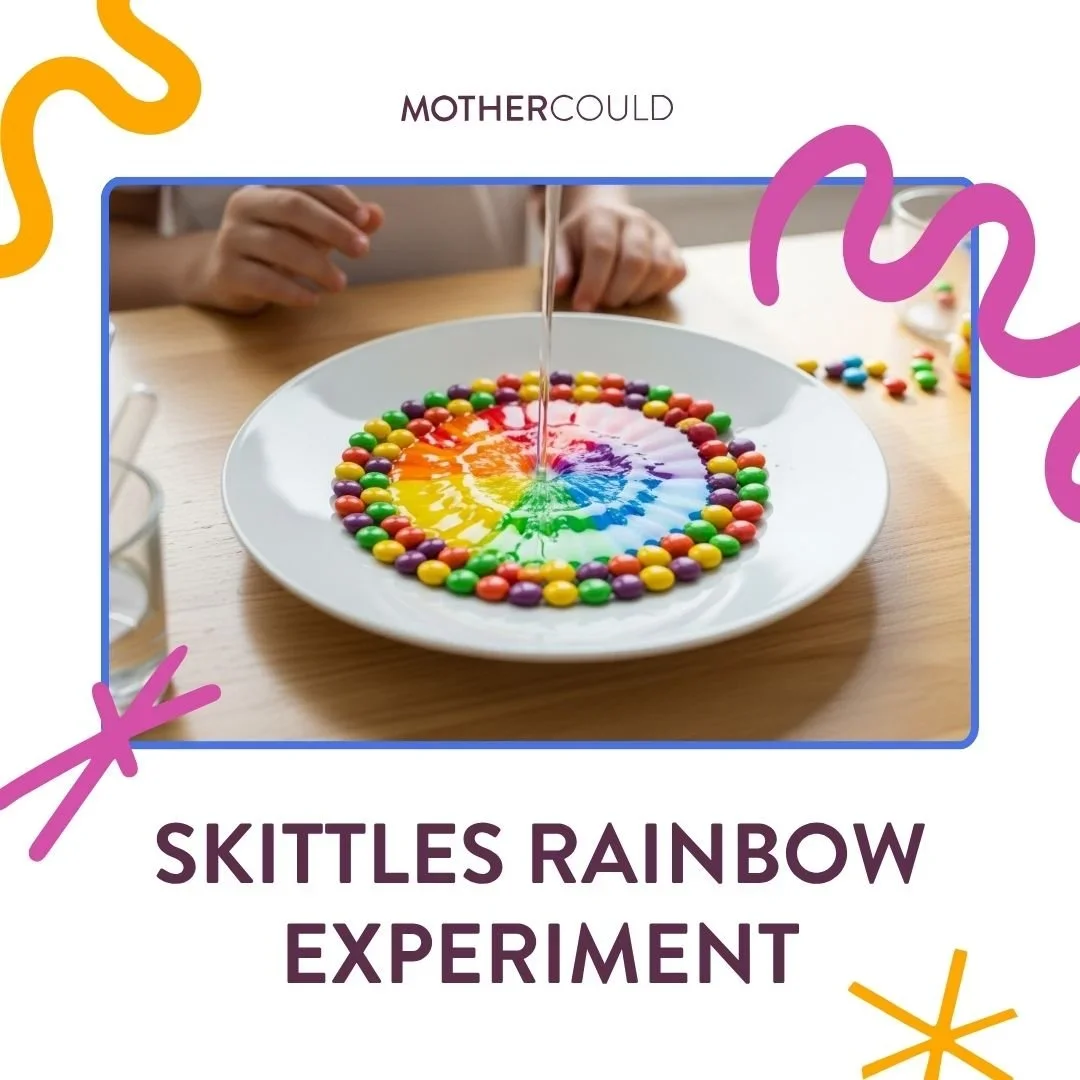
If any of you remember my M&M Experiment, this Skittles rainbow science experiment is a bit like that! Different types of candy, same amount of fun (and just as easy to set up!). In simple terms, it’s a colorful candy-and-water experiment that creates a captivating rainbow effect. I’ll explain more about how it works in a second. But first, let’s talk about why kids love it so much and why you will, too!
When it comes to sensory play (and yes, this experiment is considered sensory play!), the more color, the better. Colorful activities are a fantastic way to spark creativity, boost brain development, and aid in language growth. Plus, little ones are naturally fascinated by the blend of bright, vibrant hues.
Aside from that, the Skittles rainbow experiment is also a STEM activity! I’ve talked a little about this on the blog before, but you might still be asking, “What exactly are STEM activities?” Essentially, they are hands-on tasks that combine Science, Technology, Engineering, and Math to develop essential skills, like critical thinking and problem-solving.
So, when I found a way to combine both sensory play and STEM learning, I knew it was a winner. It's a fun, colorful, and sneaky approach to teaching science that kids will actually love!
How Does the Skittles Rainbow Science Experiment Work?
Now that you know what the Skittles rainbow science experiment is, let’s talk about how it actually works. Of course, I gave you a sneak peek above, discussing how it blends candy and water to create a rainbow. But there’s actually some pretty cool science behind it, too!
At the heart of this experiment is something called diffusion. Skittles are packed with sugar and food coloring, all tightly concentrated in one place. When you place them in warm water, those ingredients start to dissolve and spread out. They naturally move from areas of high concentration (near the Skittles), to areas of low concentration (the rest of the plate).
This process happens because of another term scientists call “concentration gradient.” Essentially, this is just a fancy way of saying that things naturally move from crowded areas to less crowded ones. Don’t worry, it sounds much more technical than it actually is!
From there, as the sugar dissolves, the colors stay separated because the dye molecules move at a similar pace. That equality in density and concentration keeps everything nice and neat, creating those clear, vibrant rainbow bands.
For little ones, all this science stuff might be a bit too much to grasp. And honestly, they don’t need to know all the details to be amazed! They’ll just enjoy watching those bright colors melt and spread like magic. But for the older kids who want to know the “why” behind it all, this is an excellent opportunity to chat about diffusion and concentration gradient! Watch their curiosity grow right alongside those rainbows.
Skittles Rainbow Experiment Instructions: What You Need and How to Do It
Skittles Rainbow Experiment Ingredients:
A white or clear plate
1-3 bags of Skittles, depending on how many times you want to repeat the experiment
Warm water
Skittles Rainbow Experiment Instructions:
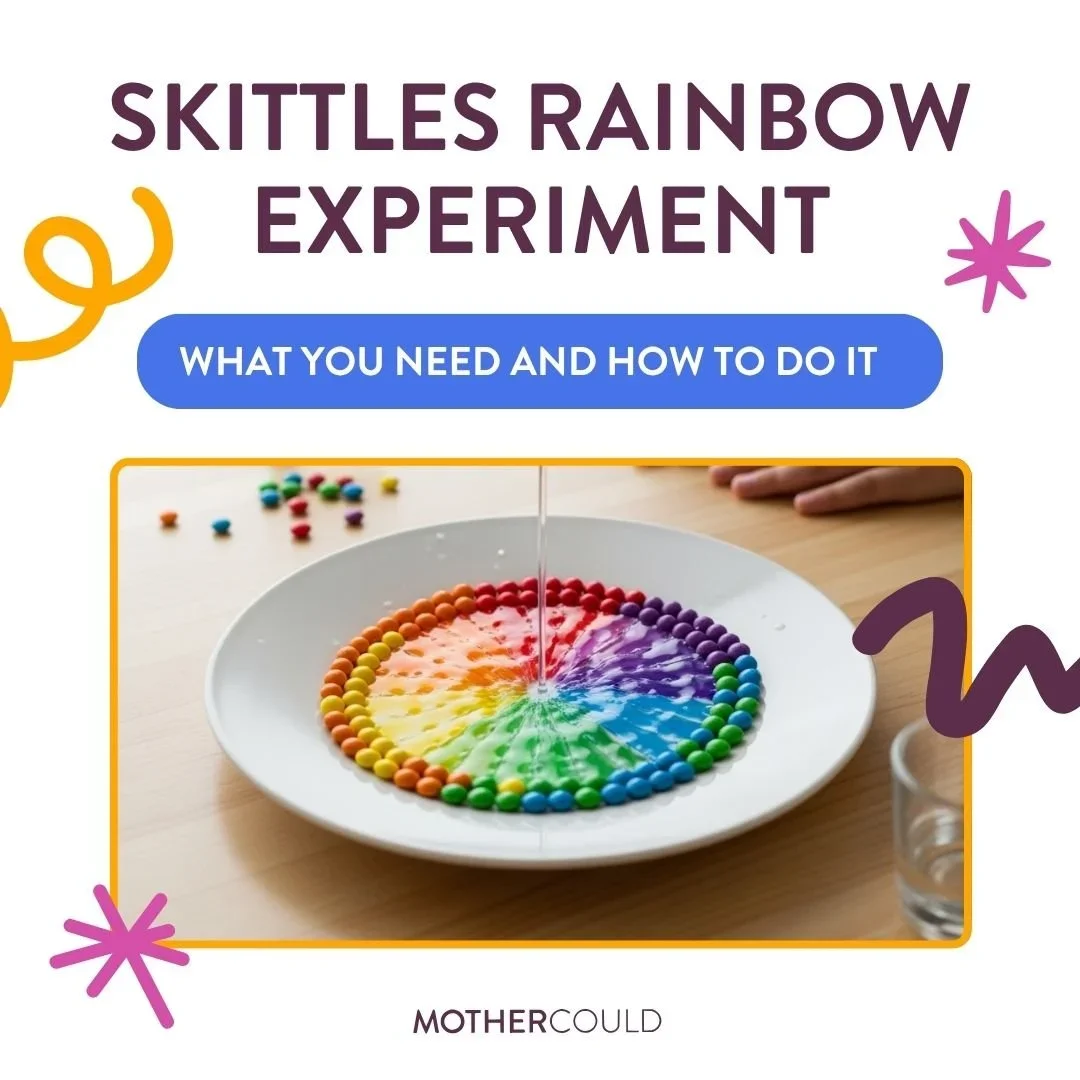
Step 1: Arrange your Skittles into a pattern. This could be a circle around the plate, a star, a heart, or the first letter of your little one’s name! Totally up to preference.
Step 2: Slowly add warm water to the center of your plate. You don’t want to add too much, otherwise the Skittles will begin to float. Instead, add just enough to fill the plate. If your little ones are helping with this part, you can also use a dropper for a more controlled application.
Step 3: Watch the colors slowly spread, blend, and form a rainbow! Repeat as many times as you want with different patterns, shapes, and Skittles colors.
The Skittles rainbow experiment is a sweet way to spark curiosity and explore science!
If there’s anything I’ve learned, it’s that if you’ve got kids, Skittles, and a few minutes, you’ve got science! It truly doesn’t take a lot to spark little ones’ imaginations and tap into their natural curiosity. Of course, they’ll love the chance to see candy melt and transform into bright, beautiful rainbows. But aside from that, they’ll also get to build essential developmental skills that last a lifetime!
Skittles aren’t the only colorful material you can use for playtime. For more, make sure to check out:
Want to learn about my tried-and-true methods for transforming my home into a place of creativity and connection? Then order our new book, Playful by Design! This stress-free guide helps you create thoughtfully planned spaces, nurture growth, and take a second to catch your breath. Even better, this resource evolves with your family, budget, and space!
Don’t forget to head to the Mothercould Blog! From colorful sensory activities to healthy, kid-friendly recipes, we’ve got it all. Also, make sure to join the Mothercould In Your Pocket Resourcefor engaging activity packs, helpful how-to guides, and printable recipe cards!