
ASSOCIATIVE PLAY VS. PARALLEL PLAY: WHAT ARE THE DIFFERENCES?
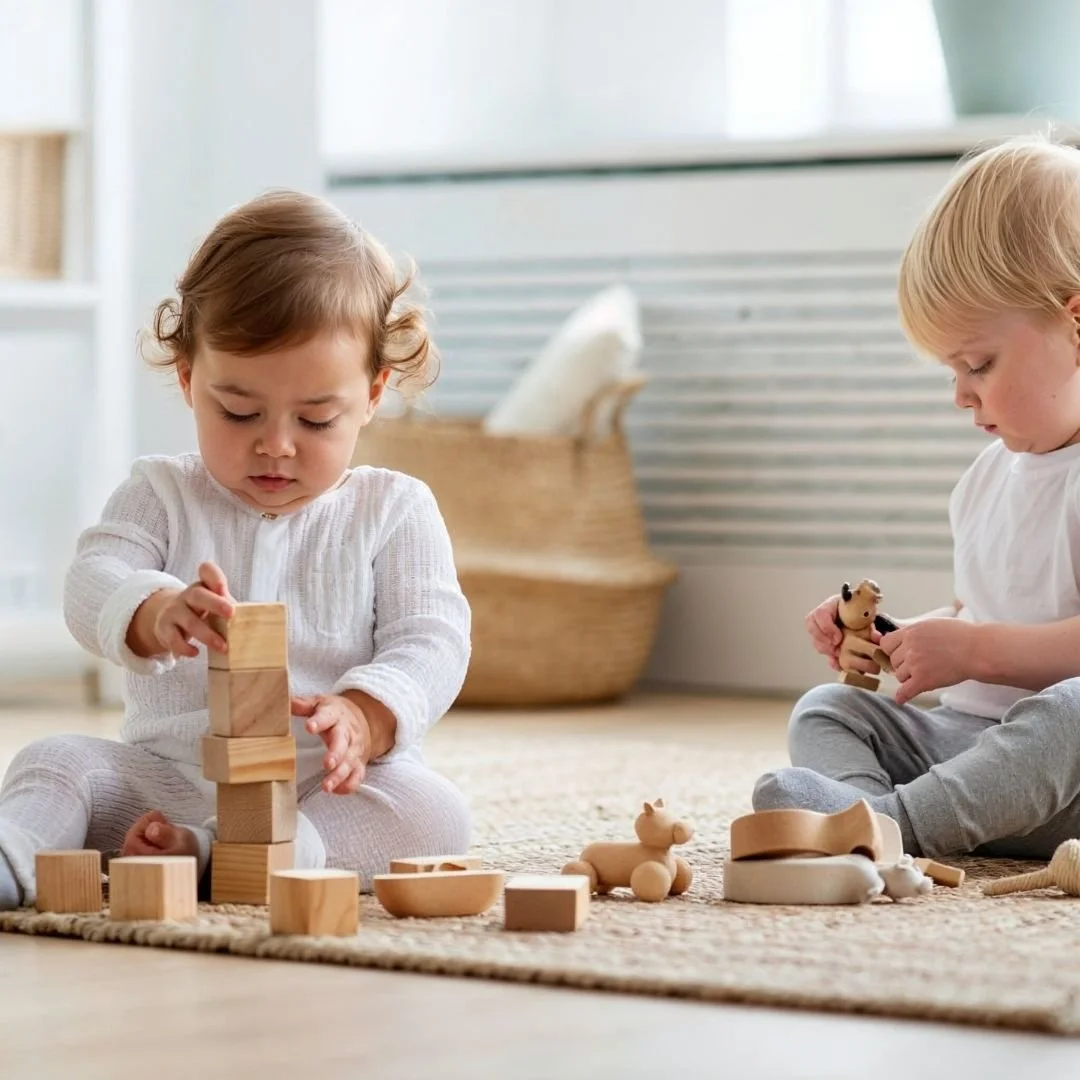
Did you know that kids tend to play differently based on their age? You have associative play, which is where children play together without a specific goal. Then you have parallel play, where children share toys but don’t typically interact. Both are natural, normal, and, honestly, key stages of social development!
Ultimately, playtime is far more intentional than we may realize. On the surface, it feels like an easy, engaging way to stay busy and get out the wiggles. Dig deeper, though, and you’ll find that play is an excellent way for children to enhance their brains and learn about their environment! And the best way we can support that? By embracing age-appropriate play without rushing social interactions.
I know, it sounds counterintuitive! But that’s exactly why I’m here to break down the differences between associative play and parallel play. I’ll discuss what each is, the ages at which each type typically occurs, and how both support child development. The more you know, the better you can support your child through these unique stages of play!
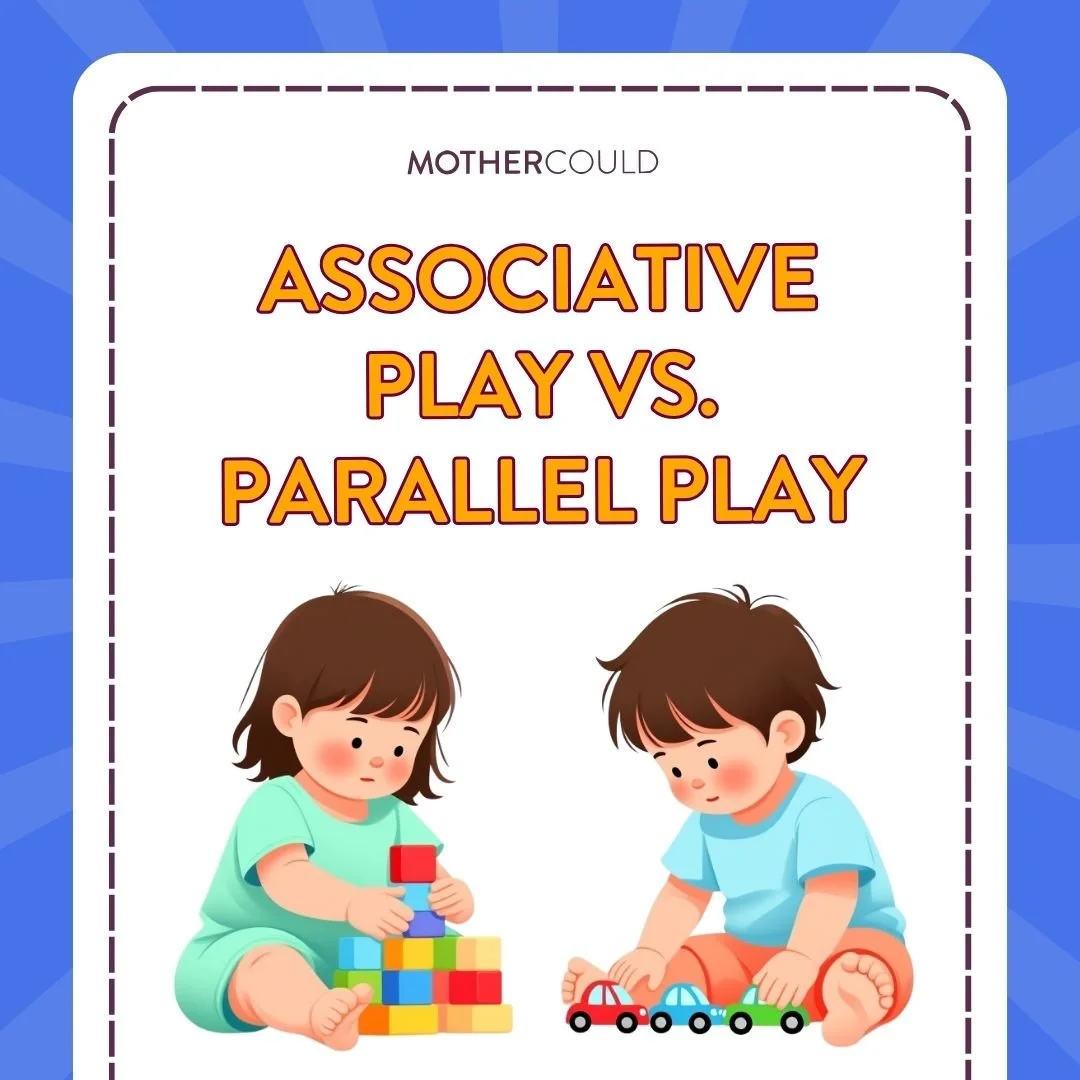
Associative Play vs. Parallel Play: What Are the Differences?
As parents, it’s so easy (and natural!) for us to analyze every tiny thing our little ones do. We just want to make sure they flourish, grow, and develop in healthy, age-appropriate ways! That’s why learning about the different play stages can help you support your child without rushing or mislabeling their development.
Here’s the good news: both parallel play and associative play are developmentally appropriate. The older children get, the more often they engage in social play. That’s why different types and stages of play tend to overlap! Some children shift play styles more quickly, some more slowly, but that doesn’t mean development is off track, or one child is developing “better.” It simply means they’re developing at their own pace!
And it’s our job to support that. When we do, we can help children thrive socially, emotionally, and mentally. So, let’s look a bit closer at why play is important, what the different types of play are, and why those key details matter:
What Is the Importance of Play in Early Childhood Development?
I’ve covered everything from the benefits of sensory play and the skills arts and crafts help develop, to how to encourage independent play and make learning fun. Because, when looking at the big picture, play is so incredibly important to childhood development!
Of course, we know that playtime encourages creativity, imagination, and activity immersion. However, the benefits extend far beyond that! Play actually supports language development, social skills, emotional regulation, and problem-solving skills.
And, as I’ll discuss in a second, children begin practicing interaction before they can even fully communicate or cooperate. So, while it can be fun and exciting, play is actually fantastic for helping your child learn, grow, and develop into a confident, capable learner.
What Are the Different Types of Play?
There are actually six formally recognized stages of play throughout early childhood development. Each describes expected levels of social interaction and play behavior, and each develops at a unique pace! Here’s what those six play development stages look like:
Unoccupied Play (birth–3 months). At this stage, babies are just learning how to move their little bodies! They may wave their arms, kick their legs, or sit back and observe what’s going on around them. It doesn't look like traditional play, but it’s crucial for spatial awareness and sensory-motor development.
Solitary Play (0–2 years). During solitary play, children will focus on their own activities without involving others. This isn’t a form of isolation! They’re just completely absorbed in self-direction exploration as they manipulate objects, explore materials, and test their own abilities.
Onlooker Play (18 months–3 years). If your child will watch other children playing without joining in, this isn’t due to a lack of social skills. Onlooker play is actually essential for kids to build confidence, develop emotional skills, and observe social cues. They’re interested in playing, but they first watch others to understand the rules, routines, and dynamics.
Parallel Play (2 years). During parallel play, children will play around each other without directly interacting, engaging, or sharing. It’s not because they don’t want to play together; they’re just not there quite yet! They’re learning to comfortably exist around their peers, developing a sense of trust.
Associative Play (3–4 years). Throughout associative play, children may interact, share materials, and play alongside each other without a common goal. They take turns, communicate, problem-solve, and become more comfortable while still enjoying their own activity.
Cooperative Play (4 years). At this stage, children begin working and playing together to reach a common goal. They’ll begin assigning roles, learning conflict resolution, and collaborating on projects!
What Is the Difference Between Associative and Parallel Play?
Levels of Interaction
In associative and parallel play, there are key differences in how much children interact with one another. In parallel play, for example, children may sit side by side, but they won’t share toys, communicate, or discuss each other’s projects. Physically close, socially independent!
On the other hand, children who engage in associative play will interact. They’ll discuss what they’re doing, occasionally focus on each other’s activity, and sometimes, even share materials! They’re not quite working on a common goal just yet, but they are engaging with their peers as they do their own thing.
Use of Materials
As I mentioned above, the type of play impacts how willing children are to share their toys. In parallel play, kids generally tend to stick to side-by-side companionship without exchanging materials. During associative play, you’ll often see kids sharing materials, trading items back and forth, and mimicking each other’s actions.
It’s important to note: the lack of sharing in parallel play isn’t a behavioral issue! So don’t feel like you necessarily have to correct this. Instead, each child is simply learning how to play alongside others while exploring their surroundings independently.
Social Awareness and Cooperation
Associative play, naturally, shows a higher level of social awareness. Children interact directly, converse, and share their toys without being told. And here’s the major difference: kids are interested in playing with their peers!
On the other hand, parallel play showers a lower level of social awareness—but that’s entirely normal. Generally, kids are aware that they’re around their peers. However, they’re just not too interested in interacting, sharing, or communicating yet. Both stages are natural, and children will eventually transition into the next stage with time.
Typical Age Ranges
Parallel play comes before associative play, generally occurring between 18 months and 3 years. Then, as children reach the 3–4 year mark, they slowly transition from independent play to enjoying social interaction. Additionally, activities typically remain separate even in associative play, since kids don’t transition to cooperative play until a bit later.
Remember that every child is different. If your 3-year-old is still slightly distant socially, that doesn’t mean anything is “wrong!” They’re developing at their own pace, on their own path, and at their own comfort level.
What Is Associative Play in Early Childhood?
Associative play is when children interact, share materials, and communicate without following any structured roles or rules. You may find them mimicking each other’s actions, using similar colors on art projects, or using the same materials in crafts. That exchange in creativity is truly incredible to witness!
Unlike cooperative play, however, as I mentioned earlier, children don’t typically follow any specific rules just yet. They play next to, around, or with each other, but they’re not working together on one single project or activity.
Here’s a quick overview of why associative play is so important in childhood development:
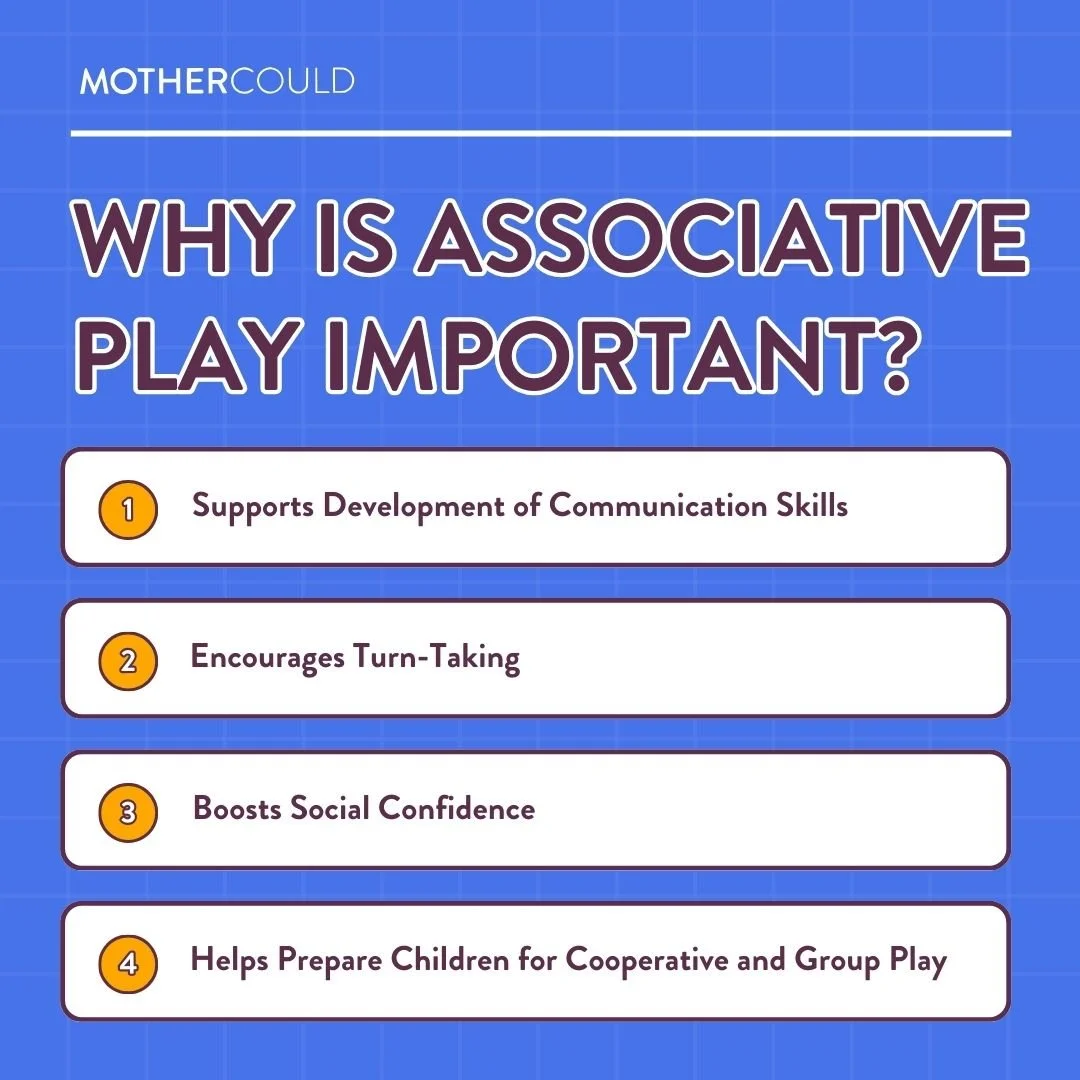
Why Is Associative Play Important?
Supports Development of Communication Skills
By toddler ages (ages 1–3), many parents are beginning to incorporate language and literacy activities. This is a huge developmental milestone! And, fortunately, associative play helps encourage language development through simple, straightforward interactions.
Children will begin asking how and why questions, discussing materials as they share them, taking turns, and reading nonverbal cues. And, through talking with peers, they’ll slowly begin to learn new words, concepts, and behaviors—all of which encourage vocabulary expansion!
Encourages Turn-Taking
When playing independently, children don’t have to navigate taking turns, sharing materials, or collaborating in activities. While beneficial for fostering autonomy, it doesn’t offer many opportunities to cooperate or navigate conflicts.
Associative play, on the other hand, naturally introduces these skills. Children learn to play together, share materials, wait their turn, and respond to others’ actions. Through these simple interactions, they begin to learn patience, flexibility, and how to handle disagreements in age-appropriate ways.
Boosts Social Confidence
As adults, interaction is part of our daily lives. We talk to bank tellers, grocery store clerks, and teachers without much of a thought. For kids, communication with peers is an entirely new concept! It can feel stressful, overwhelming, and intimidating.
Associative play bridges this gap by placing them in a structured environment where they can voluntarily interact with others. This small level of control encourages them to express themselves at a pace they’re comfortable with. Over time, this slowly builds their confidence by making them feel capable of conversing, making friends, and collaborating on small tasks.
Helps Prepare Children for Cooperative and Group Play
Remember that following the stages of play, cooperative play eventually appears shortly after associative play. So, over time, children begin learning how to work together toward shared goals, follow rules, and collaborate on larger projects during play. These early experiences are essential for fostering teamwork in a way that feels natural, safe, and reassuring.
When Does Associative Play Begin?
Associative play typically begins around 3–5 years old. However, this isn’t true for every child! Some kids may show signs earlier or later—both are completely normal. It ultimately depends on their temperament, exposure to peers, and level of comfort within their environment.
For example, a 3-year-old who regularly spends time around other children may move from parallel play to associative play a bit sooner. Maybe they have siblings, or maybe they’re in daycare! At the same time, children who aren’t around many kids their age may spend a bit longer in the parallel play phase. Development is incredibly unique, and not all children follow the same path.
Associative Play Examples
Associative play can take many different forms, but here are a few common examples you may recognize:
Arts and Crafts: Children may share markers, crayons, or colored pencils, but they’re drawing their own pictures. They’ll also occasionally discuss what their pictures are, or copy ideas from each other!
Physical Activities: Kids may ride bikes together, but they’re not racing, competing, or focusing on what others are doing.
Sandcastles: Kids will create sandcastles together, using the same materials and discussing similarities and differences in shape. However, they won’t be creating one big castle.
Pretend Play: Children will create a common “theme,” like playing house or restaurant, but they won’t assign roles. (That’s more aligned with cooperative play!) Instead, they’ll just kind of “exist” in each other’s imaginative worlds as they do their own thing.
What Is Parallel Play in Childhood Development?
Parallel play is when children play side-by-side with similar toys or activities, but they don’t directly interact with one another. Instead of sharing toys or communicating during activities, they focus on their own task while still enjoying the presence of other children.
I’ve mentioned this previously, but parallel play is not the same as social isolation—it’s a development stage! It’s easy to watch your toddler play independently surrounded by other kids and wonder why they’re not interacting. However, know that this is completely normal, expected, and natural. They’re not “delayed” or “falling behind.” They’re simply learning the first step in developing social skills: feeling comfortable in group settings.
Here is when parallel play typically occurs and why it’s so important in childhood development:
When Does Parallel Play Start?
Parallel play typically starts around 18 months to 3 years old. Just like with associative play, though, this is a general estimate, not a strict guideline. Some children may spend a little extra time enjoying parallel play, and that’s completely fine!
Ultimately, it demonstrates a toddler’s willingness to remain independent while exploring the idea of playing around peers. And, honestly, this is one of the best ways to encourage children to learn and develop social skills. At this age, they can choose when they’re ready to start actively engaging.
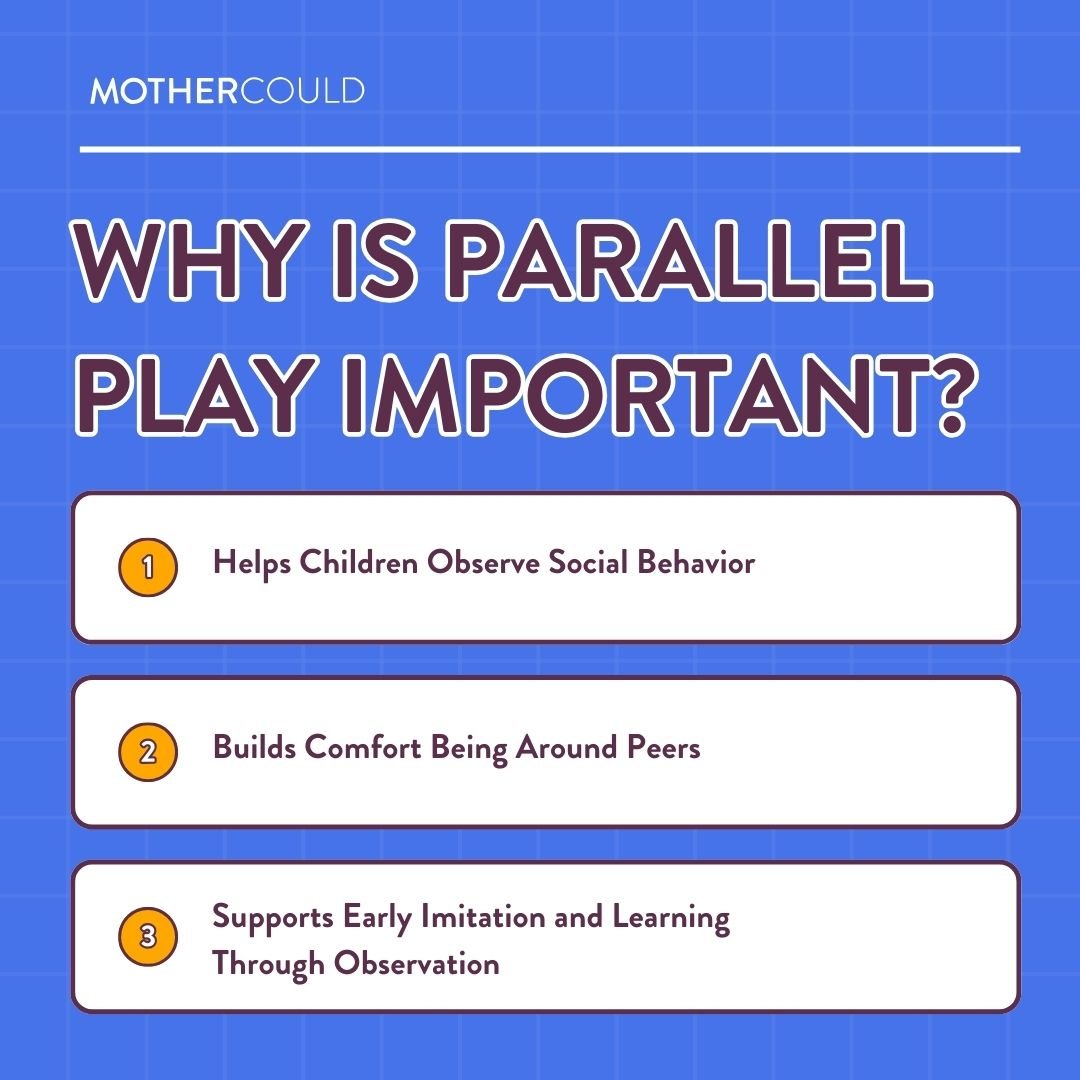
Why Is Parallel Play Important?
Helps Children Observe Social Behavior
Although it’s not yet collaborative, while playing, children learn to observe other kids’ behaviors without feeling pressured to interact. As they manipulate their own materials and engage in their own activities, they can also watch their peers play.
Maybe the child next to them stacks blocks differently. Or, here’s a different approach! Maybe the kids they’re sitting with acted out and got a toy taken. In either case, they can analyze social situations, mimic actions, and interact without pressure.
Builds Comfort Being Around Peers
Sometimes, the idea of being in the same environment and having to interact can feel overwhelming. This is especially true for toddlers who don’t have too much experience socializing yet! Parallel play encourages them to share space without feeling forced to interact.
By playing side-by-side, children become more comfortable being around others at their own pace. Over time, this low-pressure exposure helps build confidence and a sense of safety—two key factors in laying the groundwork for future social interaction!
Supports Early Imitation and Learning Through Observation
Children are incredibly observant—which, as many parents know, is a good and a bad thing! (Depends on the day, right?) However, this doesn’t just apply to our behaviors; it applies to their peers’ behaviors, too!
Your child may be navigating their own task, but they’re constantly scanning the room to see what others are up to as well. Take stacking blocks, for example. Maybe they begin stacking blocks from left to right, and they see another kid stacking blocks from right to left. They’ll mimic this action, which directly boosts creativity and encourages the development of new motor skills!
Parallel Play Examples
Just like with associative play, parallel play can look different depending on the structure, setting, or activity. However, here are a few common, real-life examples of parallel play:
Stacking Blocks: Two kids may sit together as they stack and manipulate blocks, but they won’t talk, share ideas, or collaborate. Instead, they’ll focus on their own materials and projects.
Pretend Play: Instead of collaborating to create one shared imaginative world, children engage in separate imaginative play. One child may be playing “restaurant", for example, while the other plays with a dollhouse next to them.
Arts and Crafts: When playing with homemade play dough, children will typically prefer their own colors to craft with. They don’t generally enjoy sharing their materials and don’t talk much while crafting.
Sensory Table: Two children will play with the same sensory table, but they won’t play in the same section. One may scoop rice while the other squeezes taste-safe squishy blocks!
Associative play and parallel play are two unique phases of social development that are natural, important, and unique.
Watching your child play and analyzing every little thing? Been there, done that. It’s natural as a parent to wonder where your child lies developmentally. However, there are many phases of social development, and parallel and associative play are just two of them. The best way we can support growth is by understanding these stages and allowing the kids the time, space, and energy to move through them at their own pace.
In my book, Playful by Design, I actually talk all about the importance of independence and self-reliance! With a little patience and structure, my kids don’t just engage in self-directed play; they prefer it. And, in turn, this gives me the time and space to catch my breath! Available in physical, e-reader, and audiobook formats, order Playful by Design today to learn more.
Looking to learn even more about your child’s development? Head to the Mothercould blog! I offer helpful parenting advice, kid-friendly recipes, and plenty of resources you can use through every stage of development. And, of course, don’t forget to join the Mothercould In Your Pocket resource! As soon as you join, you can access play recipes using common household items, 60+ printable recipes and guided tutorials, and effective clean-up strategies for those messy play days.