HOW TO TEACH KIDS HEALTHY STUDY HABITS FOR SCHOOL SUCCESS
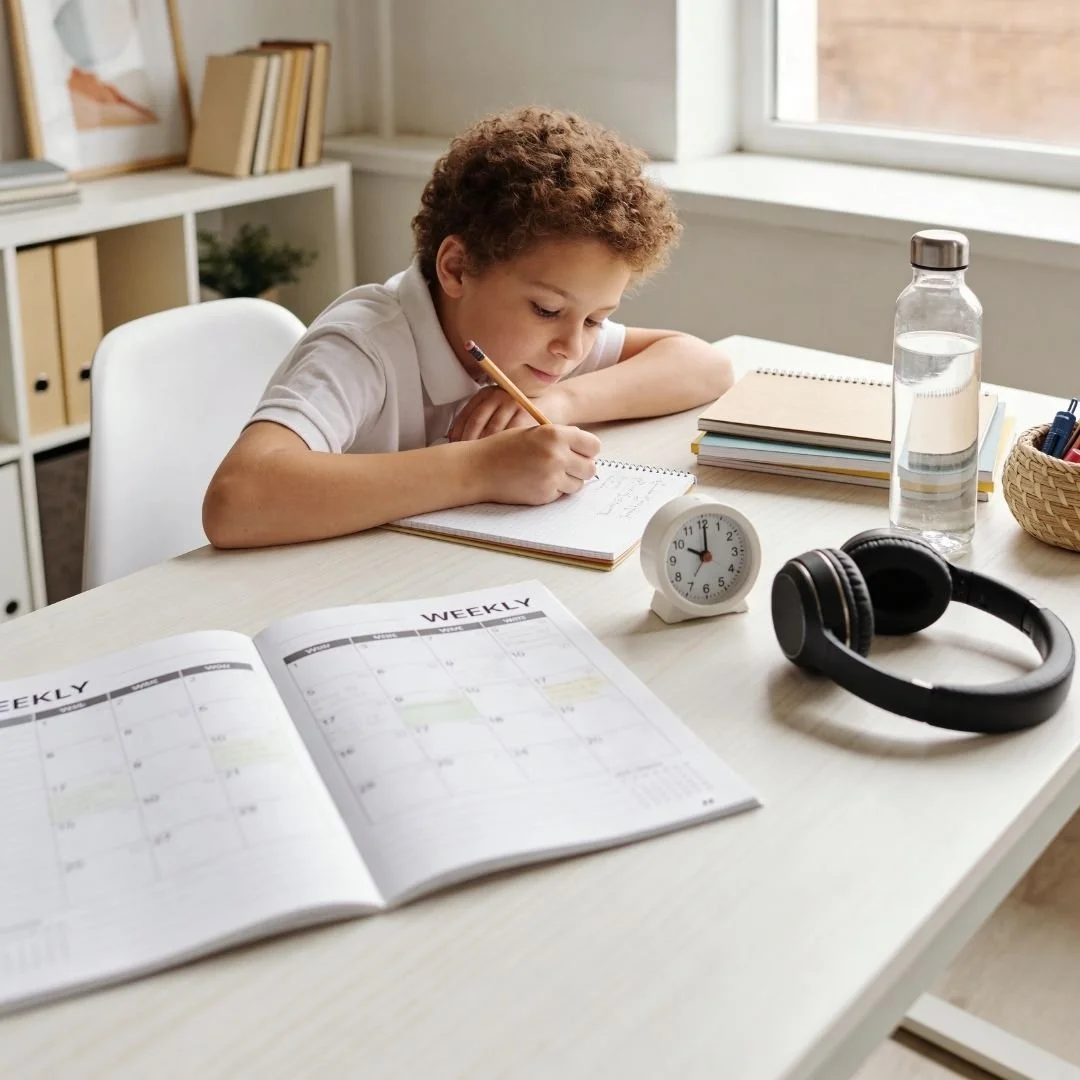
If you’ve ever felt like teaching kids healthy study habits was one of the hardest jobs as a parent, you’re not alone in that! Homework battles, a total lack of focus, and inconsistent routines can make even the simplest assignments feel overwhelming. Oh, and worst of all, procrastination. Month-long projects turn into last-minute deadlines, leaving the whole house scrambling!
Good news: It’s completely normal for kids to struggle with studying. It’s a skill they have to develop, build, and work on over time! Even better news? It’s actually surprisingly easy to help kids build healthy study habits. Small daily practices not only build long-term academic confidence and success; they also help create a consistent routine, structure, and age-appropriate skills.
In this post, I’ll share practical strategies that you can begin implementing to help your kids develop good study habits. I’ll also share research on why these strategies are so helpful and why it matters to start early. It’s time to reduce that school year stress for you and your kiddos!

How to Teach Kids Healthy Study Habits for School Success
This isn’t the first (or last!) time I’ve discussed teaching kids important skills in easy, approachable ways. From “How to Teach Kids How to Write” to “How to Teach Kids Patience,” I’ve developed a pretty solid framework for making big concepts feel doable. And that’s because I’ve been there! Which I actually talk ALL about in my book, Playful by Design. I’ve learned that most skills kids struggle with aren’t about ability—they’re about structure and consistency.
And, when it comes to studying, the habits kids form now will carry them through middle school, high school, and beyond. So, let’s shift our focus for a second. Instead of thinking about report cards and letter grades, though those do matter, let’s focus on strategy.
I’ll discuss what study habits are, why they’re important, and how to create a study system that works for your kids. Remember: effective study habits aren’t about perfection; they’re skills built through time, dedication, and consistency.
What Are Study Habits?
Study habits are consistent behaviors, routines, and strategies children learn to acquire, retain, and recall information. And they don’t always look the same for everyone! Some kids are born with a stronger verbal memory, while others have fantastic auditory processing skills. In this case, these two children may have entirely different studying strategies. That’s the beauty of learning! Everyone is unique.
However, studying is still a skill that must be taught and practiced regularly. It’s generally not something you can simply encourage your child to do without guidance, structure, and repetition. With this in mind, though, academic success isn’t the only benefit here!
Over time, healthy study habits help kids learn time management, organization skills, note-taking techniques, and the importance of break management. (AKA, treating rest as self-care, not a reward!) Aside from these general benefits, let’s look at a few more examples of why good study habits are so important.

Why Are Good Study Habits Important?
Promotes Independence
The more your child develops good study habits, the more independent they become. By encouraging them to maintain a schedule and stay consistent, they slowly begin to take ownership of their learning. No more constant reminders, last-minute stress, or late-night study sessions—learning becomes a self-driven habit.
And, as I discuss (deeply!) in my book, Playful by Design, independence is a skill that extends far beyond the classroom. It fosters confidence, resilience, and motivation, all things that reduce the fear of failure and boost self-reliance.
Reduces Stress
For most kids, school is stressful! We can introduce science to toddlers and find math tricks that make numbers click, but learning these concepts in a classroom-based setting can quickly become overwhelming. Good study habits silently reduce that stress, helping children feel capable and prepared.
Breaking larger tasks into smaller ones makes them feel more manageable. Taking breaks keeps the brain fresh and attentive. Keeping things organized reduces mental clutter. And research shows that the more effective the study habits are, the lower the stress levels become.
Helps Develop Executive Function
Executive function skills are like a toolbox, and every “skill” has a job. Planning, remembering instructions, staying focused, and switching tasks—each works together to get a job done. It’s not a measure of intelligence; it’s a set of skills that encourage self-management!
And for studying, that makes a huge difference. Research found that ultimately, executive function skills are both crucial to school readiness and early achievement. These skills help children start tasks, remember what they’re supposed to be doing, and regulate overwhelming emotions. Combined, these are all important factors for developing—and managing—healthy study habits over time!
Encourages Stronger Problem-Solving Skills
A big part of academic success is trial and error. It’s how children learn to view mistakes as opportunities and develop a growth mindset! And with trial-and-error comes problem-solving. Building good study habits helps children understand the why, not just the how.
And by knowing this, complex problems become less about simply getting it “right.” They become opportunities for children to use their cognitive focus to analyze problems and apply what they’ve learned! Which truly does matter as children continue to learn more complex concepts.
Improves Academic Confidence
Everything we’ve discussed so far—independence, reduced stress, executive function, and problem-solving skills—all factor into confidence. When children feel confident about school, they’re more motivated, more excited, and more willing to develop healthy study habits. They don’t view it as a chore; they view it as a routine they feel prepared for.
As I’ve discussed before, the more children become familiar with something, the more comfortable they feel! This goes for exploring textures through sensory play and baking with simple ingredients to math concepts and learning the alphabet. Consistency is the stepping stone to a love of life-long learning!
How Early Should We Be Creating Study Habits in Kids?
Honestly? The earlier you create study habits in kids, the better! And it doesn’t have to be anything complex; effective study habits vary by age.
For kindergarteners, it can look like creating distraction-free spaces and incorporating fun, hands-on play. For early elementary schoolers, you can begin incorporating short breaks and dedicated “homework times.” It matters less about what you do and more about how you do it.
For example, you may hand your 6-year-old a Back to School Printable Activity Pack full of colorful, hands-on activities to help them practice the alphabet, writing, numbers, and math. For your 10-year-old, on the other hand, you might focus on structured study tools like planners or assignment trackers.
When you tailor early study habits to your child’s age and abilities, you’re encouraging learning at a pace they’re familiar with. And remember, early exposure doesn’t build perfection—it builds comfort and consistency! The skills you implement now are the habits your kids will use to study for years and years to come.
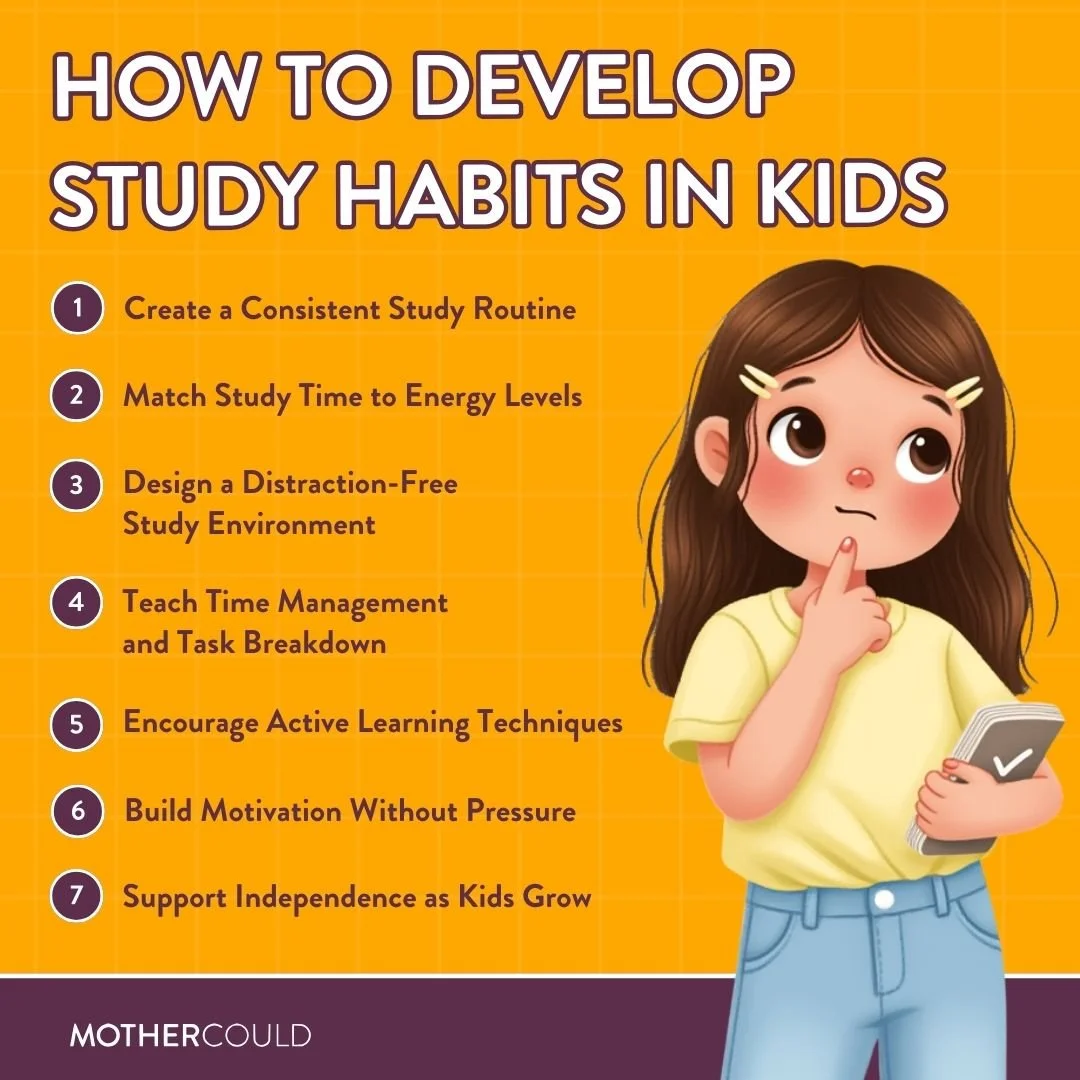
How to Develop Study Habits in Kids
Create a Consistent Study Routine
I know I’ve really been harping on consistency here, but it’s truly so important. When you set aside dedicated time to studying and learning, you directly support memory retention and discipline. Over time, that predictability helps kids know what to expect, making studying feel like an intentional part of their day.
And this routine doesn’t have to be extremely rigid! It can be as simple as choosing the same general time frame, studying in the same space, or following the same basic steps. Homemade kid-friendly charcuterie board in their Snack Box Set, homework time, review, then wrap up. It can be this easy and laid-back.
Match Study Time to Energy Levels
Sometimes your kids will feel like practicing numbers with indoor balloon tennis. Other times, they’ll prefer a relaxing Printable Alphabet Activity Pack. When you match study times to your child’s energy levels, you’re balancing productivity with understanding. And that level of attention matters in overall academic performance.
Taking necessary breaks also plays an important role in energy. If you notice your child is becoming a little fussy or irritable while studying, I know it’s easy to get frustrated. However, that’s just their brain indicating it needs a little regulation break. Take a walk outside, enjoy squishy, clear slime, or snack on some nutritious (and energy-boosting!) yogurt parfaits.
When you come back, they’ll be focused, alert, and ready to stay on track.
Design a Distraction-Free Study Environment
Speaking of staying on track, it’s time to create a distraction-free study environment! This isn’t just important for helping your child stay focused. Research shows that environmental distractions can directly affect cognitive performance! This may include noise, lighting, screens, notifications, or messy supplies.
Think about it: when a kid doesn’t want to study, they’ll take an interest in anything. So, help them stay focused by limiting distractions in their environment. Good news, though: Studies demonstrate that music can actually boost memory and focus! Just make sure to play something quiet, calm, and ideally without any lyrics.
Teach Time Management and Task Breakdown
If you haven’t heard of the Pomodoro Technique, prepare for teaching kids study habits to become a whole lot easier. And don’t worry, the process is extremely straightforward!
Begin a task, set a timer for 25 times, study consistently, and then take a 5-minute break. After 4 rounds, take a 15–30-minute break to let the brain get a little R&R. This is particularly effective for children because it lines up with their attention span. It breaks otherwise lengthy tasks into shorter, bite-sized segments, making it feel easier to manage!
Plus, research shows that the better time management children develop, the more effectively they can spend this time. It’s a study schedule that keeps kids engaged, excited, and encouraged.
Encourage Active Learning Techniques
Everyone learns in different ways. As I mentioned earlier, some children are fantastic visual learners, while others simply aren’t. That isn’t a “bad” thing! There’s no right or wrong way to learn.
However, active learning is significantly more beneficial when developing study habits. Which, if you’ve been part of the Mothercould community for a while, you know how helpful activating the entire brain is! Active learning is a process where children directly engage with the material rather than passively read it. This includes flashcards, reading outloud, summarizing concepts in their own words, and teaching the material back to you.
In fact, researchers are finding more and more that active learning methods outperform passive ones in many cases. The benefits? Deeper cognitive engagement, long-term retention, and improved critical thinking. It’s truly incredible!
Build Motivation Without Pressure
Don’t get me wrong, grades are important! However, when you’re teaching kids healthy study habits, especially early on, effort will matter more every time. It isn’t practical to expect kids to start as study pros; their little brains are learning so many new things! With this in mind, set realistic goals and positively reinforce their performance.
And positive reinforcement doesn’t have to be a fun toy or a special treat! It can be as simple as, “I see how hard you worked on this problem, and you did an incredible job.” Or it can be high-fives, sticker charts, or a little extra arts-and-crafts time. Over time, this reduces anxiety, promotes emotional safety, and fosters a growth mindset.
Support Independence as Kids Grow
The more children practice healthy study habits, the more independent they become over time. And this is a beautiful, wonderful thing! Actually, it’s what most of us hope to see as kids get older. To support this, gradually reduce parental involvement and teach kids self-checking skills.
In the beginning, you can encourage this by creating pre-made checklists, listing all of the tasks your child needs to complete while studying. Putting their name on the paper, answering all the questions, circling correct answers—all are fantastic examples of self-checking! With enough practice, kids begin to take ownership of their routines, needing fewer reminders and less hands-on support.
If you want a little extra encouragement in this department, make sure to check out my book, Playful by Design! I walk parents and caregivers through all of the fun, supportive ways they can encourage independence—and earn time for themselves again.
Healthy study habits aren’t just important for academic success; they encourage confidence, independence, and self-assurance, too!
Teaching your kid effective study habits can definitely feel like a daunting challenge. Every child is different, which means their learning styles, techniques, and skills are different, too! However, with the right strategies, studying begins to feel less like a chore and more like an encouraging, exciting part of the day.
If you’re interested in other ways to support your kiddo’s growth and development, check out my book, Playful by Design! I know how difficult it can be to feel like you’re fostering your children’s growth and still dedicating time to yourself. That’s exactly why I figured out how to balance both—and wrote a book about it! Your kids are the best versions of themselves when you support their independence, and you’re the best version of you when you get a second to breathe.
On the Mothercould blog, I have so many other dedicated guides to making parenting easy, fun, and stress-free. From squishy sensory activities to keepsake-worthy arts and crafts, there’s something for every kid to enjoy. (Plus, parents, you’ll enjoy my weekly favorites and holiday gift guides!) And, of course, join the Mothercould In Your Pocket resource for 60+ printable recipes, guided play tutorials, and pre-made home and travel kits. See you in the next post!