10 LANGUAGE AND LITERACY ACTIVITIES FOR TODDLERS (AGES 1–3)
What if I told you that when you’re planning language and literacy activities for toddlers (ages 1–3), you don’t need structured lesson plans or formal worksheets? And what if I told you that research shows a positive relationship between play and early literacy development? It sounds too good to be true—but it isn’t!
Toddlers develop language incredibly fast, often saying their first word around 9–12 months. From there, they move through rapid language growth spurts—learning new vocabulary, forming simple phrases, and finding new ways to communicate about the world around them. One of the most effective ways you can support this stage of development is through simple, play-based activities.
And the best part? Finding play ideas, crafts, and activities doesn’t have to feel hard—or time-consuming. I’m rounding up the best age-appropriate language and literacy activities for toddlers that help build vocabulary, strengthen early literacy skills, and support language development. Each idea is perfect for 1–3-year-olds and fits seamlessly into daily routines!
10 Language and Literacy Activities for Toddlers (Ages 1–3)
I’ve shared the importance of practicing science with toddlers and teaching numbers through play—but what’s the one skill that supports both? Language exposure. To read, write, and comprehend topics, children generally need a foundational understanding of language and literacy.
For the most part, toddlers benefit from repetition, interaction, and real-world language use. No surprise there! But that doesn’t mean all learning experiences are toddler-appropriate. The most effective approach is blending sensory play, hands-on activities, and natural language exposure. Yes, you can make learning fun!
Before we explore language and literacy activities, let’s first discuss why early childhood development is so important. Once you understand its impact, picking activities becomes all the more exciting!
What Is Language and Literacy Development in Early Childhood?
Language and literacy development in early childhood refers to how young children learn to understand and use language to communicate. This skill actually begins at birth! It’s why so many babies find their mother’s voice, tone, and rhythm so comforting. In fact, research shows that a mother’s voice promotes the development of language pathways!
Early language and literacy development is also why babies begin trying to communicate through little noises, cries, and facial expressions. They want to talk—their tiny brains just don’t know how to make it happen yet!
To be more specific, this is the difference between receptive language (what children understand) and expressive language (how children communicate). On average, children actually develop receptive language long before expressive language. So even if they can’t respond with words or sentences yet, they can identify objects, follow directions, and recognize emotion in voices.
Enter: vocabulary growth, sound awareness, and early narrative skills. Toddlers can generally recognize rhymes, identify beginning sounds, and understand that stories have a beginning, middle, and end.
As you can see, literacy begins long before toddlers open storybooks and read actual words. It begins with listening to conversations, engaging with their environment, and experimenting with sounds through play.
What Are the Benefits of Language and Literacy Development for Toddlers?
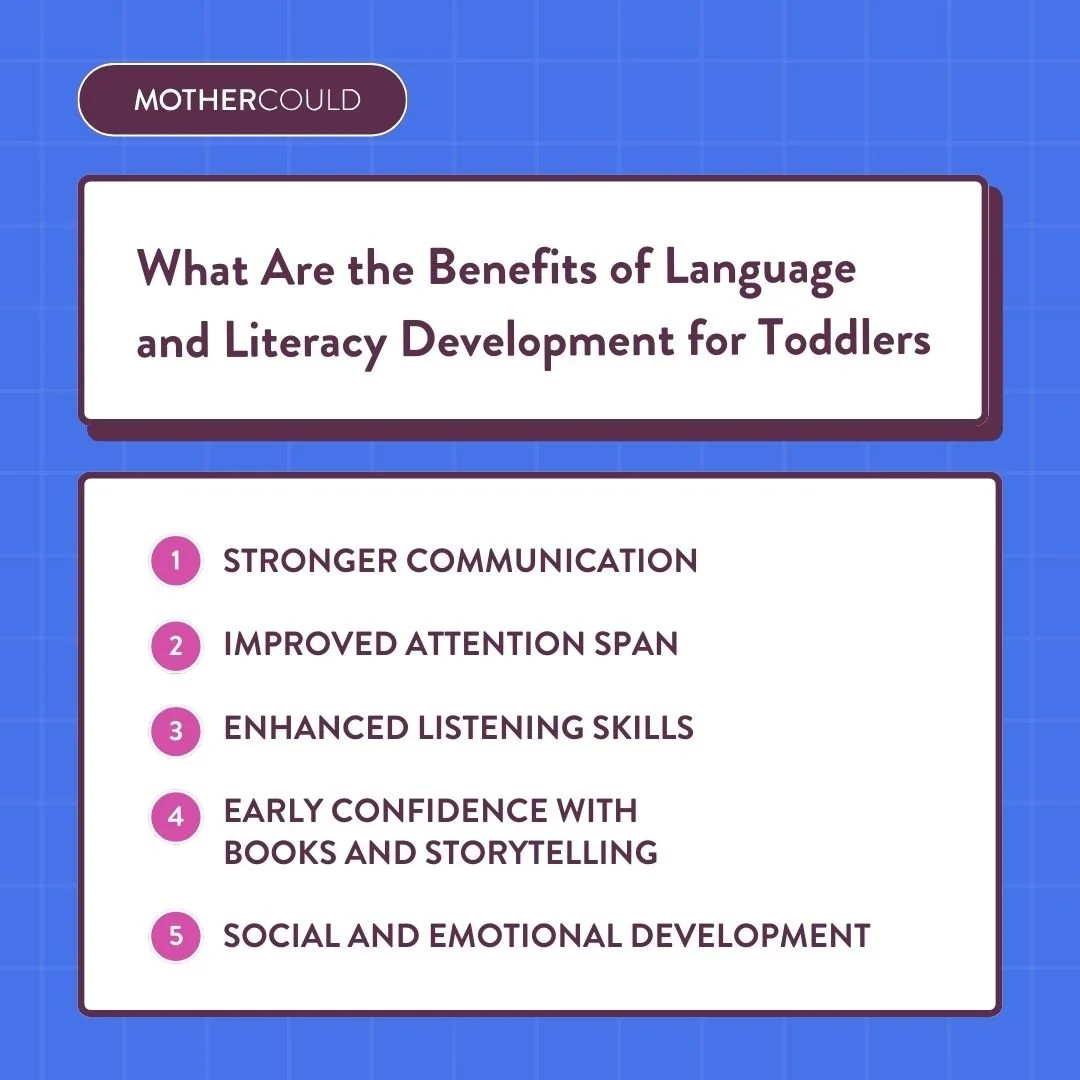
Stronger Communication
The more children learn, the more they expand their vocabulary and enhance comprehension. This allows them to express their needs, wants, and emotions much more effectively. And by doing this, it reduces frustration-related behaviors (looking at you, tantrums!). Even simple growth can make daily routines much smoother—for parents and children.
Improved Attention Span
Language-rich activities are excellent ways to encourage toddlers to focus and pay attention. Think: singing songs and reading books together. In fact, research shows that back-and-forth conversations with toddlers are critical to language development! The better the literacy skills, the better the executive functions—like focusing, retaining information, and resisting distractions.
Enhanced Listening Skills
When children’s attention spans improve, so do their listening skills. Naturally, these two processes work hand-in-hand! When kids can process what you’re saying, their brain transitions from “hearing” to “understanding.” Over time, this allows them to follow directions, stay engaged in activities, and respond more thoughtfully.
Early Confidence with Books and Storytelling
Picture books in early childhood are excellent for introducing the connection between spoken and written words. And, of course, the colorful pictures provide visual literacy, helping littles follow along as you read. However, as they get older, they begin to understand how books work.
They recognize familiar words, learn to structure sentences, and feel the emotion behind stories. The more you read to or with them, the more confident they become in language and literacy development long before they begin reading independently!
Social and Emotional Development
As your child develops language and literacy skills, they begin to understand how to communicate themselves. Tantrums turn into conversations, which turn into emotional regulation. From there, toddlers can label and understand their feelings, helping them feel seen, heard, and supported.
Why Is Language and Literacy Development Important for Toddlers?
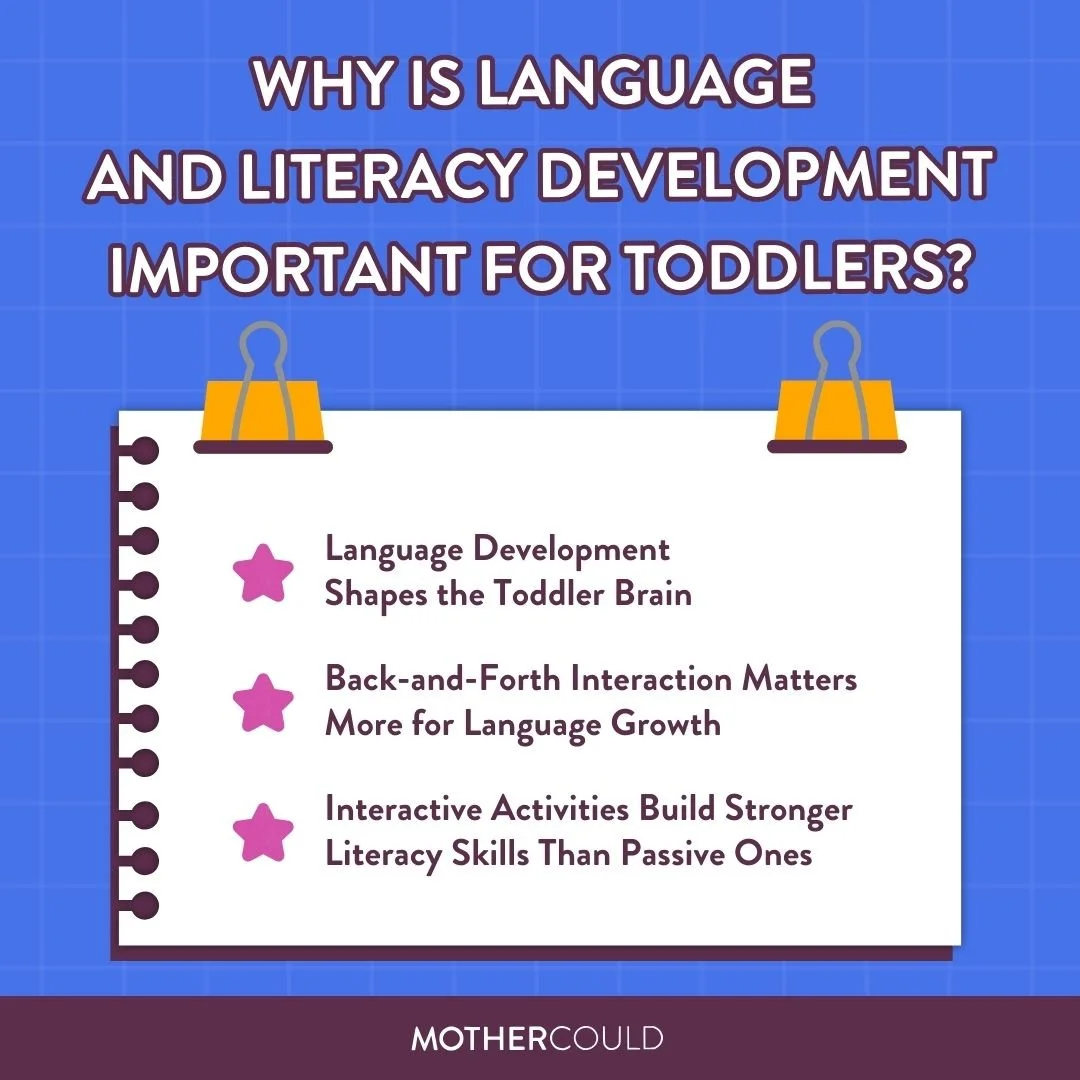
Language Development Shapes the Toddler Brain
Toddler years (ages 1–3) are a crucial period of development and brain growth—so much so that 90% of brain growth happens by age 5! This is why the earlier you can practice language and literacy skills, the better. Research shows that early language exposure strengthens neural connections and brain circuitry—particularly those involved in speech and language comprehension.
The more language toddlers hear and practice, the stronger those pathways become!
Back-and-Forth Interaction Matters More for Language Growth
I mentioned earlier that the more you converse with toddlers, the more you support their language development. And SO many studies support this! It’s called “serve and return.” As you talk back and forth with toddlers, you provide positive stimulation that their brains need.
In return, serve-and-return interactions lay the foundation for high-level cognitive development later in life. This just goes to show that what you practice now shows up later!
Interactive Activities Build Stronger Literacy Skills Than Passive Ones
I’ve said it before, and I’ll say SO many more times: hands-on activities are essential for childhood development. Regardless of what you’re trying to teach your child, when they can interact with concepts, they become tangible experiences.
And in reading, that difference really does matter! Children learn by doing. For example, when they play with slime, they learn words like “squishy” or “soft.” When they help in the kitchen, they learn how to describe temperature, taste, and smell. The more you blend hands-on learning with literacy development, the more likely toddlers are to understand, retain, and communicate those concepts later on.
10 Literacy and Language Activities for Toddlers
Alphabet and Writing Activity Pack
Worksheets don’t have to be monotonous black-and-white pages full of lengthy directions and one-size-fits-all answers. My Printable Alphabet and Writing Activity Pack is the perfect example of this!
Full of colorful activities, alphabet mazes, and lowercase trains, this resource helps children practice reading, writing, and comprehension in a way that feels fun and beneficial. And the best part? They won’t even realize they’re learning.
Check out my other Printable Activity Packs for holiday coloring pages, dot marker activities, and back-to-school bundles!
Color Mixing and Writing Bags
Mess-free and colorful, I love these color-mixing and writing bags to help my kids practice the letters of the alphabet. All this activity takes is a Ziplock bag, hair gel, and food coloring. Kids can swish and swirl the colors around as you tell them which letters to practice tracing in the squishy goo. It’s that easy!
Complete the Letter
This Complete the Letter activity is so much fun, because there’s no right or wrong way to do it! Start by writing uppercase letters on a sheet of paper, stopping exactly halfway. So, for example, you’ll write half of an “A,” half of a “B,” half of a “C,” so on and so forth.
Then, your child will complete each letter using a marker, a piece of dyed spaghetti, or rolled-out play-dough. Pro tip: let your kid choose which method is most exciting to them. This is how you keep them fully engaged!
Don’t feel like tracing every letter? No worries! I have ready-to-print pages over on the Mothercould In Your Pocket resource—all you need are your materials.
Name Recognition
Fair warning: this Name Recognition activity will require you to color on your windows. Don’t panic just yet! Using washable window paint makes everything fun and stain-free.
I LOVED pulling this activity out with Nicky when she was a baby. Because even if your littles are too young to read, they’re never too young to begin recognizing letters! Just trace letters on the outside of the window, and place foam letters inside on the window pane. Then ask your toddler to match the foam letters to the letters painted on the window.
This is an excellent way to set the stage for letter recognition, visual discrimination, and cognitive skills.
Kid-Friendly No-Bake Recipes
I know what you’re thinking… “Kid-Friendly, No-Bake Recipes? In a list of language and literacy activities?” And to that I say: absolutely! Research shows that cooking is positively related to language development—even in little ones considered delayed!
As you work through the recipe, you can ask simple questions, like “What does peanut butter feel like?” or “How does this pretzel taste?” It’s a hands-on, multi-sensory opportunity to describe textures, smells, colors, and tastes. And that’s why I love finding unique, interactive ways to teach kids fundamental skills!
Word Family DIY
If you’re teaching kids how to read and write words in the same word family, Word Family DIY is the perfect activity! And here’s the best part: you probably already have all the materials lying around. Your child will simply spin the paper towel roll, matching different letters to create different words. Fun, easy, and recyclable!
This activity is a little tricky to explain, so I definitely recommend watching my word families tutorial.
Edible Marshmallow Slime
If there’s anything that will get toddlers wanting to talk, it’s slime. And when it’s edible marshmallow slime? Suddenly, they’re describing textures, asking questions, and narrating every squish and squeeze. And because it’s taste-safe/edible, you won’t have to worry about any hand-to-mouth contact like you do with traditional slime!
Salt Dye Letter Tray
When I find opportunities to blend alphabet activities and sensory bins, I’m one happy mama! And this Taste-Safe Salt Dye Letter Tray is one I’ve kept in my playtime rotation for years. Just take a tray (or recycled shoe box), fill it up with color-dyed salt, and ask your child to practice letters.
They can be uppercase or lowercase, and you can either say the letters out loud or lay cards down next to the tray for them to copy. They’ll love the grittiness of the salt—and the noise it makes as they slide their fingers through it!
Ice Painting DIY
Sugar-free popsicles, ice exploration, fine motor skill development, and a boost in language skills all in one activity? Sign me up! With this Ice Painting DIY activity, there are limitless possibilities. I typically love pulling it out when I feel like incorporating a little process-based art into my children’s day.
However, it’s also fantastic for practicing reading, writing, and spelling! Just take a few sheets of white paper and ask your kids to use the popsicle to practice their letters. Or, if they’ve already become a letter-pro, grab a paper roll and ask them to practice writing simple words.
Easy, efficient, and taste-safe. Does it get any better?
Letter Posting Box DIY
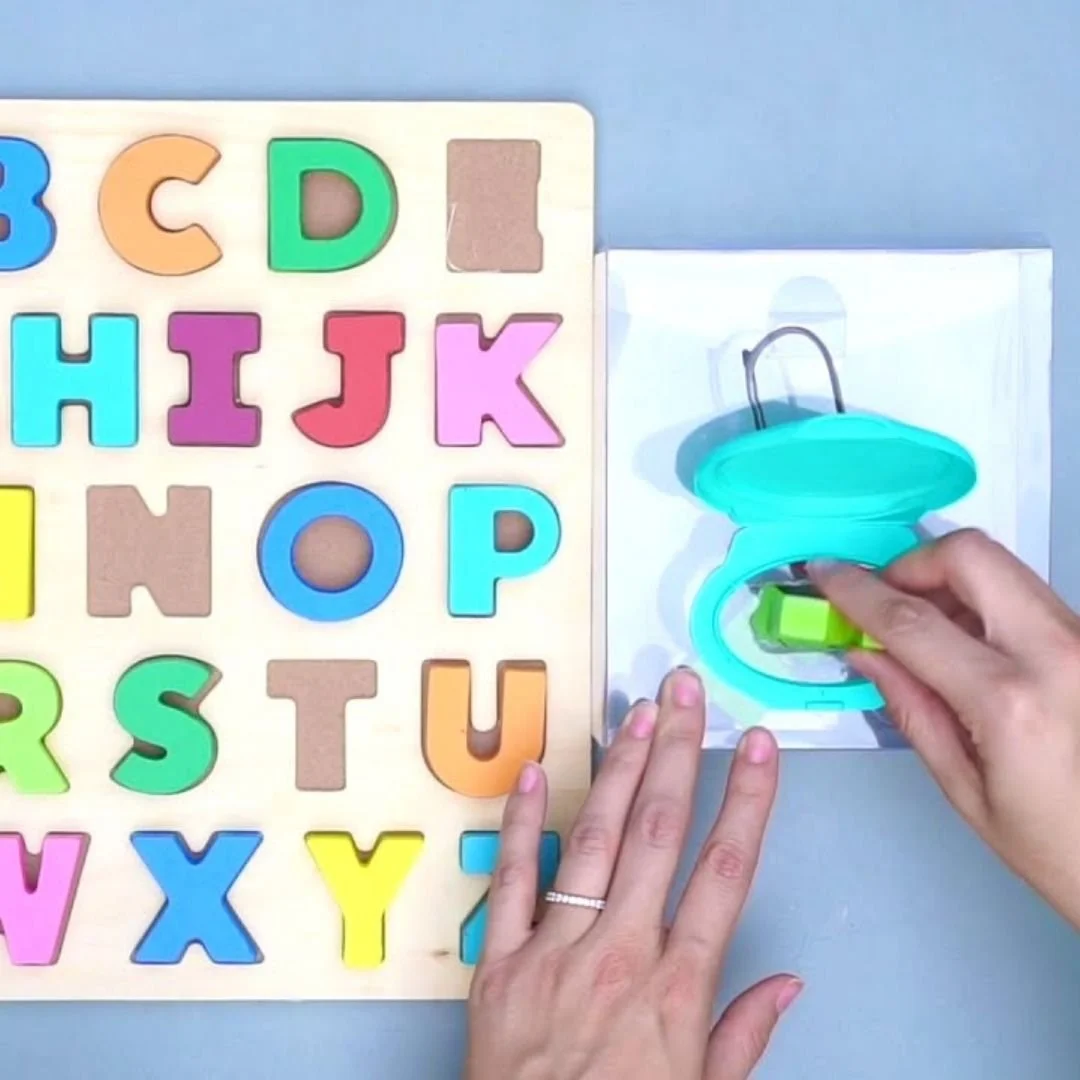
Grab your 3D letters, a plastic box, and a disposable wipes case. This recyclable activity is great for literacy development and fostering fine motor skills! To make this Letter Posting Box, glue a disposable wipes lid to a plastic box, open the lid, and make a hole in the center.
Now, your kids can insert letters into the box and watch them magically disappear. Here’s the trick, though: ask them to place certain letters inside and watch as they follow along. It’s an excellent way to support early language development while also building vocabulary skills.
When language and literacy are woven into daily play, learning feels natural, engaging, and effective.
Teaching toddlers new concepts can be challenging—I get it! But here’s the good news: it doesn’t have to be. When you find activities and play ideas that integrate developmental milestones into everyday routines, learning becomes effortless. And the best part? Children don’t even realize that they’re learning. That’s where the magic happens.
Language growth is also so important for budding independence. That’s exactly why I wrote my book, Playful by Design! Through enriching, self-directed play, thoughtfully planned play-spaces, and easy maintenance routines, children naturally become independent, confident, and self-assured. And as parents, that’s all we can really ask for!
If you loved these activities as much as I do, make sure to head over to the Mothercould blog! I share sensory play ideas, helpful cleaning hacks, and kid-friendly recipes that make parenthood as fun as it is enjoyable. And, of course, don’t forget to join the Mothercould In Your Pocket resource! I share printable recipes, guided-play tutorials, and efficient play strategies you’d wish you learned sooner. See you there!