10 FINE MOTOR ACTIVITIES FOR TODDLERS THAT MAKE LEARNING FUN
As parents, a huge part of our journey is helping our little ones learn the necessary skills for every stage of life. However, important as it may be, that doesn’t mean it’s easy! Teaching kids how to spell or teaching kids patience? Not always the most thrilling activity—for all parties involved.
The truth is, choosing activities that match your kid’s age and abilities can make a world of difference. When learning feels doable, it’s not just easier—it’s exciting! A lot of the magic in early learning, though, comes from developing fine motor skills. Those small but mighty hand and finger movements lay the groundwork for confidence in everything from playtime to everyday tasks.
But how do you help encourage fine motor development, especially to antsy littles who never seem to stay in one place? Fortunately, that’s exactly what I’m talking about today! I’ll explore a handful of fine motor activities for toddlers that make learning both fun and fulfilling. Let’s dive in!
10 Fine Motor Activities for Toddlers That Make Learning Fun
Kids start learning fine motor skills as soon as they’re born—seriously! Just in the first year, they’re already mastering things like the pincer grasp to pick up small items. I mention this to say that kids are naturally curious and want to explore. We just have to find the right ways to encourage that curiosity and support their growth.
So, consider this post “all the right ways.” I’ll talk about what fine motor skills for toddlers are, why they’re important, and how you can encourage their development. Then, of course, I’ll share all of my favorite toddler fine motor activities you can start incorporating today!
What Are Fine Motor Skills for Toddlers?
Fine motor skills are the coordination of tiny muscles in the hands, fingers, and wrists to perform simple, everyday movements. Think: using a pencil to write, holding a fork during dinnertime, or lacing up a pair of sneakers. And the earlier you teach them, the better—research says so!
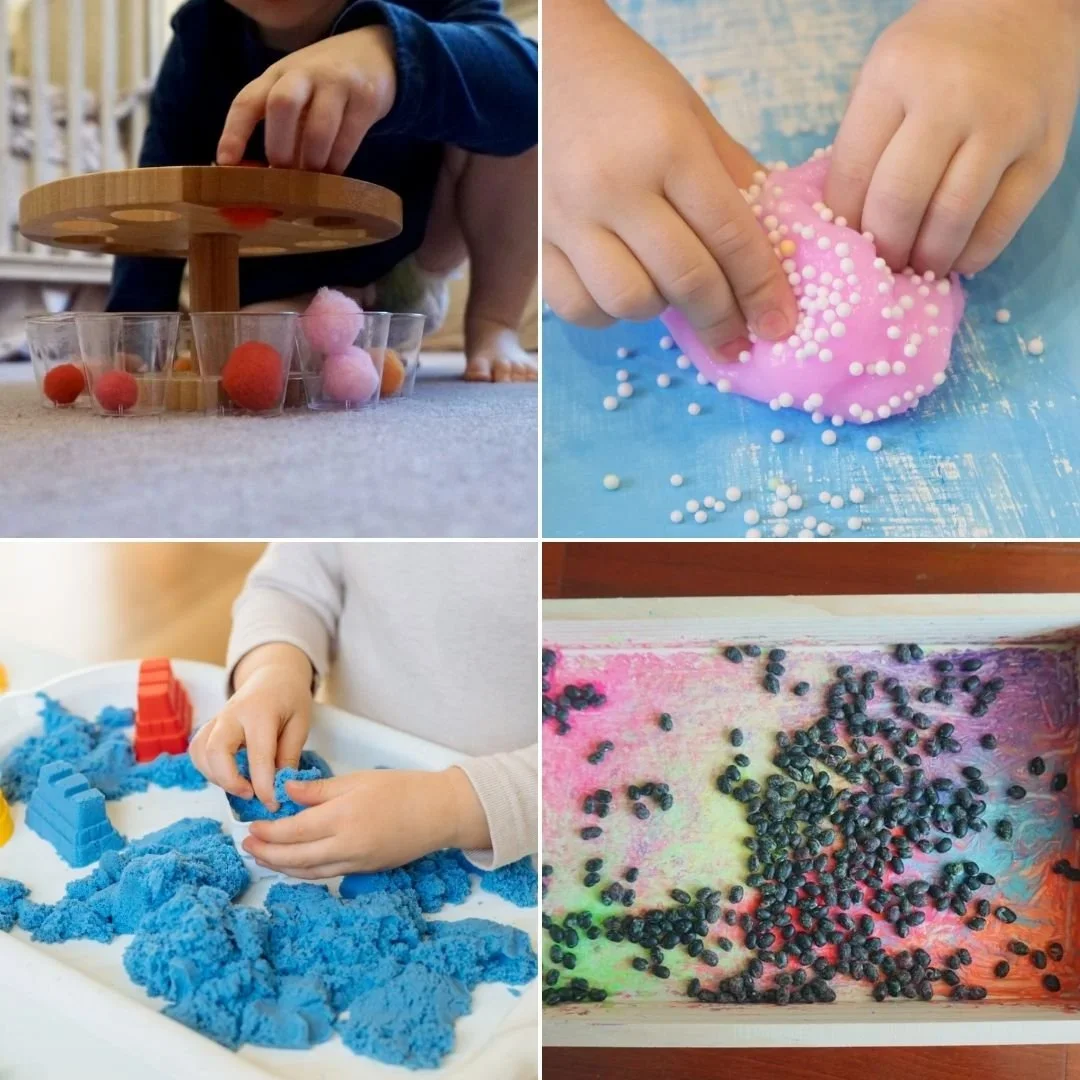
For toddlers, this may look like playing with playdough, painting with their fingers, and scooping small items out of a sensory bin. Simple, intentional movements that build hand strength, control, and confidence—essential for all the little tasks they’ll master next.
Quick heads-up: toddlers develop fine motor skills in the blink of an eye. Trust me, I wasn’t ready for it, either! One day, they’re using a palmar grasp, and the next, they’re using a pincer grasp. This improvement is wonderful to witness—and it just continues to blossom.

Why Are Fine Motor Skills Important for Toddlers?
Builds Independence: The more kids use their hands and fingers, the more they can start doing everyday tasks independently. They’ll begin to feed themselves, brush their own teeth, or even dress themselves! Those “I did it!” moments are everything in motherhood.
Prepares Toddlers for School: Before kids ever write their first letter, they need to have strength and coordination. This is super important for holding a pencil, cutting with scissors, and manipulating classroom materials. Early development sets them up for success when it’s time to start preschool and kindergarten.
Supports Brain Development: Every time your little one pinches, twists, and squeezes, their brain is hard at work. These actions strengthen neural connections between the brain and muscles, helping toddlers build on these skills as they grow.
Strengthens Hand-Eye Coordination: Whenever your kids intentionally move things around, chances are, they’re looking at what they’re doing. Whether it’s opening and closing chip clips or moving a paintbrush on a piece of paper, that attention to detail slowly strengthens hand-eye coordination.
Build Patience and Focus: Patience truly is a virtue—no matter what skill you’re trying to teach. Fine motor activities naturally slow little ones down, encouraging them to focus, be patient, and persevere through frustration.
Encourage Self-Expression: When your kids begin to do things on their own, they’re not just showing off their fine motor skills. They’re also showing you what they’ve learned, and what they can now do! These skills give them the tools they need to bring their ideas to life—boosting confidence and imagination.
Support Overall Development: Gross motor skills help kids with the big things—like running or jumping. Fine motor skills, on the other hand, help develop control, precision, and dexterity. Together, the two types of motor development create a well-rounded and confident little mover.
How to Develop Fine Motor Skills for Toddlers
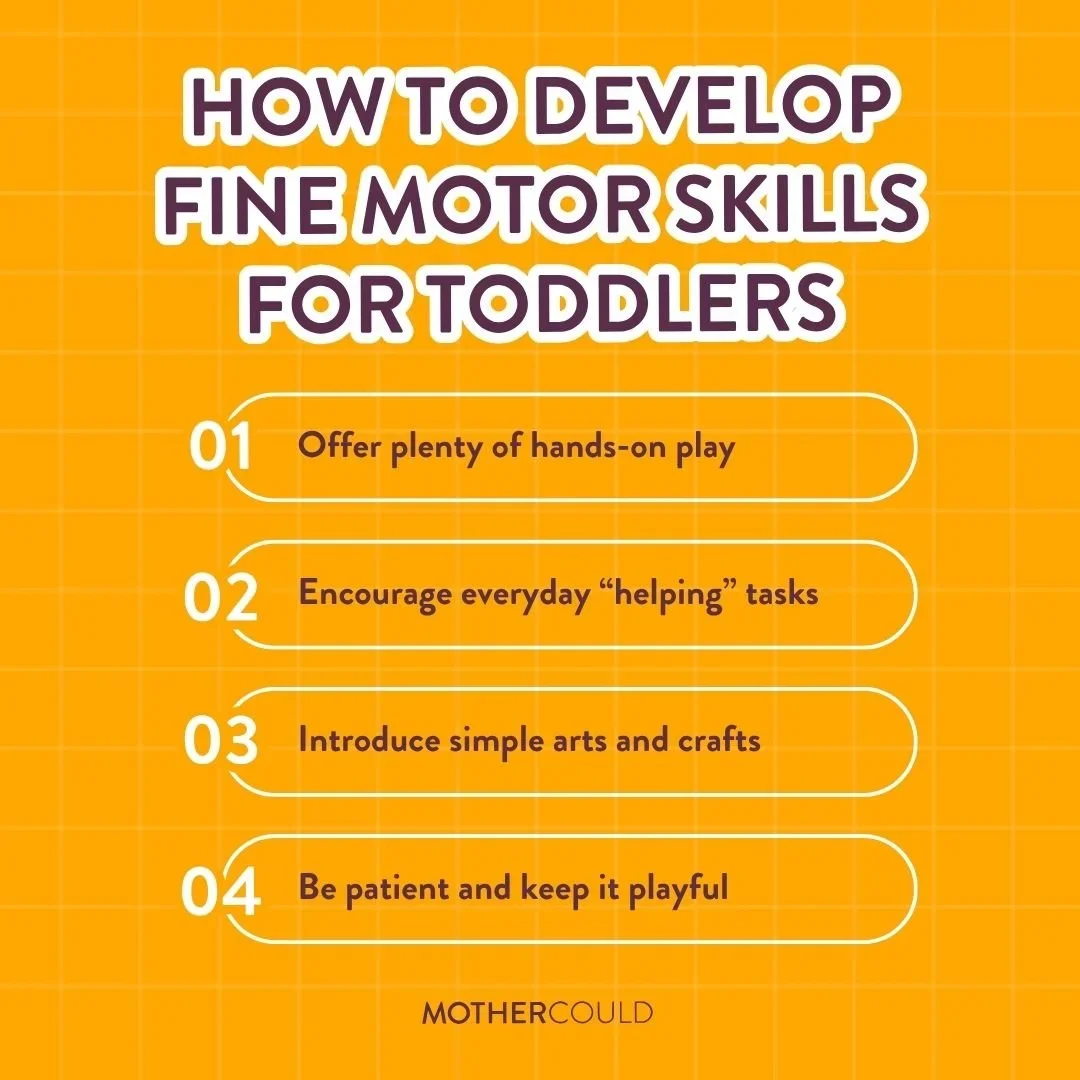
Offer plenty of hands-on play: Kids learn best through doing—also known as experiential learning. The best way for toddlers to truly strengthen their fine motor skills at home is by regularly practicing them! Encourage activities that involve opening and closing, squishing and squeezing, and cutting and tearing. We’ll explore a few below!
Encourage everyday “helping” tasks: Toddlers may not be old enough to start doing “chores” yet, but that doesn’t mean they don’t love helping out! Let your child pick up small toys or help stir ingredients while you cook. These small tasks build strength and coordination—even when they don’t realize it!
Introduce simple arts and crafts: Kids of all ages enjoy arts and crafts—especially when it’s process-based rather than project-based. Let your toddler cut paper into small pieces, learn how to hold a paintbrush, or figure out their way around stickers! Although it can be messy at times, it’s fantastic for building hand control, coordination, and creativity. Read “How Does Arts and Crafts Help a Child’s Development?” and prepare to be amazed!
Be patient and keep it playful: Every child develops at their own pace. The key is to make fine motor practice feel fun, not like work. Offer encouragement, keep activities short and sweet, and let your toddler explore freely. The more they enjoy it, the more they’ll practice—and the stronger those skills will become!
Fine Motor Skills Activities for Toddlers: Sensory Play Edition
DIY Water Sensory Bag:
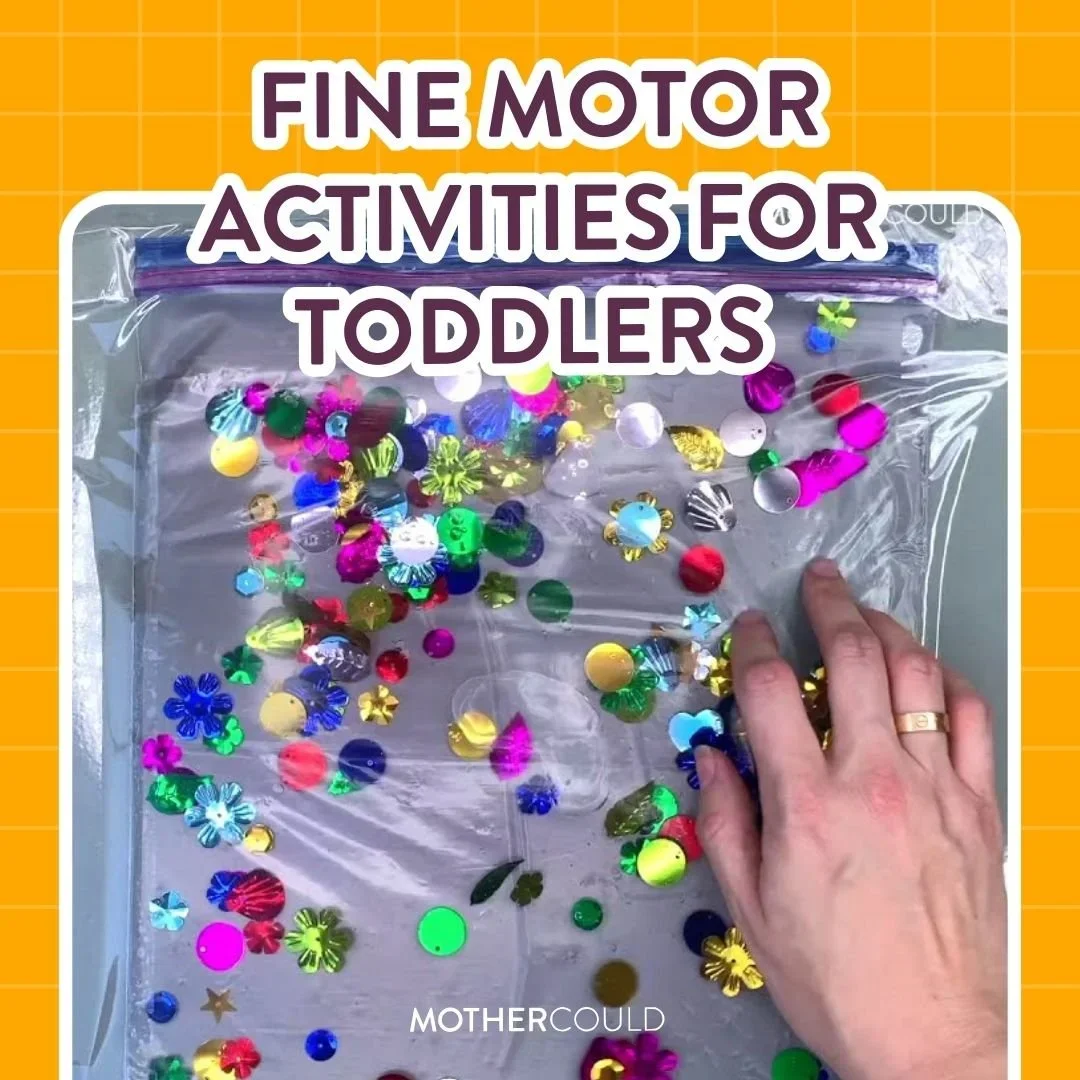
This DIY water sensory bag is developmentally beneficial and easy to set up. All you need is a gallon-sized Ziplock bag, pom-poms, glitter, confetti, and water. Kids can poke, swirl, and squeeze all the materials inside as they explore new textures and build fine motor skills.
Rainbow Play-Dough:
This rainbow play dough activity features two things toddlers and preschoolers love: vibrant colors and squishy textures. Does it get any better than that? (Trick question, it does! Just check out the benefits of play dough.)
Follow my homemade play dough recipe, layer the colors, and roll them to blend everything together. As simple as it may seem, just manipulating the dough is a great fine motor activity.
Ice Painting DIY
There are so many benefits to this ice painting DIY, and fine motor strengthening is certainly one of them! Did I mention it’s also taste-safe? Fill an ice cube tray with water and food coloring, add popsicle sticks, and freeze. Now you have a vibrant activity that little ones can practice their tripod grasp with!
Sensory Bin Play
Whether little ones use small tools or explore with their fingers, sensory bin benefits are unmatched.
Scooping, pouring, grasping, and sorting allow kids to practice everything from fine motor control to hand-eye coordination. Plus, there are so many ways to customize bins for different interests, age groups, or target areas!
Playing with Slime
You may not be the biggest fan of this material, but once you learn about all of the benefits of playing with slime? You won’t be able to incorporate it enough.
Everything kids do with slime—roll, stack, squish, squeeze, and flatten it—are fine motor skills in action. Plus, it’s fantastic for stimulating the senses and encouraging independent play. Check out “Different Types of Slime” for some inspiration!
Fine Motor Skills Activities for Toddlers: Arts and Crafts Edition
Cutting Practice Rainbow Activity:
Don’t throw away those paper plates just yet! Instead, create this rainbow practice cutting activity.
Punch holes around the edges, thread yarn through, and knot it. Then, give your little one a pair of safety scissors to cut the yarn. They get to practice scissor skills and fine motor development—all in one!
Dot Marker Mini Activity Pack:
Activity packs are fantastic for working on fine motor skills, and this Dot Marker Mini Activity Pack is a favorite.
Kids can use dot stickers to add color to gumballs, backpacks, mazes, and more. Not only is it engaging, but peeling and placing stickers is actually excellent for working on fine motor skills. (As long as those stickers don’t end up on walls or windows, right?)
In case they do, check out my post on how to remove kids’ stickers from furniture. Also, head to the blog to check out all of the other Printable Activity Packs you can snag!
Puffy Paint Rainbows:
Regular paint can be messy—keep the fun and contain the mess with puffy paint! After following my puffy paint recipe, let your kiddos create all kinds of different shapes. It’s bright, colorful, and developmentally beneficial.
Painting with Beans:
Want to encourage fine motor skills and create a special keepsake? Set up this painting with beans activity! Fill a shallow tray with paint and dry beans, then let your toddler swirl, scoop, and tilt it. This creative activity helps strengthen hand muscles and improve coordination—all while having fun!
Pom-Pom Sorting:
Easy and engaging, this pom-pom sorting activity is excellent for working on fine motor development. Grab a cone stand, colorful pom-poms, and small cups. Have your kids drop the pom-poms through the holes and into the cups, and voila! It’s that easy—plus, no cleanup necessary!
Fine motor skills are the building blocks that give toddlers strength, coordination, and confidence.
Teaching new skills, especially ones as important as fine motor skills, can be intimidating. You want to make sure you’re doing all the right things while still making it enjoyable for your little ones. Fortunately, all it takes is the right activities and the proper methods! Kids get to have fun, and you get to sit back and enjoy watching them grow—right in front of your eyes.
Looking for other ways to foster essential developmental skills and independent play? Check out our new book, Playful by Design! This resource offers an abundance of tips, helping parents create thoughtfully planned spaces, turn boredom into creativity, and still find time to catch their breath.
The fun doesn’t have to stop here! Head to the Mothercould blog, where you can find engaging activities and unique sensory play ideas. Also, make sure to join the Mothercould In Your Pocket Resource! You’ll find 60+ printable recipes, guided tutorials, and quick, effective cleaning strategies. Allow the Mothercould community to be your one-stop shop for easier, more fulfilling parenting!