SCIENCE WITH TODDLERS: HANDS-ON ACTIVITIES TO MAKE LEARNING FUN
Introducing science to toddlers can be incredibly beneficial to early development. Seriously, it’s never too soon! Through simple, hands-on activities, science becomes a natural part of toddler learning and play. As parents, we often think of those “big life lessons” as teaching fine motor skills to 2-year-olds or teaching kindergarteners how to write.
But here’s the thing: science stimulates curiosity, develops critical skills, and fosters a lifelong love of learning. Kids are naturally very inquisitive—hence that infamous “why” stage that begins right at toddlerhood! By introducing science, you’re tapping into that curiosity while simultaneously helping them build core developmental skills.
With a world full of possibilities, though, where do you start? Today, I’m rounding up my favorite easy science activities for toddlers. Think: lots of colors, fun textures, and simple experiments that feel more like play than learning. Let’s dive in!
Science with Toddlers: Hands-On Activities to Make Learning Fun
This post is all about how, why, and when we should begin introducing science to our toddlers. I know what you may be thinking, “Using science experiments with a toddler?” I know! It sounds a bit too early. But that’s exactly why I’ll tell you how it’s actually worth it—and why the earlier the better!
Of course, we naturally gravitate towards sensory play ideas that feel a little less… technical. But when you know the benefits that lie behind fizzy blocks or shaving cream slime (a sneak peel at what's to come!), it’s easier—and more exciting—to integrate.
And if you’re interested in even more ways to incorporate essential skills into playtime? Join the Mothercould In Your Pocket resource! Here you can find printable recipes, guided tutorials for sensory play activities, and setup tips that maximize play experiences.
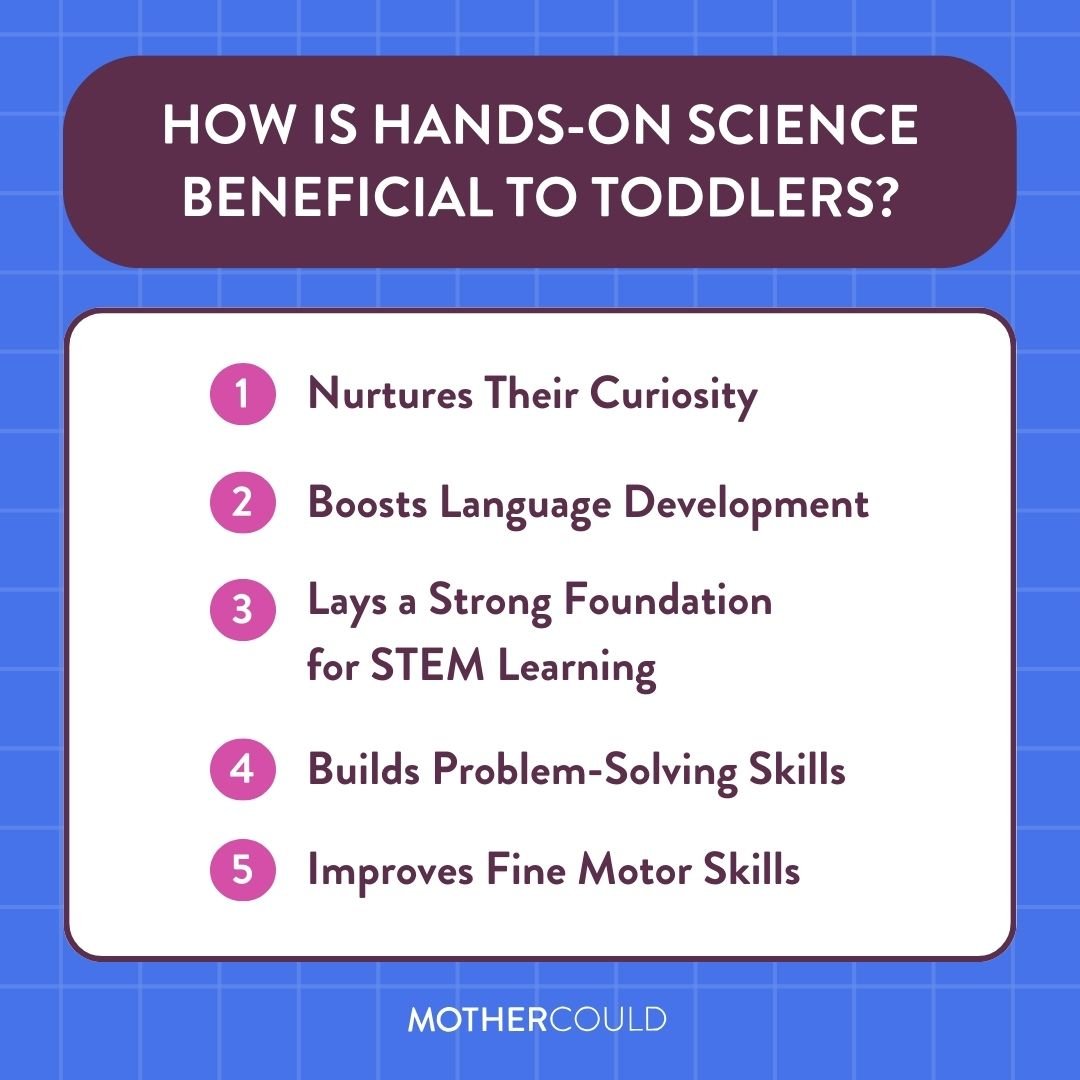
How Is Hands-On Science Beneficial to Toddlers?
Nurtures Their Curiosity:
Science experiments are like a curious toddler’s mental playground. They invite them to ask those “how” and “why” questions—except the answers are right in front of them! Instead of just listening to your response, they get to physically experience it through their five senses.
Boosts Language Development:
When kids experience something new, they’ll try to explain it the best they can with the vocabulary they have. This then allows you to step in and teach them new terms! Think: “Slimy, stringy, soft, bright, heavy, fluffy”—all those descriptors that put a name to what they’re experiencing.
Lays a Strong Foundation for STEM Learning:
We use STEM concepts throughout our entire lives. For toddlers, this shows up as mixing colors, building with simple materials, fitting pieces into a puzzle, and counting toys. For adults? We use these skills for budgeting, baking, or even using our phones. Yes, really! The earlier you teach these skills, the stronger the foundation your little ones will have to build on.
Improves Fine Motor Skills:
Fine motor skills rely on those tiny muscles in the hands that allow us to make small, precise movements. So, each time a toddler pinches tweezers, scoops up slime, or squeezes a dropper, they’re refining hand strength and coordination!
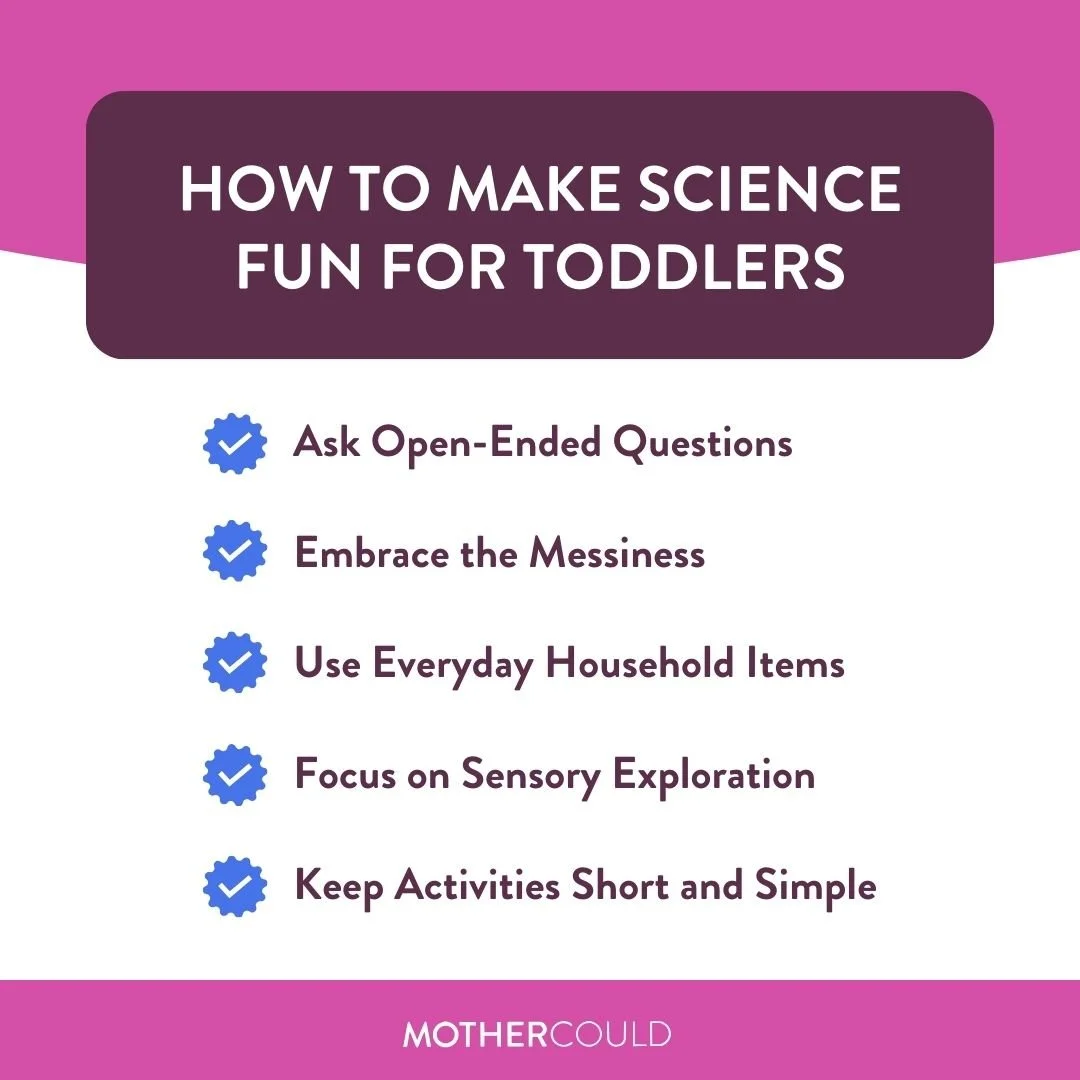
How to Make Science Fun for Toddlers
Ask Open-Ended Questions
Asking toddlers open-ended questions is a fantastic way to spark natural curiosity. You’re not looking for a “right” or “wrong” answer—you’re just encouraging them to use critical thinking and cognitive skills! They begin looking for reasons, explanations, and answers—which is the goal. Plus, every time you ask for their input, it’s a silent boost to their confidence.
Embrace the Messiness
When you turn these activities into immersive, hands-on adventures, it encourages your toddler to truly participate in the experiment. They’re no longer worried about “perfect” outcomes or “right answers.” Instead, they’re tapping into that curiosity. They’ll want to know what happens if you mix two colors or add extra vinegar. It invites them to explore each concept freely on their own terms.
Use Everyday Household Items
I mentioned earlier how the toddler stage comes with the endless “why” questions. What I was getting at was that kids are naturally extremely curious about their environment. They want to know what things are, what they do, and how they can use them.
Essentially, those “WOW” moments truly do come from plastic bottles, shaving cream, ice cubes, and aluminium foil. When you use those items they’re constantly asking about, each science experiment becomes a bit easier to understand.
Focus on Sensory Exploration
Every time your toddler touches, smells, tastes, hears, or sees something, they’re strengthening neural connections. For example, when your child squishes slime between their fingers, they’re watching how it stretches, sticks, and changes shape.
Those connections don’t just disappear—they continue building on them their whole life! When you introduce science in simple, easy-to-understand ways, they’re learning (and building on) something new each time.
Keep Activities Short and Simple
No matter how interested they are in the activity, you can only keep toddlers engaged for so long. Ultimately, complex projects and slow results can both feel overwhelming. Stick to activities that require minimal effort, instant (or almost instant) results, and offer a quick sense of accomplishment. This will keep them excited, interactive, and ready to repeat experiments over and over again.
Science Experiments for Toddlers
Shaving Cream Slime DIY
I’m sure you’ve incorporated traditional slime into playtime… but have you tried shaving cream slime? It’s all the same fun, it just has a lighter, fluffier feel! A lot of the time, when making slime from scratch, we tend to toss it together and hand it over when we’re done.
However, letting toddlers help make the slime turns playtime into a hands-on science activity that encourages curiosity and exploration. They get a first-row seat to chemical reactions and states of matter in a fun, tactile way.
Ingredients:
1 to tablespoons of contact lens solution (or saline solution)
½ cup of school glue
1 to 2 cups of shaving cream
1 tablespoon of baking soda
Optional: Food coloring, sensory sequins, and glitter
Instructions:
Step 1: In a large mixing bowl, add in your glue and shaving cream. The more shaving cream you add, the fluffier it will become! Mix everything together until it’s smooth.
Step 2: Once you’re happy with the consistency, add in your baking soda. This is where things get stretchy.
Step 3: Slowly pour in the contact solution—don’t add too much at once! The combination of boric acid and sodium borate stabilizes things, but too much can make it stiff. (Ironic, right?)
Step 4: Add food coloring, stir it a bit, and start kneading with your hands. Once your slime starts to pull from the sides of the bowl, you know it’s ready.
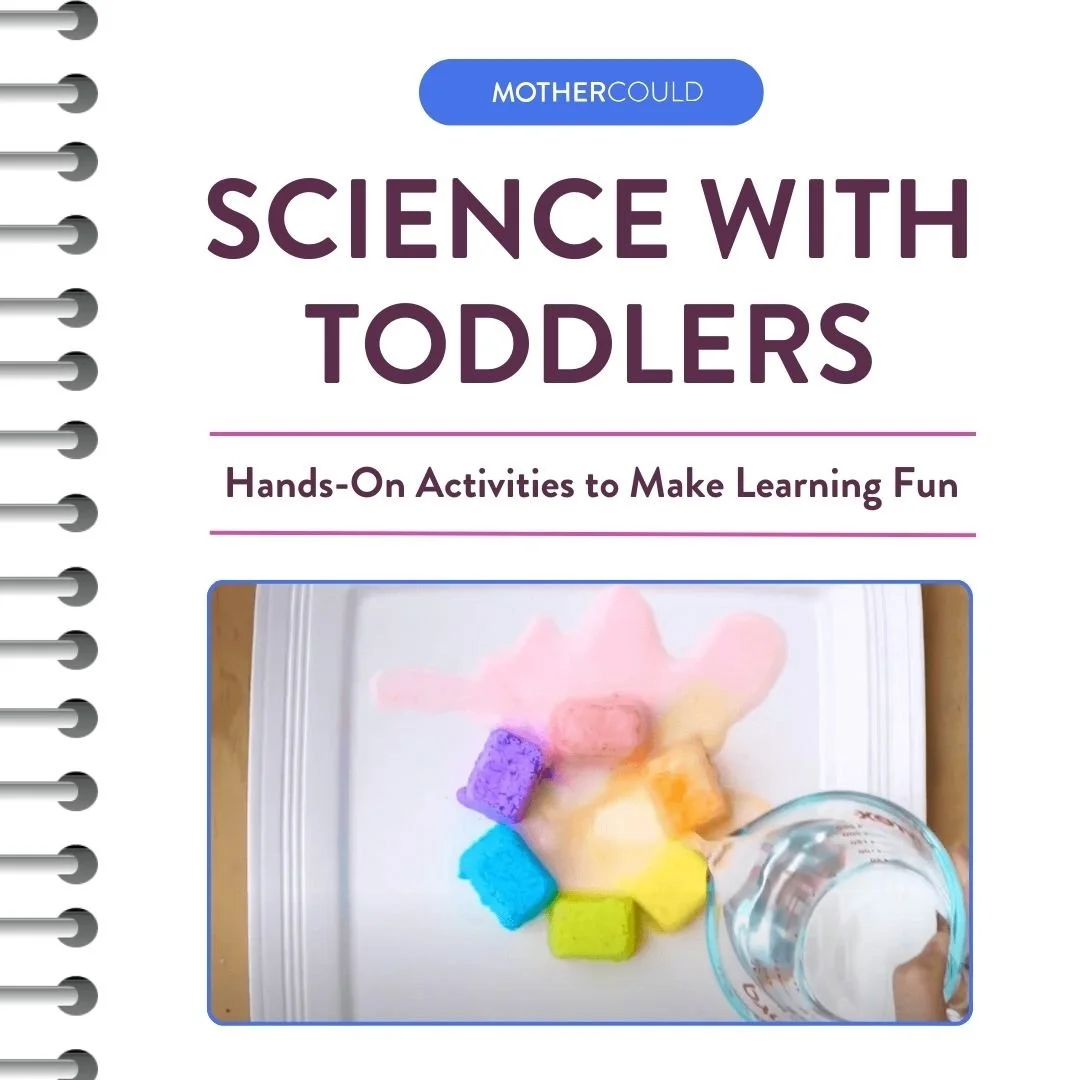
Skittles Rainbow Experiment
This Skittles rainbow experiment is a fantastic introduction to STEM concepts for toddlers. Will they understand topics like solubility, diffusion, and density? No, of course not! But they will begin to understand cause-and-effect in a way that makes sense to them. As the candy coating dissolves, the colors spread through the water, creating a visible reaction that toddlers can watch unfold.
You can encourage interaction by asking questions, like “What do you think will happen?” or “What do you notice the colors are doing?” These prompts spark curiosity and help toddlers engage without feeling pressured to know the “right” answer.
Ingredients:
A clear or white plate
1-3 bags of Skittles
Warm Water
Instructions:
Step 1: Start by arranging your Skittles into whatever pattern you want—circles, squares, hearts, triangles, letters—the options are endless!
Step 2: Once you’ve created your shape, slowly begin adding warm water to the center. Make sure to go slow, otherwise your Skittles will start floating, and that’s not what we want here!
Step 3: Watch the colors slowly swirl and spread, forming a super fun and colorful rainbow.
Science Experiment with Fizzy Blocks
Remember those classic volcano science experiments? Fascinating, but a bit too complex! Instead, these taste-safe fizzy blocks are the perfect toddler-friendly way to introduce (extremely) simple chemistry concepts. You turn water into ice, pour vinegar over top, and watch them bubble and fizz into an array of bright colors—easy, fun, and interactive!
Ask your toddler to add vinegar using a small dropper, and suddenly, it doubles as a sensory activity. So, not only is it excellent for introducing STEM skills, but it also fosters motor skills and introduces color mixing. It doesn’t get any better!
Ingredients:
1 cup of baking soda
1 tsp clear gelatin
¼ cup of water
Food coloring
Ice cube tray
Vinegar
Instructions:
Step 1: Grab a bowl and mix the baking soda and gelatin.
Step 2: In a separate bowl, add a few drops of food coloring to your ¼ cup of water. Remember: the more you add, the darker it will become! Now, pour the water into the baking soda mixture.
Step 3: Evenly divide the mixture into the ice cube tray and freeze overnight.
Step 4: Take the cubes out of the tray, pour vinegar on top, and watch them fizz away!
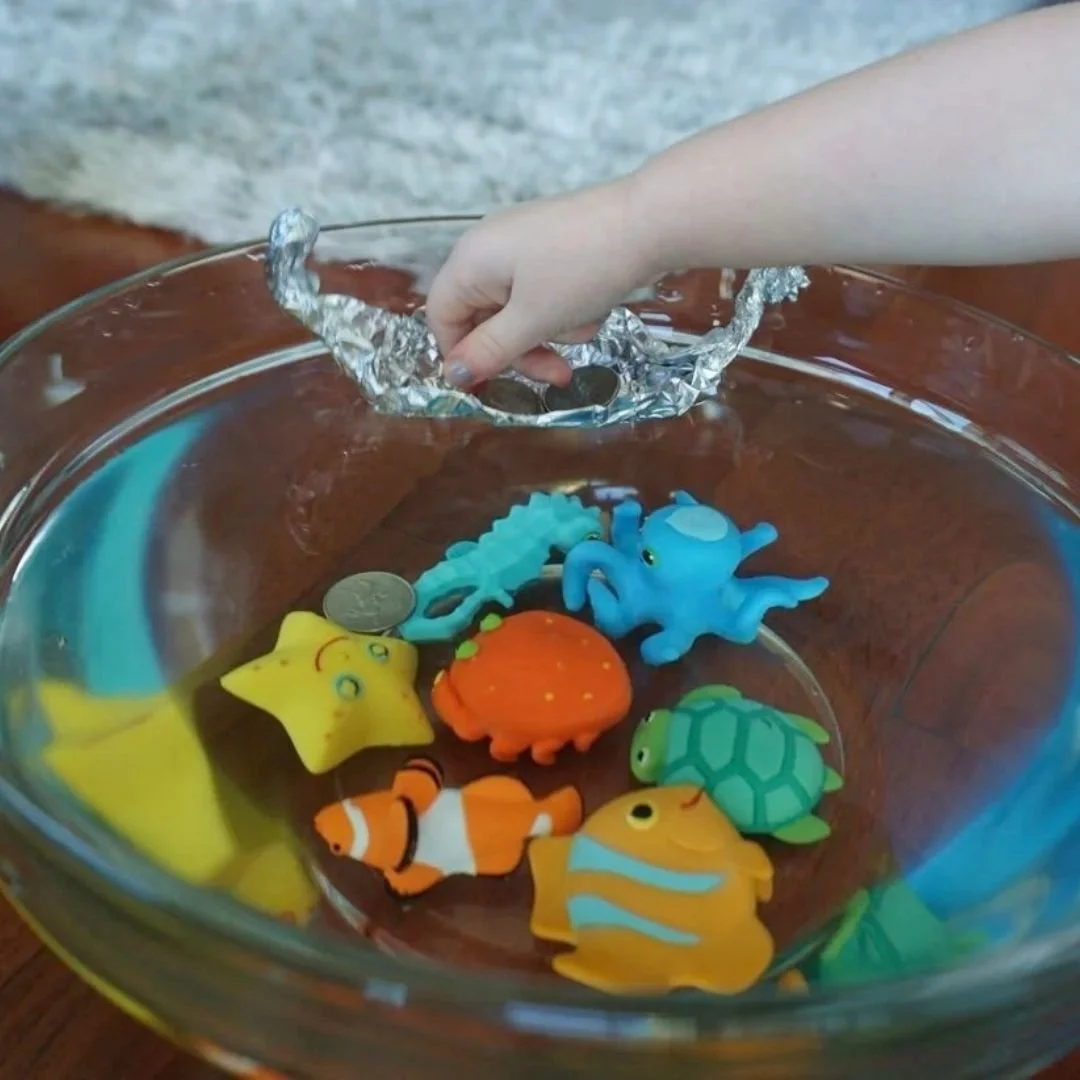
Float Your Boat Activity
There are so many reasons I love this float your boat activity. First off, water sensory play is incredibly beneficial for children. Through temperature variations and water movements, it naturally stimulates their senses.
In this case, though, it’s an easy (and fun!) way to introduce concepts like density, buoyancy, and gravity. As kids redirect the water and build different structures, they can see firsthand what makes a boat sink or float. Plus, you can do it HUNDREDS of times with all different kinds of boats—the fun never runs out!
Ingredients:
Large (clear) bowl
Water
Aluminium foil
Coins
Optional (but highly recommended!): Plastic fishy friends
Instructions:
Step 1: My top tip? Let your little ones make their own boats with the aluminum foil—this keeps them engaged from start to finish. It also adds an extra layer of hands-on fun!
Step 2: Add water to a bowl or sensory bin. Keep a little extra room at the top to avoid spills from splashing. Don’t forget your fish!
Step 3: Place the boat in the water and start adding coins to its base one at a time. Try to encourage them to count the amount they add out loud!
Step 4: Watch the boat sink as you continue adding more coins. It sounds simple, but speaking from experience, toddlers find it so exciting!
DIY Lava Lamp for Kids
This DIY lava lamp is one of my little’s favorite experiments. The way the colorful bubbles rise and fall around? It never gets old! Plus, I’m always a fan of recycled activities—they’re inexpensive, easy to make, and require items you probably already have lying around.
And the best part? This activity is loaded with scientific principles toddlers will love—even if they don’t fully understand them yet. It covers density, polarity (water and oil not mixing), chemical reactions, and gas and buoyancy. And, as I mentioned earlier, you can ask questions like, “Why do you think the bubbles are bouncing?” to encourage critical thinking.
Ingredients:
Recycled water bottles
Vegetable oil or baby oil
Water
Food coloring
Instructions:
Step 1: Grab your recycled bottle and fill it up halfway with water. If you’re having little ones help out with this step, I recommend using a funnel to make things easier!
Step 2: Add in a few drops of food coloring. Don’t feel like you have to mix colors just yet—these are so easy to make, you can create multiple!
Step 3: Fill the rest of the bottle up with oil. You can really use any type, but I’ve found the best results happen with either vegetable or baby oil.
Step 4: Drop in a single Alka-Seltzer tablet and watch the magic happen!
These simple science experiments for toddlers turn everyday play into meaningful learning moments.
Now that you’ve learned the benefits, it’s a lot easier to see just how important science can be! And when you integrate these concepts early, you’re not just encouraging their natural curiosity. You’re also fostering the core developmental skills that will carry them all throughout life—from toddlerhood and beyond.
At its core, science is all about promoting and celebrating self-guided, independent play. And, fortunately, that’s exactly what my book, Playful by Design, is about! This guide explores all the tools parents and caregivers need to unlock children’s creativity, curiosity, imagination, and self-direction. Hint: it’s not through Pinterest-perfect play spaces! It’s through intention, maintenance, and thoughtfully planned areas that feel just as kid-friendly as they are.
Also, don’t forget to stay updated with the Mothercould blog! Here you can find everything from kid-friendly meals and handmade recipes to gift guides and my weekly favorites (that include products parents and kids will love!). And, of course, join the Mothercould In Your Pocket resource for access to printable activity packs, clean-up hacks, and more!