HOW TO MAKE MOON SAND: EASY 3-INGREDIENT DIY FOR KIDS

When it comes to sensory play ideas, your material options truly are endless. You have naturally-dyed cloud dough, cloud slime, even homemade rainbow play dough—and those are just the top options. But what if I told you that there’s a taste-safe, kid-friendly sensory material you can make with just three ingredients?
Nope, it’s not too good to be true—it’s moon sand! We’ve talked about how to make moon dough on the blog before, but this recipe is a little different. Moon sand is a little grainy, a little crumbly, and lots of fun for little ones exploring new textures.
Kids can squish it, squeeze it, build with it, or just roll it around in their hands; it offers hours of sensory-fulfilling fun. And, best of all, it’s incredibly easy to make and extremely versatile for playtime! So today, I’m sharing my taste-safe moon sand recipe for you all. I’ll also explore how it differs from other materials and share a few fun ways you can use it. Let’s have some fun!
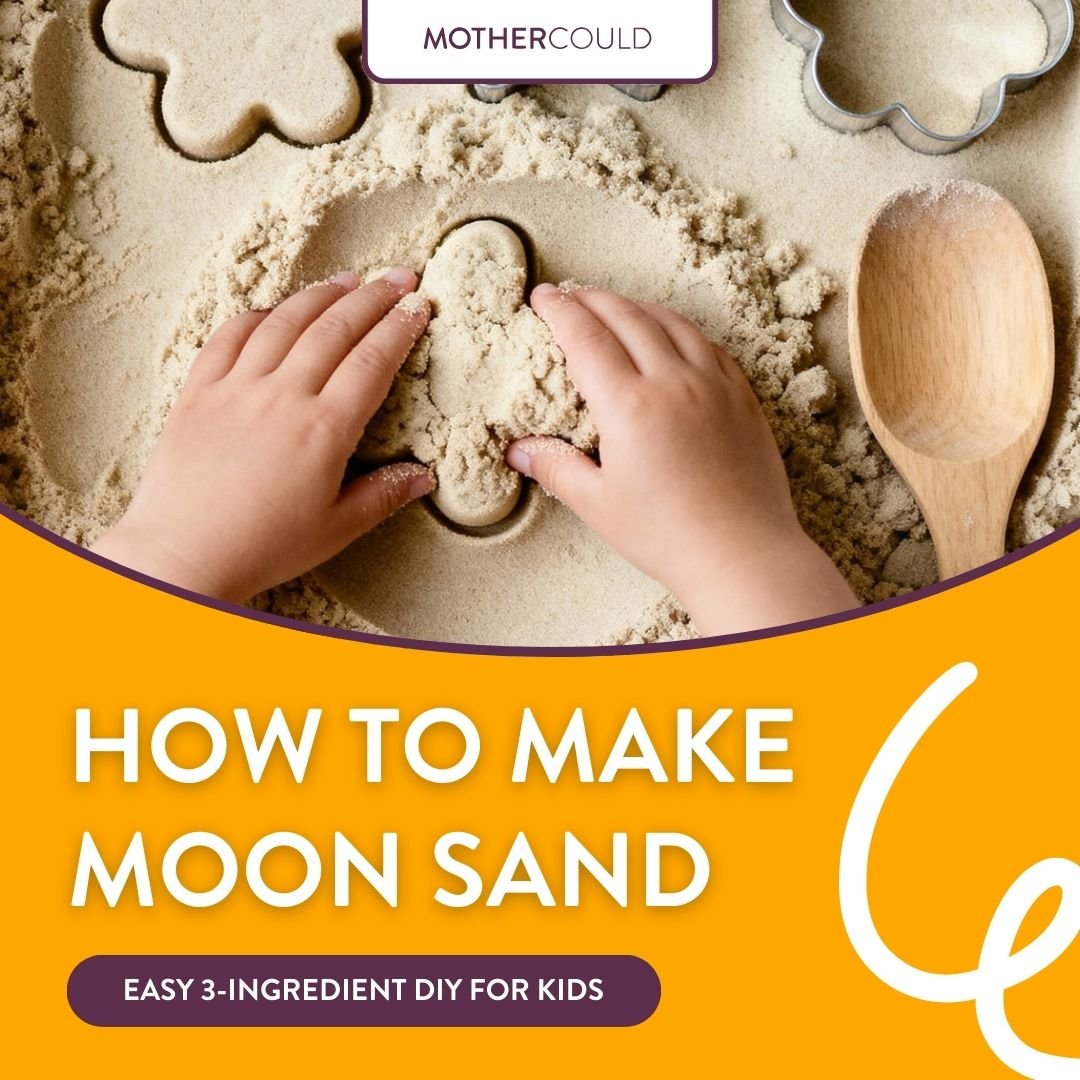
How to Make Moon Sand: The Best Homemade Sensory Recipe
When parents think of play sand, most of the time, they imagine a recipe for disaster. Tiny grains of sand in the eyes, ears, or nose? Vacuuming up sand throughout the house for what feels like weeks? No, thank you! Trust me, I completely get it—which is why I love using moon sand instead.
My kids still get excited about playing with a soft, gritty texture in tons of different activities. But with this material, it’s contained, safe, and so much easier to clean up. Plus, this recipe is easily customizable, taste-safe, and can be safely stored for weeks. It’s a total parenting-win!
Before we dive into the how-tos, though, let’s talk about what moon sand actually is. Then we’ll discuss how it’s different from other textures and how you can incorporate it into your daily playtime routine.
What Is Moon Sand?
Sensory activities often begin with a soft, inviting base, and that’s exactly where moon sand shines. This play material checks all the boxes—it’s soft, crumbly, moldable, squishy, and fun for all ages!
When kids manipulate the material, it easily holds its shape. This is why I’ll often recommend it for DIY sand castles, holiday cookie baking play, and simple sculpting projects. Plus, not only is it tons of fun, but you can press everything back together after playtime and reuse it again!
And when it’s not used for molding, moon sand works as a fantastic base for both sensory bins and sensory jars. Add in some scoops, and you’re fostering fine motor skills and strengthening hand and wrist muscles. Let little ones explore with their hands, and you’re encouraging cognitive growth and early STEM learning!
In addition to building specific skills, the texture of moon sand itself is incredibly beneficial. The more kids play with it, the more they strengthen their sensory processing skills—that behind-the-scenes system in the brain that helps them make sense of their surroundings.
So, needless to say, moon sand is as beneficial as it is fun. And when I find a material, craft, or play recipe that can do both? You bet I’m adding it to my sensory exploration rotation—and sharing it with the Mothercould community!
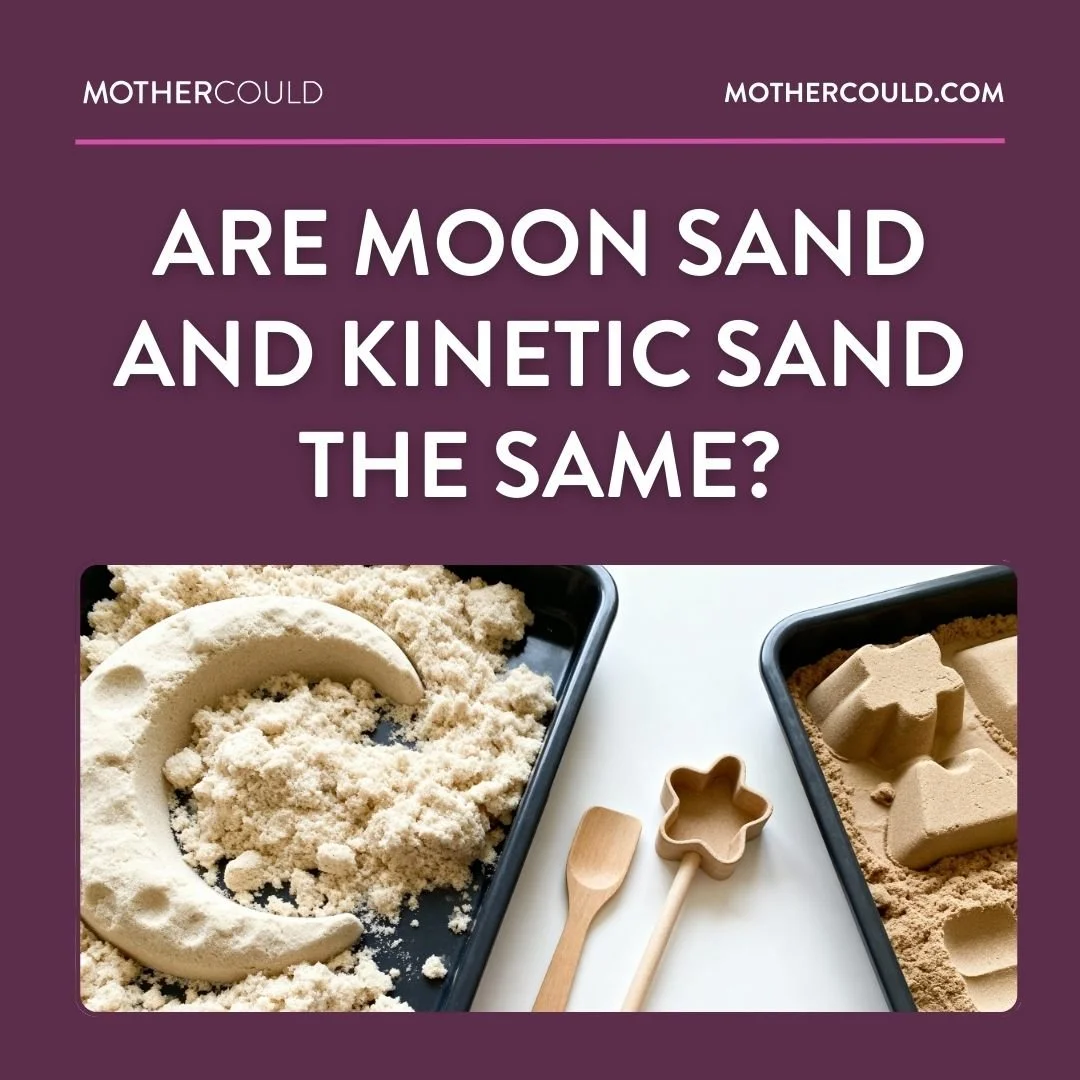
Are Moon Sand and Kinetic Sand the Same?
Moon sand, taste-safe dirt, snow dough, DIY putty—so many materials, so many similar textures! The one people often confuse moon sand with, though, is kinetic sand. And while they’re both moldable and commonly used in sensory play, the two are actually totally different!
Moon sand is generally squishy, fluffy, and crumbly—almost like damp sand without the water. It’s more likely to stick to hands, tools, and surfaces, but it doesn’t have that classic “goopy” texture.
On the other hand, kinetic sand is smooth, stretchy, and flowy—kind of like if you mixed sand with putty! It does have that “goopy” feel, and it clumps together instead of lightly sticking to other materials. Check out my kid-friendly kinetic sand play recipe on the Mothercould In Your Pocket resource to compare the two yourself!
Ultimately, both materials offer endless fun for little ones. They’re both squishy, soft, moldable, and an instant hit for kids of all ages. However, compared to store-bought kinetic sand, many parents love moon sand for its taste-safe ingredients and endless versatility.
Now, let’s get into that exciting, easy, kid-friendly moon sand recipe!
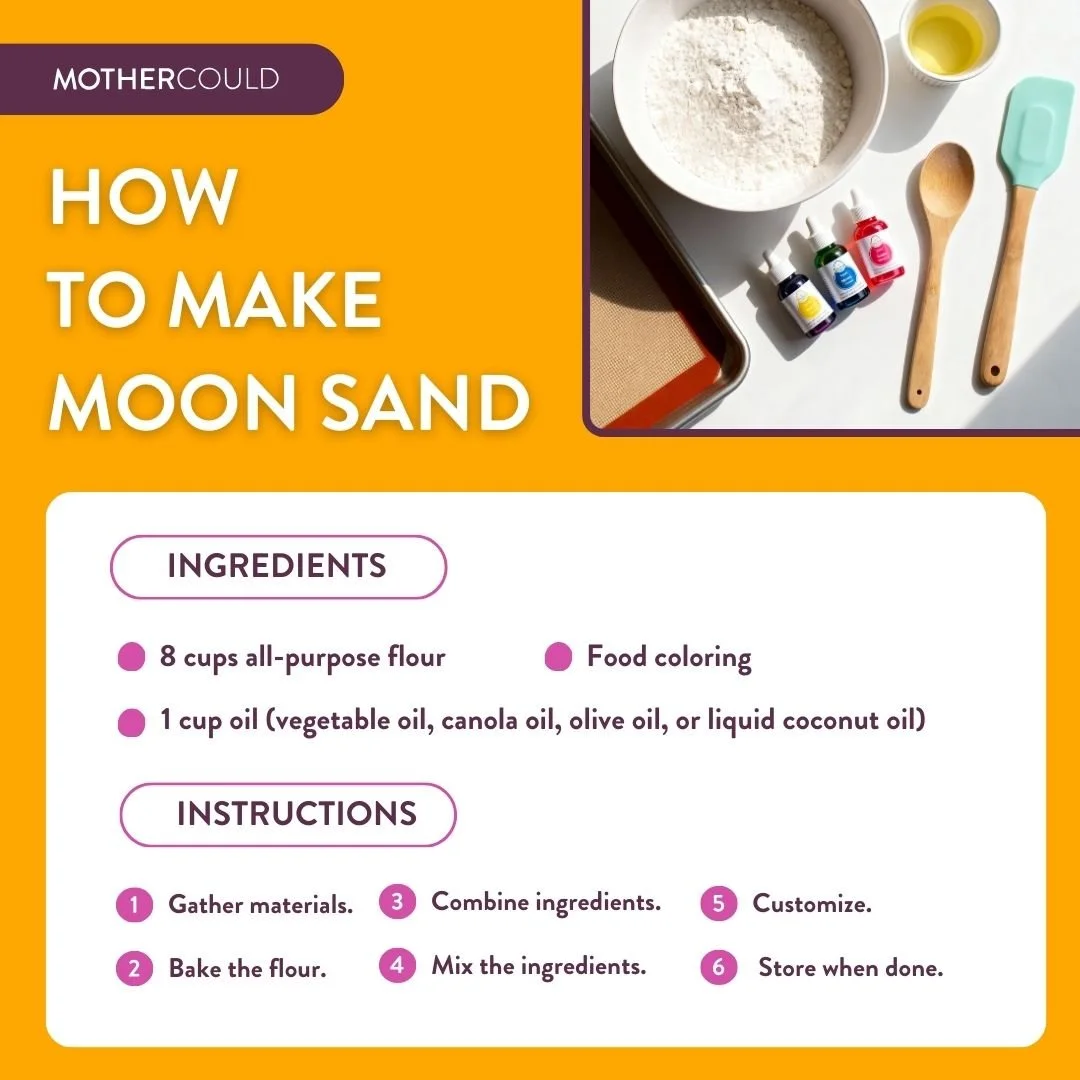
How Do You Make Moon Sand?
Ingredients for Moon Sand:
8 cups all-purpose flour
1 cup oil (vegetable oil, canola oil, olive oil, or liquid coconut oil)
Food coloring
Instructions for Making Moon Sand:
Step 1: Gather materials. Gather everything you’ll need—fortunately, it’s not much! But by setting out all of your materials, you won’t have to scramble around through each step.
Step 2: Bake the flour. Preheat your oven to 350°F. While you’re waiting, spread your 8 cups of flour evenly onto a baking sheet. You’re not baking it, you’re heat treating it to get rid of all that yucky, dangerous bacteria! Once the oven is ready, set the flour in there for 5 minutes.
Step 3: Combine ingredients. Once your flour has cooled, pour it into a large bowl. Now, gradually add in your taste-safe oil and food coloring. Remember, the more food coloring you add, the deeper that color gets!
Step 4: Mix the ingredients. Begin mixing your ingredients with either your hands or a spoon. This may take a little while, so don’t get discouraged if it doesn’t come together immediately!
Step 5: Customize. If your moon sand is too crumbly, add a little bit more oil. If it’s too wet or oily, add a little extra heat-treated flour! Same for the food coloring—add more if the color is too light.
Step 6: Store when done. To preserve the texture and consistency of your moon sand, it’s important to store it properly. An airtight container is always the ideal option—but you can also store it in a Ziploc bag. Just make sure you squeeze out all the air! My secret hack? Wrap the sand in plastic wrap and then store it. This way, it can last anywhere from weeks to months.
Add moon sand to your playtime routine for easy, sensory-enriching fun!
One of the best parts of sensory play is how dynamic it is. From moldable materials to engaging play recipes, there are so many creative ways to mix developmental benefits with hours worth of fun. And when you find something that’s taste-safe, easy to make, and exciting to play with? It instantly deserves a spot in your rotation of sensory play materials!
Looking for other ways to ignite your child’s imagination and nurture their growing independence? Check out our new book, Playful by Design! From planned play-spaces to toy-rotation systems, it’s never been easier to transform boredom into an opportunity for creativity. And, best of all, parents can declutter, maintain, and have the time to catch their breath!
Don’t stop there, though! On the Mothercould blog, you can find arts-and-crafts ideas, sensory play activities, and tons of kid-friendly meal and snacktime recipes. And, of course, don’t forget to join the Mothercould In Your Pocket resource, where you get…
60+ printable recipes with step-by-step instructions
Quick and easy-to-follow how-to videos that walk you through each activity
Printable activity packs designed to foster growth and provide tons of fun
Make sure to stay updated with my Instagram for all of my latest gift guides, organization hacks, and lifestyle updates. And, of course, join in on the fun on Pinterest, where I share tips, tricks, recipes, and more!