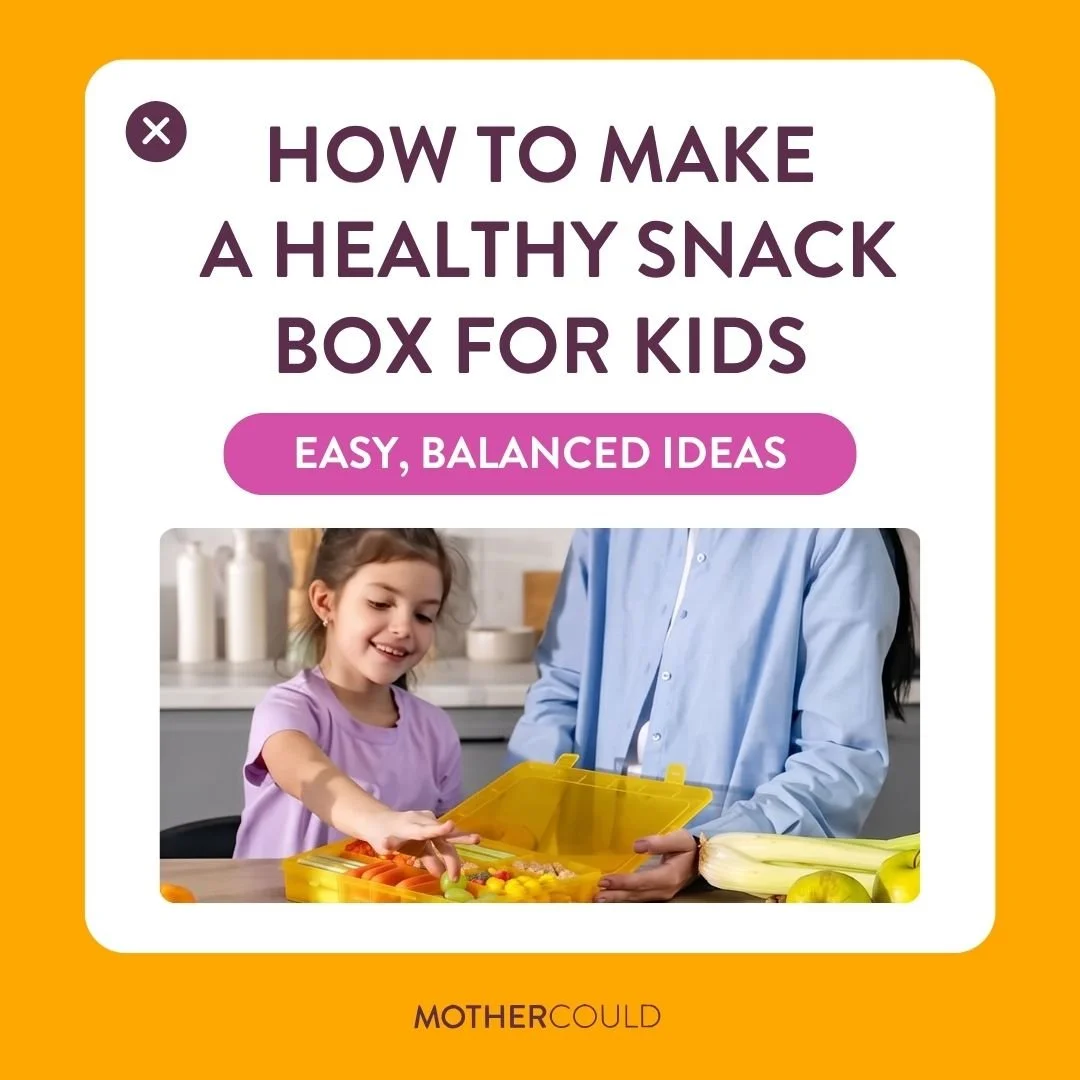
HOW TO MAKE A HEALTHY SNACK BOX FOR KIDS: EASY, BALANCED IDEAS

It’s no secret that between planning breakfasts, lunches, and dinners, snack time kind of falls in that awkward “in between.” But instead of grabbing whatever’s most convenient, save yourself the time (and stress!) by making a healthy snack box with the Mothercould Snack Box Set!
Ultimately, snacktime is essential for kids. Because their stomachs are smaller, they often need nutrient-dense snacks every few hours to boost energy, stabilize blood sugar, and support mental focus. And with Mothercould Snack Box Sets, the adjustable compartments, slim grab-and-go design, and easy cleanup make snacktime simple, organized, and actually doable.
Don’t know where to start? You’re in the right place! In this post, I’m sharing my top tips for making a healthy snack box for kids with our Mothercould Snack Box Set. I’ll tell you what a balanced snack box is, what to put in it, and a step-by-step guide for creating a box that’s yummy, filling, and full of good-for-you ingredients. Stick around, snacktime is about to become a whole lot easier!
How to Make a Healthy Snack Box for Kids: Easy, Balanced Ideas
Healthy snack boxes aren’t just about choosing better foods—though that’s definitely a benefit! Instead, they’re about creating a system that makesthese choices seamless and consistent. Trust me, I know how easy it can be to grab something out of the pantry and call it a day. Especially when the kids are running around, you’re thinking about what to make for dinner later, and you’re trying to finish up last week’s chores. (No shaming here!)
However, I’m typically left thinking… I wish I had taken the time to make something more wholesome. And snack boxes are that easy solution.
When using the Mothercould Snack Box Set, you have a reliable, versatile tool that helps you incorporate nutrition, snack preference, and variety into one simple, organized system. And even better? Our Snack Boxes are meant to be used, meaning they’re durable, keep snacks fresh, and clean up easily. Ready for the good stuff? I’ll talk about what a snack box is and what I recommend adding to them.
Before we dive in, I quickly want to scale back and talk about one more tool for creating intentional, structured systems: Playful by Design. In my book, I discuss how important structure, consistency, and, believe it or not, stepping back are for children. This step-by-step resource is designed to help you create play spaces, routines, and toy-rotation systems that foster kid-directed, kid-enriching play. (And, most importantly, independence!)
Listen to this podcast episode, “The Secret to Happier Kids and Calmer Homes with Myriam Sandler” from With Whit to learn even more!
What Is a Snack Box?
A snack box is a pre-portioned container with a variety of small snacks. Designed for convenience and balance, you can add a mix of whichever foods you want. Think: sweet banana sushi wraps, savory hummus with veggie sticks, or nutrient-dense Greek yogurt. Your options really are endless!
That said… not all snack boxes are created equal.
The Mothercould Snack Box Set was made by parents, for parents. With adjustable dividers, you can customize portions and keep everything separated (no soggy crackers or mixed snacks!). And with a slim, portable design, our Snack Box Sets seamlessly fit into Kids Travel Organizers, bookbags, purses, and more.
With this, it isn’t just another thing you’ll toss in your cabinet—it’s a practical, functional addition to your everyday routine. Here are a few ideas for what to put in the Mothercould Snack Box, and a few steps for putting it all together:
What to Put in a Snack Box for Kids
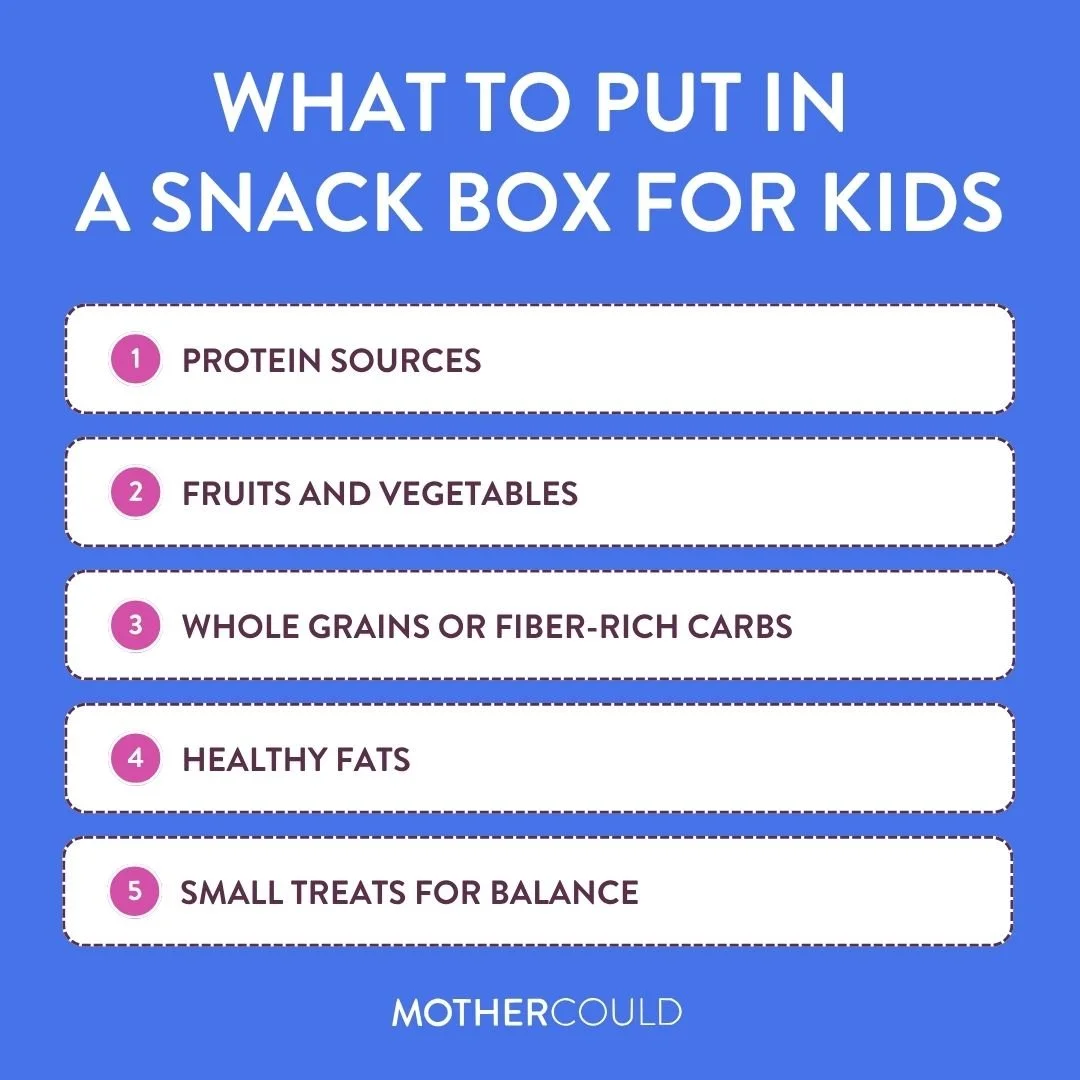
Protein Sources
Protein plays an essential role in children's development. More specifically, it helps strengthen the immune system, repair tissues, foster cognitive development, and regulate body functions—including mood! Fortunately, there are plenty of ways to help your children hit their daily protein needs.
Examples: Boiled eggs, Greek yogurt, cottage cheese, chickpeas, tofu, almonds, walnuts, cashews, chicken, salmon, and beef.
If you’re looking for a kid-friendly recipe to add to your daily snacktime rotation, check out my post, “Kid-Approved Yogurt Parfait Recipe.” And, yes, it totally works forthe Mothercould Snack Box Set! The dividable compartments keep every snack separated, so your yogurt won’t spill onto the other ingredients in your box.
Fruits and Vegetables
Fruits and veggies provide essential vitamins, minerals, and fiber, while also adding natural color and variety to the snack box. However, for most of us, getting our kids to eat fruit and vegetable snacks isn’t the easiest task in the world. Here’s one of my favorite tips: sneak them in or make them feel fun.
Hidden vegetable mac and cheese is an easy kid-favorite—and they’d never know they’re eating things like broccoli, peas, or zucchini. And, don’t worry, the Mothercould Snack Box Sets ARE microwave-safe! So whenever it’s snack time, just toss it in the microwave to keep everything warm, delicious, and kid-approved.
If you’d rather do something a little simpler, cut your fruits and veggies into fun shapes! Trust me, both mom-approved hacks are serious lifesavers here. And for any leftover ingredients, don’t feel like you have to toss them out. Store them in leakproof fruit containers or reusable silicone bags (one of my favorite discoveries). Or, if you’re incorporating avocados, tomatoes, lemons, and oranges? A reusable produce container makes all the difference in freshness and longevity.
Whole Grains or Fiber-Rich Carbs
Whole grains and fiber-rich carbs help provide sustained energy—which is extremely important for active kiddos! They also reduce fatigue, support long-term cognitive function, and promote healthy digestion.
Examples: Whole grain crackers, mini bagels, popcorn, snack bars, brown rice cakes, quinoa, lentils, beans, and sweet potatoes
Looking for ways to incorporate more whole grains into your own daily meal plan? Check out my Quinoa Breakfast Bowl recipe! Full of good-for-you ingredients, it looks yummy enough that even your kids will ask for a bite!
Healthy Fats
Because our brains are nearly 60% fat, eating enough healthy fats is so important—especially for littles. It encourages brain development, provides energy, supports vitamin absorption, and can even boost heart health.
Examples: Avocado slices, nuts, trail mix, olives, nut butters, fatty fish, eggs, dark chocolate, chia seeds, and flaxseed
This Kid-Friendly Pistachio Muffin recipe is a super-easy way to squeeze in a nutritious boost of healthy fats, protein, and flavor. Plus, although these muffins come out a fun bright green, they don’t require any food coloring or artificial dyes! Just cut them into small, bite-sized pieces to fit them seamlessly into your Mothercould Snack Box Set.
Small Treats for Balance
Including a small treat helps create a balanced, realistic approach to eating healthier, more nutritious options. Plus, it helps kids feel like their snack boxes are exciting—not restrictive! That said, treats don’t have to mean sugar-filled or overly processed picks. You can still prioritize quality ingredients and portion balance.
Examples: Mini cookies, yogurt-covered raisins, homemade rice crispy treats, and apple slices with peanut butter
If you have a little extra time on your hands, you won’t regret making these Kid-Friendly No-Bake Chocolate Brownies. (Here’s a secret: they use Medjool dates—and they’re gluten-free!) And here’s the most convenient part: because you can adjust the size of the Mothercould Snack Box Set compartments, your sweets don’t even have to take up a huge portion of the box! This makes it easier for children to view treats as complements to their snacks, not the main component.
How to Make a Snack Box
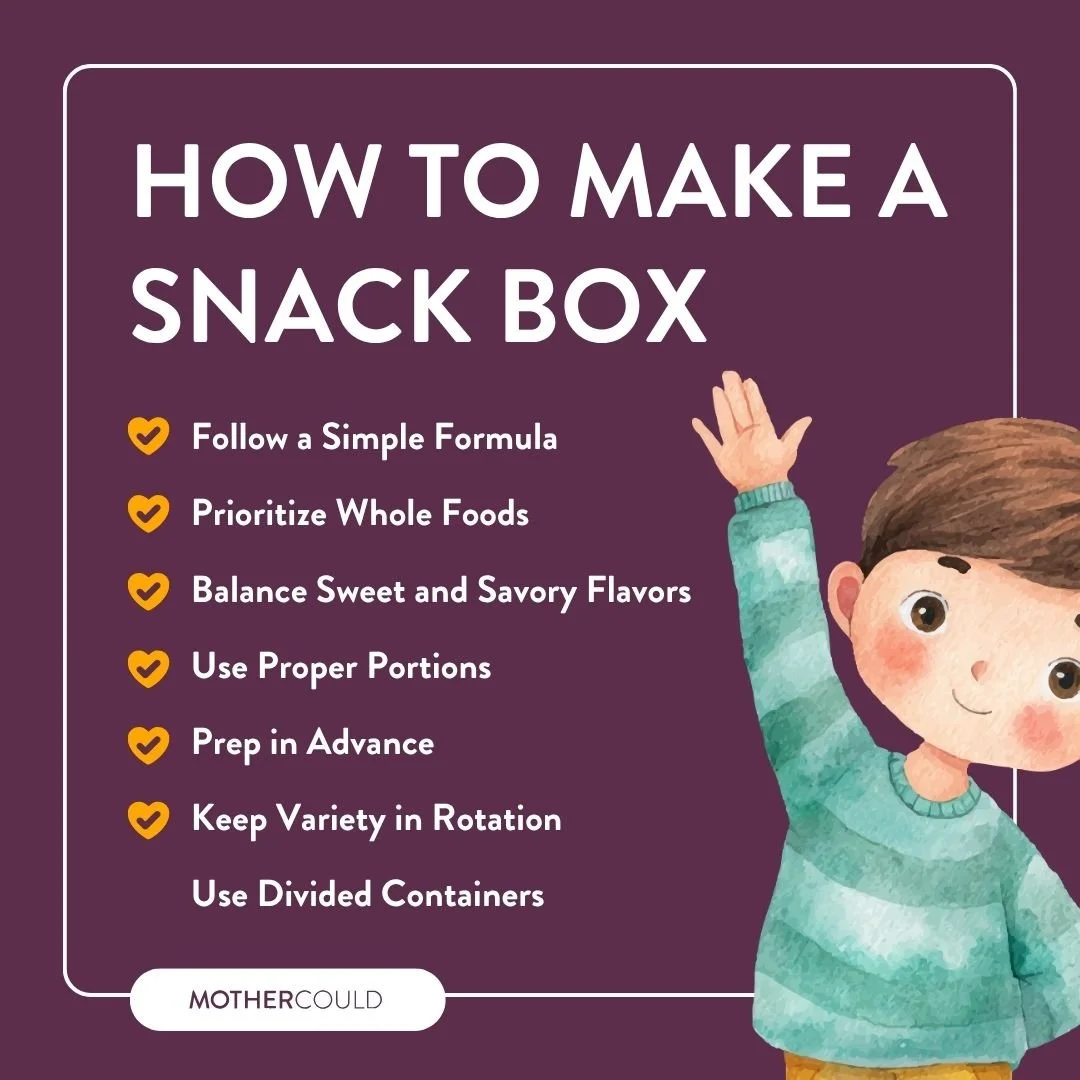
Follow a Simple Formula
When you’re planning out your snack box, prioritize at least three key nutrients. For example, incorporate protein, fiber-rich carbs, and healthy fats. Or, mix whole grains, fruits and veggies, and protein. Following this formula keeps snacks balanced, filling, and enjoyable—without overcomplicating the process.
With the Mothercould Snack Box Set, it’s easy to visually separate each category. With the adjustable compartments, everything stays organized and portioned without overthinking it!
Prioritize Whole Foods
Have you ever given your kid a snack just for them to turn around an hour later and complain that they’re hungry again? Of course, it happens to all of us! Whole foods help prevent this, providing sustained energy without energy crashes or those “hangry” tantrums. Choose minimally processed options, like fresh fruits, bright vegetables, nutrient-dense nuts, and whole grains.
The Mothercould Snack Box Set does an excellent job at keeping ingredients fresh and delicious. More specifically, you can easily separate wet and dry foods, so everything stays just how you packed it.
Balance Sweet and Savory Flavors
Flavor fatigue is real—kids experience it too! And here’s a fun fact: kids are actually biologically driven to crave sweet and salty flavors. Science proves it! That said, mixing sweet and savory flavors adds layering, keeping snacktime engaging and exciting. And, as a secondary benefit, it also helps prevent cravings!
And just as I mentioned earlier, you don’t have to dedicate half of your box to “sweet treats.” You can adjust the size of each compartment, adding as much (or as little!) of each ingredient as you want.
Use Proper Portions
I’ve been harping on this throughout the entire post—but it’s extremely important! The Mothercould Snack Box makes it extremely easy to provide proper portions. Too little of something, and your child may still be hungry shortly after. Too much, and it can feel overwhelming or lead to unnecessary snacking.
Instead, aim for moderate, balanced portions to support sustained energy and to keep kids satisfied!
Prep in Advance
The most time-consuming part of making snack boxes is the prep. But if you make them in advance, you really only have to do it once a week! That said, wash, cut, and portion ingredients ahead of time.
I highly recommend this vegetable chopper; it cuts prep time in half. Once you’ve prepared your produce, store it in stackable plastic storage containers—they keep things fresh and ingredients easily accessible. And for the days you want to pre-make your snack boxes in advance, you can do that, too! Just add everything into your Mothercould Snack Box the night before, so all you have to do is pull it out during snack time. No soggy ingredients, no blended wet and dry foods, and no tantrums.
Keep Variety in Rotation
Even the healthiest, yummiest snacks can lose their appeal if they’re eaten too often. You can use the same ingredients for your weekly snack boxes, just try to mix them up throughout the week so kids don’t eat the same thing every day. This helps avoid boredom, maintain nutritional diversity, and encourages kids to try new foods!
The reason a lot of us avoid variety? Preservation. The Mothercould Snack Box keeps this process seamless with BPA-free, Food Grade materials and a PTPA seal.
Use Divided Containers
Divided containers make it so much easier to create balanced snack boxes without mixing foods together. (We all have our preferences!) Plus, it also keeps foods fresh and helps the snack box look more visually appealing. Which, for kids, seriously matters.
If you want to take a more hands-on approach, encourage children to play a more active role in what they eat by using this kid-friendly serving set! You prep the ingredients—they add it to the box. It’s fun, exciting, and actually makes them want to eat what they added!
Why Choose the Mothercould Snack Box Set?
Adjustable Compartments for Every Snack Combination
The adjustable compartments aren’t just a simple design choice—they make it easy to customize your snack box based on specific preferences and needs. Whether you need more apple slices or just a small section for a treat, you’re not locked into one layout. This flexibility? It matters for building a snack box that actually fits your family’s routine.
And luckily, we have a few different sizes of snack boxes! First, we have our standard Snack Box Set Containers with 8 adjustable compartments for smaller, simpler snacks. Then, we have our Large Snack Box Containers with 18 adjustable compartments for longer days and more options. Regardless of the size, both products are made with non-toxic materials, are dishwasher- and microwave-safe, and come with 100 dissolvable labels for easy identification.
Keeps Snacks Fresh and Separated
No more soggy crackers, watery grapes, or mushy granola. The divided design keeps each snack in its own space, so everything stays perfectly fresh. This is especially helpful when you’re combining different textures like crunchy, creamy, and fresh foods. And for those of you with picky eaters or littles with texture sensitivities, you know how important that structure can be.
Slim, Travel-Friendly Design
When you’re on the go, you don’t want to have to stress about expensive convenience store stops and unhealthy, packaged snacks. And with the Mothercould Snack Box, you don’t have to! The slim design makes it easy to slide into a backpack, purse, or your Large Kids Travel Organizer. It doesn’t take up much space and is easily accessible whenever you need it.
Easy, Dishwasher-Safe Cleanup
After a long day, the last thing you want is more cleanup. Having to scrub hours-old, dried peanut butter? No thank you! The Mothercould Snack Box eliminates this stress with its durable, dishwasher-safe design. In other words, we created it so you can use it daily without adding another task to your to-do list.
Durable, BPA-Free Materials
There are lots of harmful toxins in everyday materials—from cookware to dishes. However, you shouldn’t have to stress about that when it comes to storing your children’s snacks. When designing the Mothercould Snack Box, BPA-free, food-grade materials were a top priority. You can feel confident using it every day, knowing you’re storing snacks in the highest-quality containers.
Designed for Real Life Routines
Kids can be unintentionally destructive, and it’s important to accommodate their routine with that in mind! The Mothercould Snack Box isn’t just a product that looks good; it’s one that works in practice. I designed it with REAL routines in mind—busy mornings, after-school chaos, hectic travel days, and everything in between. It fits into your day rather than complicating it.
Simplifies Snack Prep
When everything has a place, prep becomes so much easier. You can quickly portion out snacks, keep ingredients organized, and build your boxes without overthinking it. It turns something that typically feels overwhelming into a simple, structured, repeatable routine.
Encourages Independent Snacking
If you’ve read my book, Playful by Design, you know just how important independence is in children. And that same philosophy applies to snacking! Snack time becomes more engaging when kids can see their options and intentionally choose what they want. The compartments make it easy for them to grab snacks on their own—or even build their own box!
Snack boxes are an essential part of making healthy, balanced eating feel practical AND fun!
As a mom of three, I know how challenging snacktime can be. Between finding options that make everyone happy and choosing nutritional ingredients, it can be overwhelming! However, snack boxes simplify the process. Plus, now you know exactly what food to use and how to make a balanced snack box. Trust me, it will transform snacktime—for the better! Traveling with kids soon? Here are travel snack ideas for kids that they’ll actually eat.
As a matter of fact, snacktime can play a huge role in your child’s independence—especially if they get to help with prep! As I talk about in my book, Playful by Design, independence is an invaluable skill. Actually, it helps children feel more confident, more resilient, and more self-assured. Order Playful by Design to learn all of my tips, tricks, and practical routines for encouraging independent kiddos!
If you’re looking for other helpful parenting hacks, you can find plenty on the Mothercould blog. From holiday gift guides and family travel favorites to kid-friendly recipes and sensory play ideas, there’s a lot you don’t want to miss. And, of course, don’t forget to join Mothercould In Your Pocket! Consider this your go-to resource for sensory play, clean-up, helpful hacks, and more.
See you in the next post!