15 SCREEN-FREE ACTIVITIES FOR KIDS: INDOOR AND OUTDOOR IDEAS
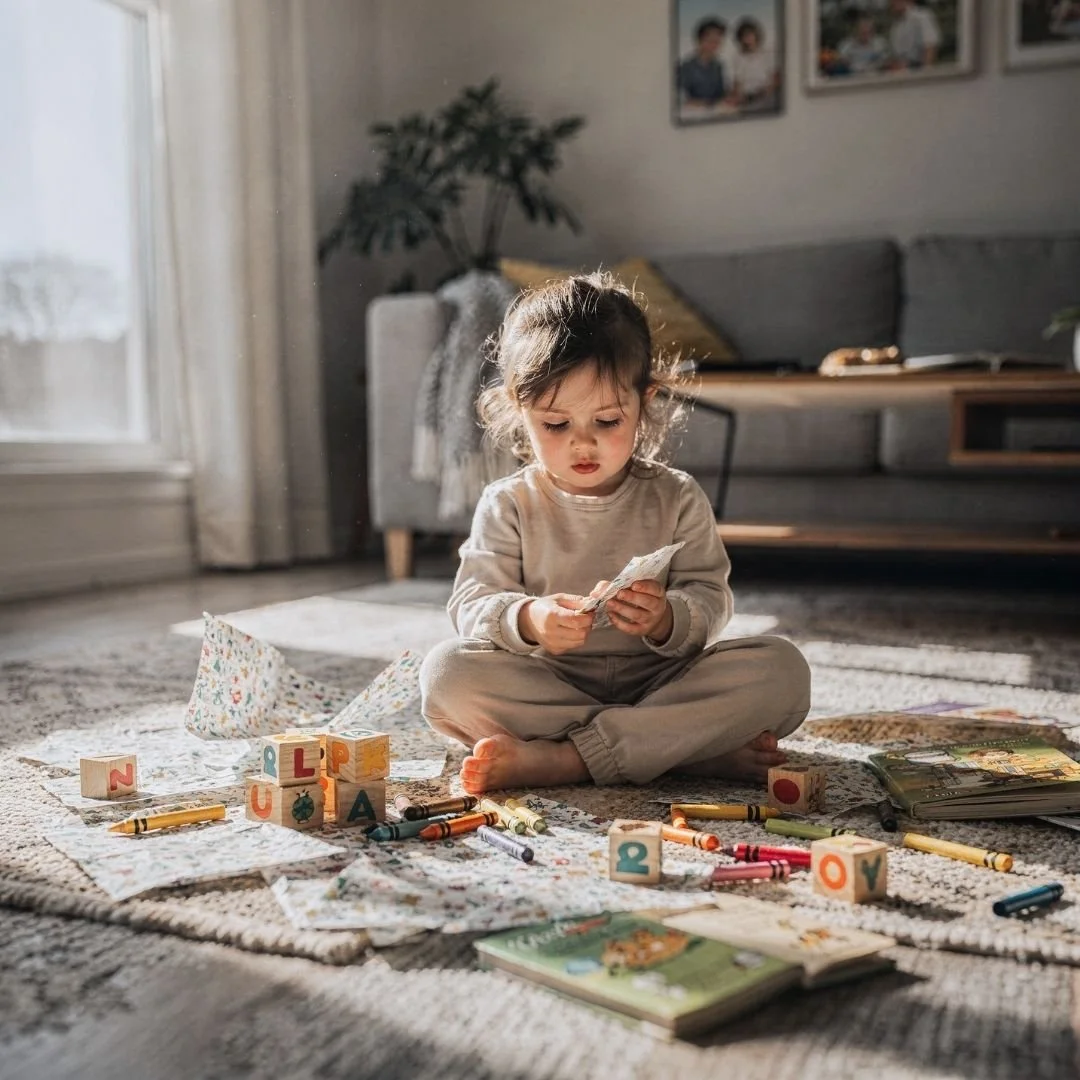
If you’re anything like me, you’re constantly on the hunt for screen-free activities for your kids. Screens are everywhere these days—on long car rides and plane rides, during quiet time, even woven into our daily routines. And while they can definitely be helpful, too much screen time can make it harder for kids to stay active, creative, and engaged in the world around them.
I know it feels easiest to hand them a screen to keep them amused—especially because there are so many educational apps, videos, and games out there. But here’s the thing: kids don’t need screens to stay entertained. In fact, the most meaningful play often happens when they’re given the space to explore, get creative, and follow their own curiosity.
When we step back (just a little), we make room for more independence—which, for children, is essential. Just as I talk about in my book, Playful by Design, independence is the key to reducing overwhelm, welcoming a more intentional family life, and finding a balance between “mom time” and “me time.”
Sounds too good to be true? I promise, it isn’t! That’s why I’ve put together a list of screen-free activities for kids that are simple, fun, and just as entertaining. No matter the age, interest, or environment, there’s an activity on here for every kid to enjoy!

15 Screen-Free Activities for Kids: Indoor and Outdoor Ideas
When you have a variety of screen-free activities ready, it’s much easier to reduce screen time without a struggle. No tantrums, no fits, and no boredom—just a strategy and a plan!
However, the type of activity you choose does matter. You want it to match a child’s interest, adapt to their energy level, and be age-appropriate. That’s the secret to making them stay engaged longer! (And making them ask for that activity instead of the screen later on.)
When you build a routine around screen-free playtime, you can create a more balanced schedule. Don’t worry, your children still get to have fun! They just do so in a way that’s supportive, encouraging, and developmentally beneficial—not designed to overstimulate and simply occupy their attention.
Before I lead you into my list of screen-free activities, let’s cover the basics. I’ll talk about why screen time can be “bad,” how much is too much, and how to manage it without feeling like you have to completely eliminate it.
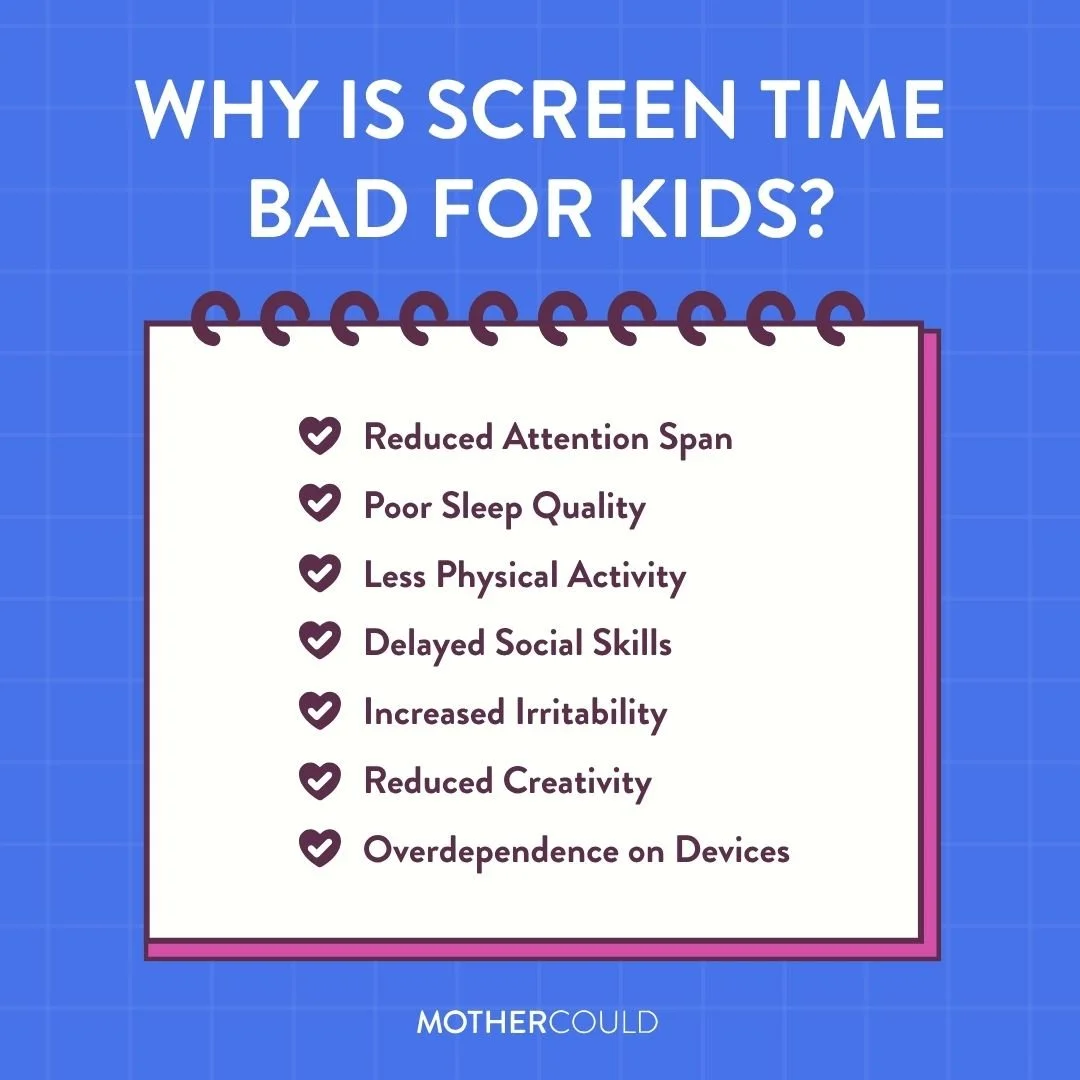
Why Is Screen Time Bad for Kids?
Reduced Attention Span
The more time a child spends glued to a screen, the worse their attention span can become. Not shocking, I know! But it’s easy to forget in busy moments and hectic schedules. (Guilty.) Childhood is a crucial period for the development of attention. If they’re constantly overstimulated, it can make it harder for those skills to fully develop.
More specifically, they’ll begin to constantly expect high levels of stimulation. And the result? Things that require critical thinking, like reading, solving problems, and engaging in imaginative play, become difficult—and even boring.
Poor Sleep Quality
Studies show that each 1-hour increase in screen time is associated with reduced sleep duration and quality. That means that not only are children sleeping less, but they’re also sleeping worse! And as a parent, you know how crucial proper rest is for those growing little brains.
There are a couple of reasons for this. First, the more children are exposed to screens, the more they crave that same level of stimulation. In other words, they want to stay up late, continue playing, and throw a tantrum when it’s bedtime. But more importantly, the blue light emitted from phones and tablets actually tricks the brain into thinking it’s daytime.
Because blue light delays melatonin production, children remain more mentally alert—even long after shutting off their screens.
Less Physical Activity
The more time children spend on phones, games, or tablets, the less time they spend engaging in active play. Of course, that’s not surprising! However, this matters more than we tend to realize at the moment. More specifically, research is increasingly focusing on the relationship between cardiovascular wellness and screen time.
When children sit for long periods, their large muscle groups become inactive, reducing circulation and the heart’s workload. This is a problem because when they do engage in physical activity, it feels more demanding and less appealing. Beyond that, physical activity encourages essential skills like coordination, balance, teamwork, and even emotional regulation!
Delayed Social Skills
For kids, everyday interactions are how they learn to read emotions, build empathy, and develop strong communication skills. When they spend too much time on screens, they miss out on building real-life connections. In fact, studies show that increased screen time is linked to underdeveloped social skills, broken down into 3 categories:
Expression
Compliance
Disruption
While these skills are critical for early childhood development, their reach extends far beyond the early years. They’re essential from childhood to adulthood, paving the way for confidence, self-assurance, and discipline.
Increased Irritability
Spending too much time on screens can make it harder for kids to regulate their emotions as they grow and develop. Think about it: when you take away their source of stimulation, it often leads to frustration, mood swings, and tantrums.
This happens because screens provide quick, easy rewards. Think: fast-paced visuals, instant gratification, and constant engagement! Over time, real-life moments feel slower in comparison. This can make it harder for children to stay patient, flexible, and emotionally balanced throughout the day.
Reduced Creativity
When children rely on screens for entertainment, they have fewer opportunities to use their imagination. Games and visuals catered to kids are often bright, exciting, colorful, and animated… AKA, everything they enjoy! So instead of creating their own game, story, or idea, they’re consuming pre-made content—no work required.
Unstructured, screen-free time is where creativity really begins to develop. It encourages kids to think independently, explore new ideas, and engage in more open-ended play, all of which are fantastic for cognitive growth.
Overdependence on Devices
Research suggests that the more children engage with screens, the more they’ll experience socioemotional disruptions and the more likely they are to use screens as coping mechanisms. It’s just one big cycle!
Over time, this shift can make screens feel less like a helpful tool, and more like a distraction. And the result? Kids find it harder to enjoy independent play, tolerate boredom, or find interest in everyday activities. But just like I talk about in Playful by Design, "boredom" isn’t a bad word. In fact, it’s where imagination is born!
Should Parents Limit Screen Time for Kids?
Ultimately, yes, parents should limit screen time for kids. However, limitations aren’t controlling—they’re simple ways to support their development, physical health, sleep, and overall well-being! Plus, setting boundaries is what makes quality screen time different from quantity screen time.
The goal isn’t to take away screens entirely; in many cases, that’s just unrealistic! Instead, the goal is to incorporate screens in meaningful, intentional ways. When you take an active role in your child’s screen time usage, you can transform it into a tool that supports them—not distracts them. And that balance creates space for the moments that matter most.
How Much Screen Time Is Too Much for Kids?
Each child is unique, so there’s no one-size-fits-all approach to limiting screen time! However, fortunately, research has done the hard work for us. Here are the general guidelines for screen time limitations based on age group per pediatric recommendations:
Infants (0–18 months): Zero screen time unless video chatting
Toddlers (8–24 months): Limited screen time with parents or caregivers
Preschoolers (2–5 years): Up to 1 hour per day of high-quality, educational content
School-Aged Children (5–12 years): Ideally no more than 2 hours per day except for homework
Teens (13–18 years): No universal screen time, but rather a recommendation to consider the quality of content teens are engaging with
Are these screen time limitations realistic? It depends on your family, your lifestyle, your child, and the quality of the content they’re consuming! Plus, nowadays, everything from homework to books exists online—so it’s hard to limit it entirely. What’s most important is to find a schedule that works best for you and your kiddos.
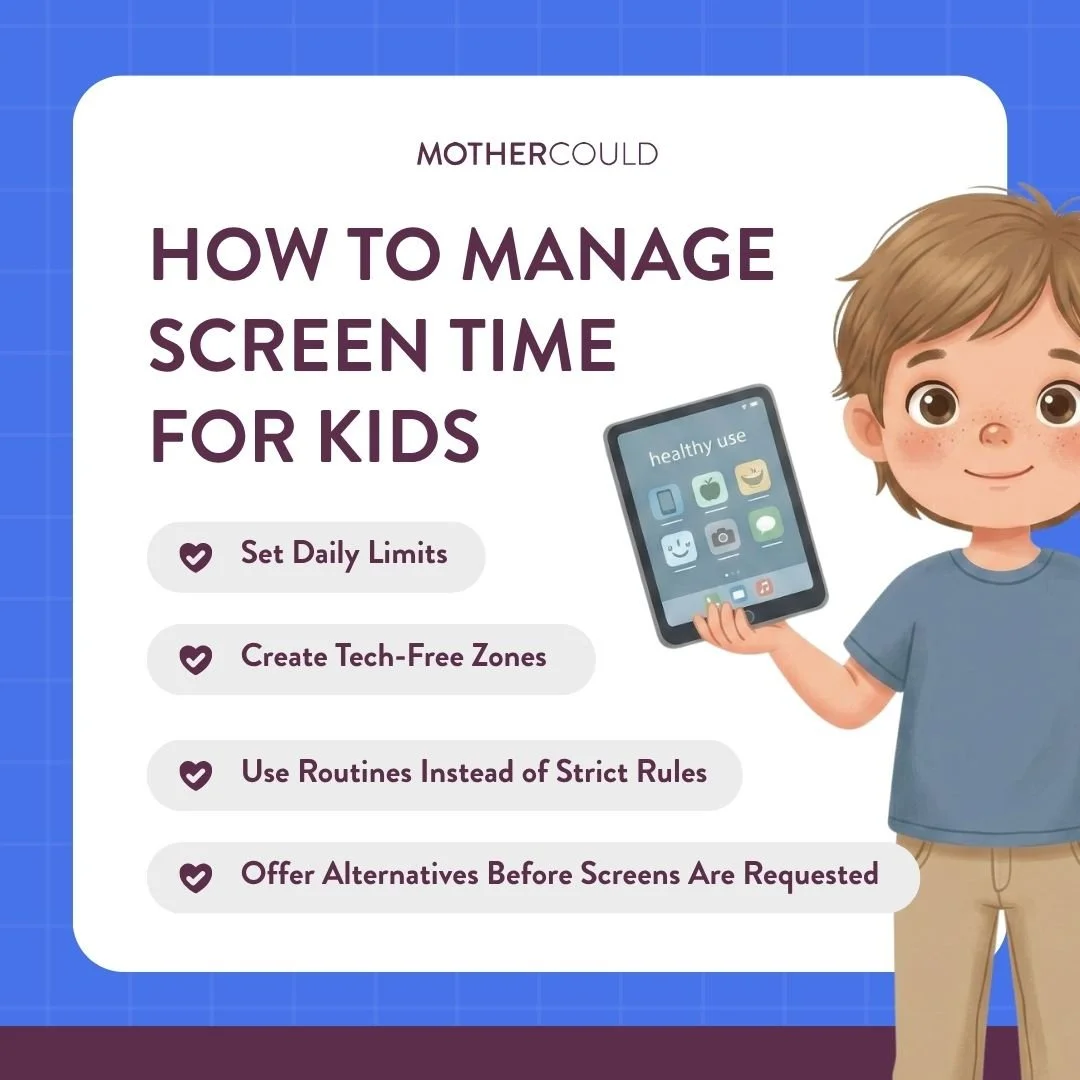
How to Manage Screen Time for Kids
Set Daily Limits
When it comes to children and screen time, setting daily limits can be an extremely helpful first step. Doing so creates a clear structure and sets clear expectations, making it easier for kids to understand when screens are (or aren’t!) an option. The key? Consistency. Children are less likely to push boundaries when they understand devices have a time and place.
Create Tech-Free Zones
Designating certain areas of your home as screen-free zones can be a serious lifesaver. When you establish this boundary, you naturally encourage screen-free interaction without it feeling like a restriction. For example, spaces like bedrooms, dinner tables, and playrooms can become places for connection, conversation, and creativity—not passive distraction.
Use Routines Instead of Strict Rules
We all remember what it was like to be told not to do something as a child. It just made you want to do it more! While we may not have had screens, we did have our own versions of “just 5 more minutes.”
Instead of “taking away” screen time, try building limitations into your daily routine. For example, screens can come away after homework, outdoor play, or reading time. But as soon as it’s bedtime or dinner time, the phones go up. This approach helps children view screen time as a part of their day—not the main event.
Offer Alternatives Before Screens Are Requested
Remember what I said earlier: it’s easiest to reduce screen time when you’re one step ahead. If kids are already asking for devices, make sure to have a non-screen activity to replace their boredom with. When engaging options are available, children are much more likely to choose them than throw a tantrum.
15 Non-Screen Activities for Kids
Printable Activity Packs
Whenever my kids are looking for screen-free play, I always pull out these Printable Activity Packs. They’re simple, low-prep, and packed with engaging activities that keep little hands busy and minds active. From coloring pages and puzzles to matching games and 3D templates, they’re structured enough to guide play while still encouraging creativity. And one more bonus? They slide perfectly into a Large Kids Travel Organizer for on-the-go fun!
Sensory Paths and Sensory Walls
Getting outside is such an easy way to keep children active, engaged, and curious about the world around them. Even better, outdoor sensory walls and sensory paths open the door for both structured and open-ended play! Aside from keeping them engaged, both activities help foster emotional regulation, attention, and motor skill development. It’s a win-win! Just don’t forget your Mothercould Premium Sunscreen Brush Set, because sun protection should be just as easy as play itself.
Letter Activities
From their attention spans to their energy bursts, toddlers move fast. At the same time, this is such an important stage, with their brains forming new connections faster than ever. That’s why I created an entire list of letter activities for preschoolers that are as engaging as they are fun! Each activity keeps them excited and curious while simultaneously encouraging language development, strong decoding skills, and confidence.
Clay Crafts
Clay crafts are one of my favorite ways to keep older kids engaged without screens—and there are a few different reasons why! First, movements like pinching, rolling, squeezing, and flattening are fantastic for hand-eye coordination and dexterity. These are all skills necessary for things like writing, brushing teeth, and using utensils. Second, crafting is an excellent sensory-rich way to encourage creativity and imagination. If you need a starting point, check out this kid-friendly air-dry clay! It comes with so many fun, bright colors.
Magnetic Tile Games
If you don’t have magnetic tiles yet, take this as your sign to invest in some! More specifically, this magnetic tile race track activity keeps my kids entertained for hours. Children can build glowing multi-level tracks while secretly mastering the basics of engineering and physics! (Yes, really!) And the best part? Creativity plays a big part in helping them arrange, assemble, and set up the tiles in different patterns. And if you want to join in on the fun, turn magnetic tiles into air hockey!
Sensory Foam Ball Pit
We’ve played with sensory tables and sensory bins—and we know how developmentally beneficial they are. Now, let me introduce you to a sensory foam ball bit! Fill it up with foam balls, soft toys, and other gently textured items to create an engaging, hands-on play space. Not only is it an active, exciting option to replace screens, but it also encourages children to practice their motor skills through crawling, grabbing, tossing, and squeezing.
Outdoor Splash Pad
Those “perfect weather” days are the best opportunity to swap screens for sensory fun. And what better way to cool off and make learning exciting than with this 3-in-1 splash pad? With its learning mat base, children can practice letters, numbers, and shapes while splashing, moving, and engaging in hands-on learning. And if you want to really turn up the fun? Bring out your Sunscreen Brush Set and this colorful bubble machine! Every warm, sunny day can be an opportunity to turn play into something fun, active, and meaningful.
Slime Creation Station
Whenever I pull out a slime creation station, my kids jump at the opportunity to join in. And, honestly, it’s why slime is one of my favorite enriching activities. You can make cloud slime, clear slime, or, for littles, edible slime! The best part? Actions like mixing, stretching, squeezing, and pulling are great for strengthening fine motor skills and hand coordination. You can make it even more exciting with this microbead kit, which includes glitter, sprinkles, charms, and tiny foam beans. Just keep your hawk eyes out—these add-ons aren’t edible!
Mess-Free Crayola Painting
I can’t rave about this Crayola Wonder Magic Light Brush enough. With this, creative play doesn’t have to require a ton of clean-up! The paint only shows up on the pages—not skin, fabric, or furniture. (It truly is magic!) More importantly, this mess-free painting station is one of the easiest ways to encourage artistic expression without the stains or stress. Kids can explore colors, patterns, and movement while also building hand-eye coordination and fine motor skills.
Crystal Gem Creations
Anyone with tweens out there knows how hard it can be to get their attention off screens. It definitely requires a little creativity, which is why I LOVE this Jewel Succulents Kit! Placing each gem requires patience, precision, and attention to detail—all of which help strengthen fine motor skills. Beyond that, it’s a fantastic, fun way to incorporate structure without feeling restrictive. Afterward, they get a handful of cute decorations to add to their room!
Minute to Win It Games
Fun for kids of all ages, these Minute to Win It sensory games make children actually ask for screen-free playtime. These fast-paced, simple challenges keep kids moving, thinking, and laughing all at the same time. From stacking cups to balancing objects, each game encourages problem-solving, coordination, and fast thinking. And the best part? You don’t need anything fancy! Just grab household items, follow the instructions to set them up, and enjoy a developmentally beneficial afternoon full of fun.
Color Building Bath
We all know that bath time can go one of two ways—kids either get super excited, or they throw a 2-hour tantrum. There’s no in between! So… why not turn it into something fun? Make a color building bath, squeeze in some fluffy foam soap, and scroll through my “Kids Bath” list to pick out the perfect toys for your littles. When you make bathtime fun and interactive, kids are much more likely to value the transition from screen time to real life.
Bubble Wrap Feet Painting
If you’re looking for something a little more playful, bubble wrap feet painting is always an easy favorite. Simply wrap bubble wrap around your child’s feet, add some paint, and let them walk across paper to create unique textures and patterns. This activity is the best for swapping screens for movement, creativity, and sensory play. Plus, who doesn’t like to get a little messy from time to time?!
DIY Homemade Play-Dough
There’s something extra special about making your own play-dough from scratch. Not only is it a fun activity, but it also adds another layer of exploration through mixing, measuring, and kneading! And when you ask kids to be part of the process, it allows them to get off the screens and enjoy something a little more hands-on. But that’s not even the best part! The play-dough recipe above is taste-safe—so kids of all ages can mix, mash, and join in on the fun.
Sand Box Activities
One more outdoor activity because I love any excuse to get my kids out of the house and into nature! Sandboxes naturally create a sensory-rich environment. The gritty sand is fantastic for tactile exploration, while actions like digging, scooping, pouring, and lifting help fine motor development, gross motor strength, and hand-eye coordination.
And this sensory activity can be a morning-to-afternoon activity! Toss in some beach toys, pull out your Toniebox for some tunes, and sit down for a picnic-style lunch with this Large Snack Box set. It’s the best way to set the screens aside for meaningful family time and lots of outdoor fun.
Create a structured list of screen-free activities to keep kids engaged, excited, and actively learning throughout the day!
Screens are a natural part of everyday life; there’s no escaping them. And, honestly, you shouldn’t feel like you have to! You can create an even blend of screen- and screen-free fun with the right strategies, routines, and activities. And now that you know just how to do that—and which activities to keep on hand—building that balance is easier than ever.
In Playful by Design, I talk all about how to encourage kid-directed, kid-executed, and kid-enriching play. The truth is, we don’t need more—even though it may feel like it at times! You just need the right resource to teach you how to do more with less. Giving your children the gift of independence is a skill that stretches throughout their entire lives—and it’s easier than you think. Available on Kindle, Audiobook, and in hardcover, discover the world of stress-free parenting today!
For more tips, tricks, and helpful routines, visit the Mothercould blog and join the Mothercould In Your Pocket Resource! On the blog, I share everything from kid-friendly recipes to exciting sensory play activities designed to make everyday routines easier and more fun. And in the resource, you can find everything from printable recipes to my favorite clean-up hacks. It’s everything you need to simplify your day and keep your kids engaged.