10 MATH ACTIVITIES FOR TODDLERS: TEACHING NUMBERS THROUGH PLAY
There are two types of toddlers: the ones who enjoy math, and the ones who aren’t too fond of it. But here’s the thing: the earlier you introduce simple math activities for toddlers, the better. I know, I know, it sounds intimidating! But it’s a lot easier—and more important—than you may realize.
Teaching math concepts to toddlers isn’t about building a foundation for academic success, though that’s definitely an obvious bonus! It’s about fostering critical thinking, enhancing problem-solving skills, and boosting confidence. And the best part? No traditional classroom-style lessons required. There are plenty of hands-on activities that make learning fun.
In this post, I’m sharing all of my favorite math activities for toddlers that focus on counting, sorting, shapes, and number recognition through play. I’ll also talk about why math is so important and offer helpful tips you can use to make it more enjoyable. Let’s get our thinking caps on and have some fun!
10 Math Activities for Toddlers: Teaching Numbers Through Play
We have a lot of jobs as parents, from teaching kids how to write to introducing science to toddlers. We’re booked and busy! However, math is equally important because we use it in everyday life. Cooking, time management, sharing, and playing sports—all of these activities require math skills that we learn early on.
Before I dive into all of the hands-on activities I have in store, I first want to talk about why math is important for kids. I’ll explore specific benefits it offers, discuss when toddlers start learning math, and tell you how to make it truly fun.
Because learning doesn’t have to actually feel like learning! When you know the right tools and methods to use, teaching simple math to toddlers becomes so much easier—and more enjoyable.
Why Is Math Important for Kids?
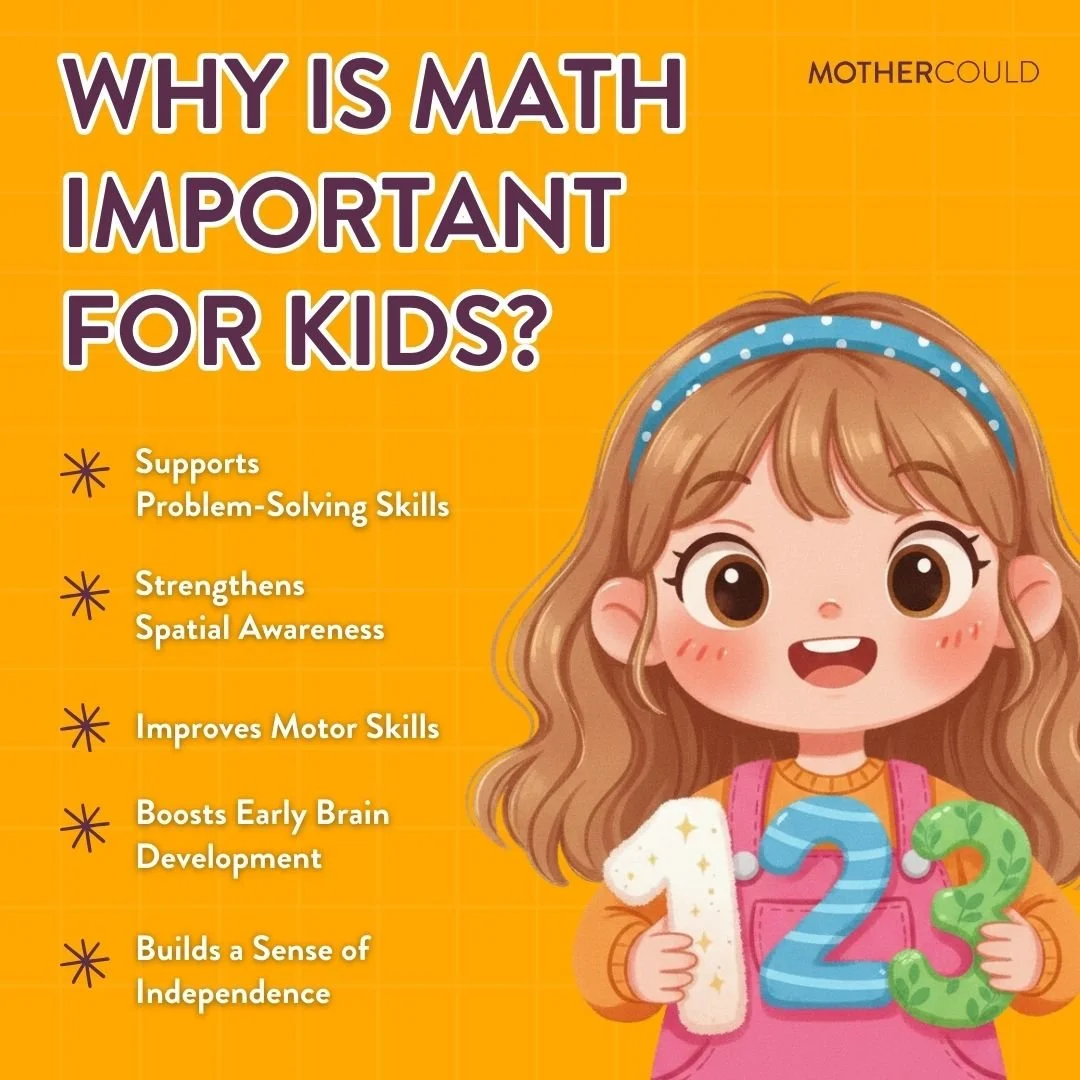
Supports Problem-Solving Skills
A lot of math concepts are trial-and-error—especially with young children. And while it may be frustrating sometimes, messing up and trying again is extremely important for fostering problem-solving skills.
When children learn to navigate problems, they develop a sense of pride, confidence, and self-efficacy. They begin to understand that mistakes are part of learning—not a flaw. From there, they can begin successfully working through challenges that would’ve once ended in a tantrum. That’s what I like to call a win-win!
Strengthens Spatial Awareness
Did you know that math can even help kids strengthen their sense of spatial awareness? I know, it’s incredible! Spatial awareness is the ability to understand your body’s position in relation to your environment. So, think: catching a ball, getting dressed, and using utensils during meals.
Simple tasks like stacking blocks and sorting objects by size are excellent for spatial visualization. This is also why all of the activities below are incredibly hands-on. The more that children can manipulate objects while learning, the stronger their spatial sense will be.
Improves Motor Skills
There are two main types of motor skills important for child development: gross motor skills (large-muscle movement) and fine motor skills (small-muscle movement). Together, they build a foundation for everyday tasks and independence. And here’s a fun fact! The same areas of the brain involved in math are also involved in motor skills.
That said, just as with spatial awareness, movement matters here. When you incorporate sensory play ideas, arts and crafts, and games into preschool math activities, toddlers can strengthen their motor skills while building early number sense.
For even more fun ways to improve motor skills, check out “Fine Motor Activities for Toddlers!”
Boosts Early Brain Development
Early brain development goes hand-in-hand with everything we’ve discussed so far—the ability to problem-solve, navigate spatial awareness, and use motor skills. However, that’s not where the benefits end. Math also gives children the ability to:
Sort objects by color, size, or shape
Count the number of items in a sequence
Recognize patterns in daily life
Foster language development
Incorporate creative thinking easily
Basically, think of math as a cognitive workout for the brain! Seems simple on the surface, but toddlers are doing a lot of heavy lifting behind the scenes.
Builds a Sense of Independence
Math will begin to look different as children get older. Today it’s matching games—tomorrow it’s telling time, saving money, and budgeting their allowance. That said, equipping children with the skills they need now helps them become more independent later.
And, as I discuss in my book, Playful by Design, independence is SUCH a crucial skill to teach early. When children unlock the tools for independence, they open the door to feeling more confident, more fulfilled, and more connected. And those benefits span throughout their lifetime.
Interested in learning more? Pick up Playful by Design, available in physical, e-reader, and audiobook formats!
When Should Toddlers Be Able to Do Math?
So, when should toddlers be able to “do” math? The answer is: there isn’t one! There’s no one-size-fits-all approach to teaching kids math. Every toddler is different, and so are their skills, abilities, and developmental processes. However, here’s a general timeline for key mathematical milestones:
0–12 Months: Babies begin to understand cause and effect, classify things in simple ways, and understand size. So, they learn that shaking a rattle produces noise, or that they’re smaller in size than adults.
1–2 Years Old: Children understand that counting means “how many,” and words like “big and small” are quantitative. They can also begin to understand “volume” when they fill or empty containers with objects.
2–4 Years Old: By this age, kids can compare size, shape, and color. They may also be able to count numbers (often skipping a few) and understand one-to-one correspondence.
4–5 Years Old: At around age 5, kids can begin counting on their hands, understand time, and follow numerical directions—like steps involving “first,” “second,” and “third.” They may also be able to independently count to 20 and complete simple addition.
It’s extremely important to remember: if your child isn’t quite reaching these milestones yet, it doesn’t mean something is “wrong.” For formal advice, never hesitate to reach out to a pediatrician or occupational therapist.
Math Games for Toddlers
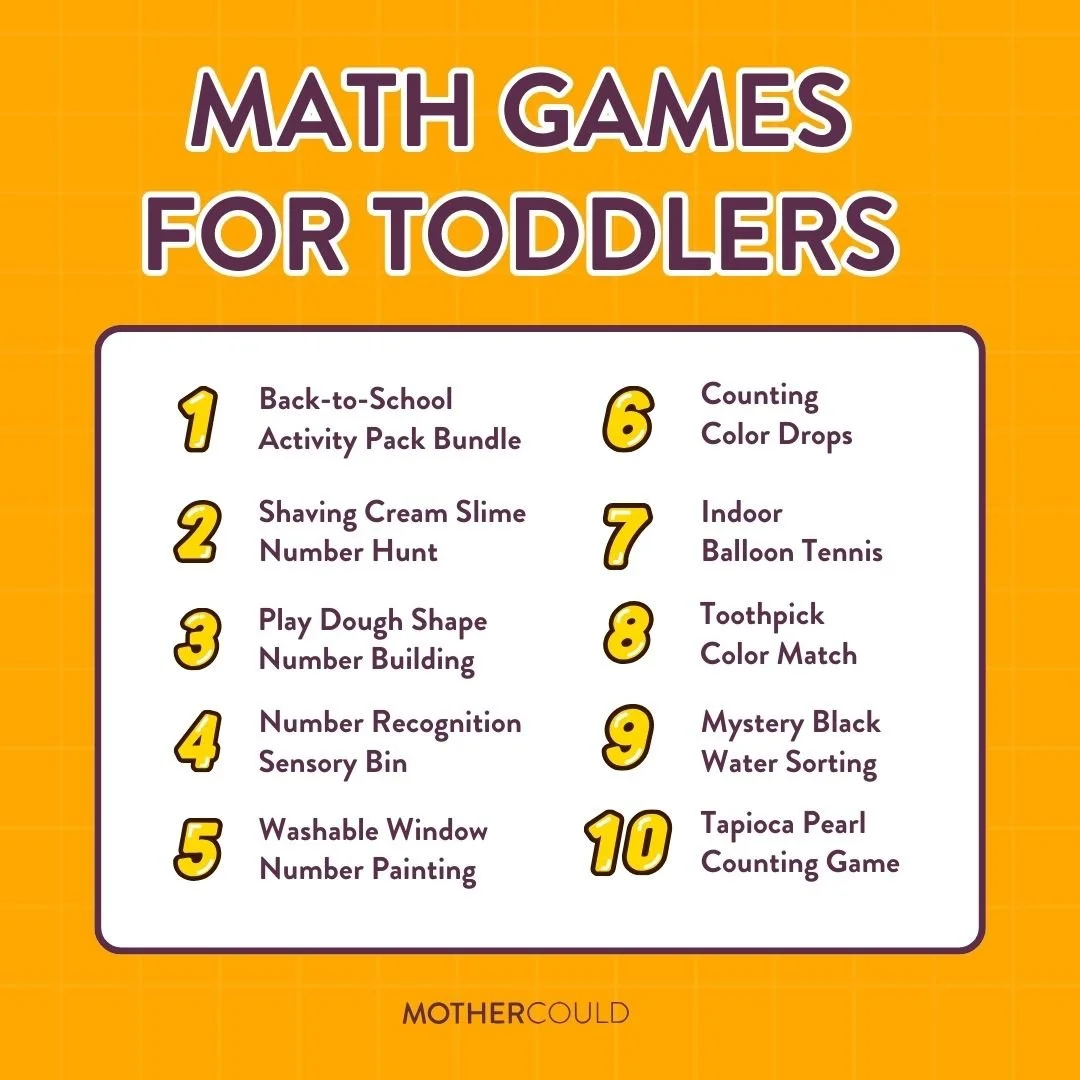
Back-to-School Activity Pack Bundle
Do you consider activity pages to be math games? Because when they look like this Back-to-School Activity Pack Bundle, I sure do! These aren’t your typical “add, subtract, and count the items” worksheets. Instead, this pack offers 80+ pages full of colorful patterns, unique matching games, and toddler-friendly I Spy puzzles.
And when you’re ready, you can also find pages dedicated to practicing the alphabet and writing skills, too! This pack works so well because it’s tailored to what toddlers love most: bright colors, familiar objects, and easy-to-follow instructions.
If your kids love these activities as much as mine do, make sure to check out the rest of my Printable Activity Packs for even more fun!
Shaving Cream Slime Number Hunt
Whenever you begin to teach math, add a little bit of slime to your game and watch how interested toddlers become. It’s like magic, seriously! And in this case, slime with shaving cream is the ultimate hit. It’s soft, it’s gooey, it’s fluffy, and it’s perfect for hiding things inside.
The rules are simple. Make shaving cream slime, separate it into individual “batches,” and hide two small number tags inside. (3D numbers and shapes can also work!) Now, your toddler can treat the slime as a math-themed scavenger hunt. Each time they pull out the two numbers, ask them to count, add, or identify them. It’s tactilely engaging and fun!
Play Dough Shape Number Building
I know what you may be thinking. Making numbers out of play-dough is a game? To toddlers, it definitely is! First off, children love squishy, familiar textures—so you’ve already got their attention. Second, this activity turns abstract numbers into a hands-on learning experience that they can see, feel, and understand.
Start by making this homemade play dough recipe. Trust me, it’s so much better than the store-bought version. Now, lay out number-shaped cookie cutters and begin asking your child to cut out specific, random numbers. Make it a little more challenging by playing a 30-second clip of their favorite song and seeing how many numbers they can create before the song shuts off!
Number Recognition Sensory Bin
If you haven’t read up on the benefits of sensory bins, prepare to be amazed. Sensory bins are excellent for multisensory engagement, self-regulation, cooperative play, and, you guessed it, math proficiency. Think: counting, sorting, and categorizing.
And the best part? You can fill your sensory bin up with things you already have at home. Color-dyed rice, dyed beans, bright and vibrant spaghetti noodles—these materials are all fantastic bases. Now, dedicate each bin to a different fun game! Use one bin as a “count the number of items underneath the spaghetti noodles.” Use another as a “match all the 2s together and put them in a jar.”
The fun thing about sensory bins is that they’re incredibly versatile—and endlessly beneficial!
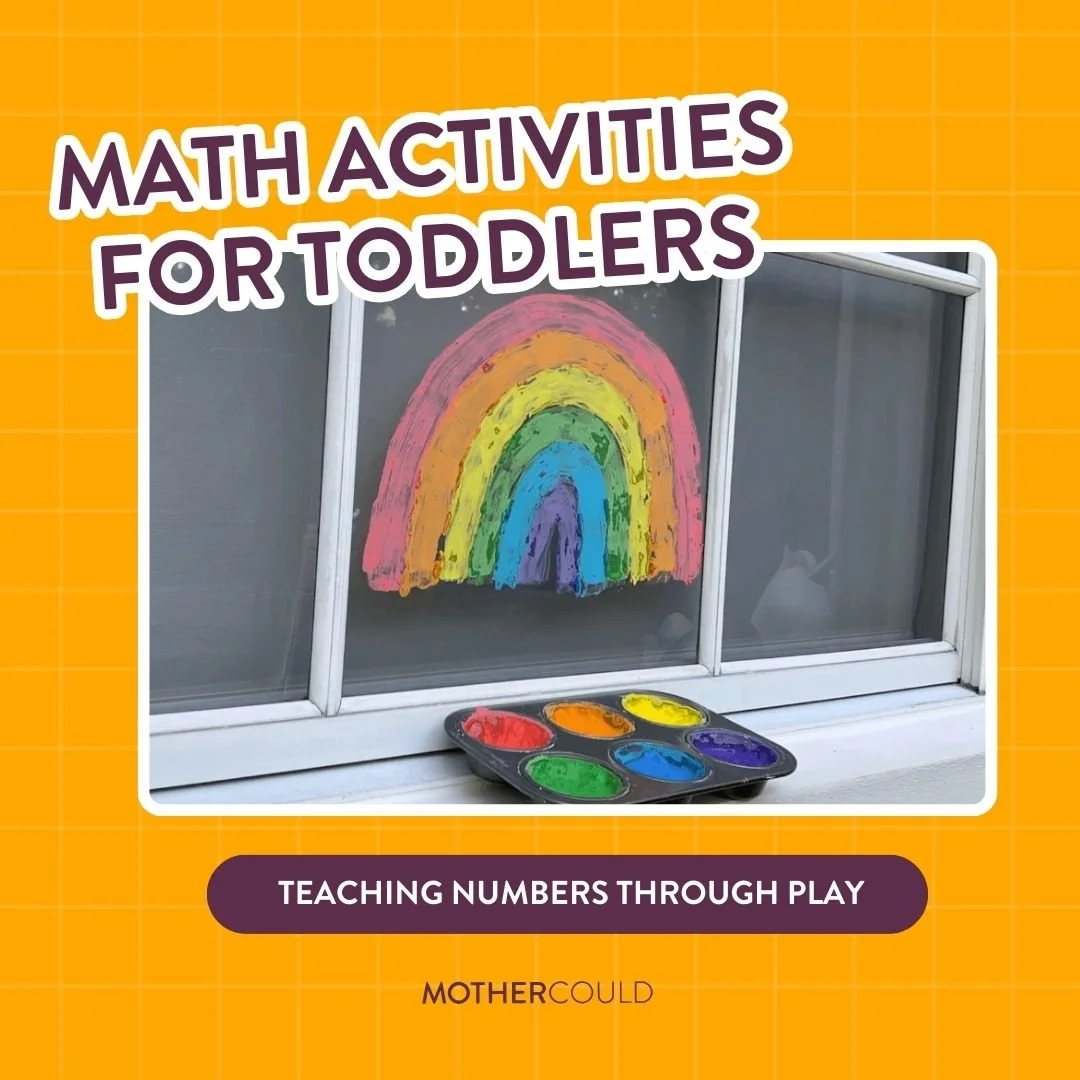
Washable Window Number Painting
Yes, I am telling you to let your kids paint on the windows for this game. And yes, of course it washes off! This homemade washable window paint is bright, vibrant, and so fun to play with. Plus, who doesn’t love a little outdoor mess from time to time?
Write the numbers 1–10 on separate sheets of paper, making them large and easy for your toddler to see. Tape one number to the window, give your child the washable paint, and ask them to paint the same number on the glass. Here’s the fun part. After your toddler paints the number, ask them things like…
“Can you find me 3 flowers?” or “Can you clap 5 times?” It turns a simple, colorful activity into a playful math game that builds number recognition and counting skills. Oh, and since you’ll be outdoors, don’t forget to apply sunscreen with your sunscreen brush set! Say goodbye to messy hands and greasy lotion bottles.
Counting Color Drops
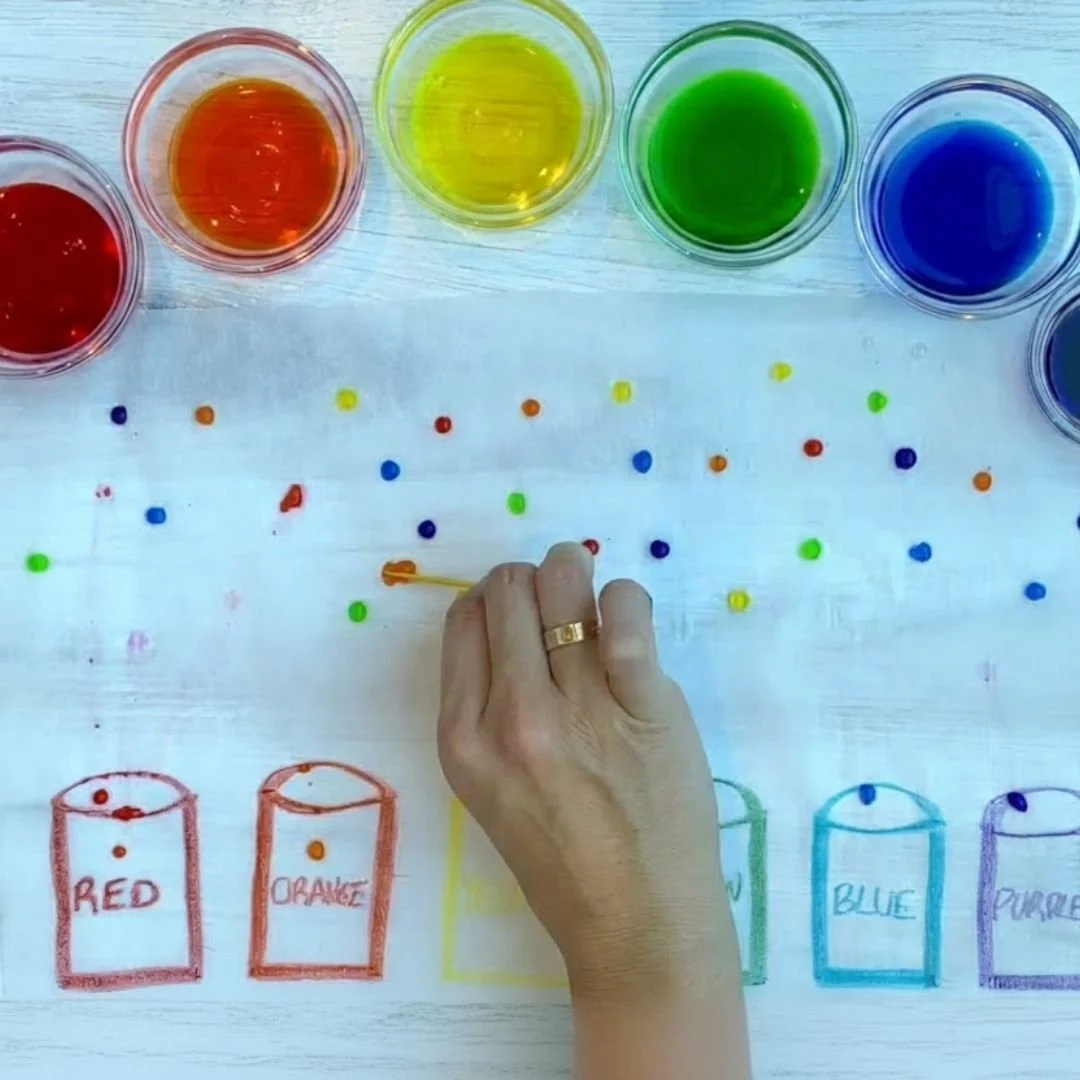
If you’re looking for a game that makes math feel like magic, look no further than colorful moving water. Your toddlers will watch with pure amazement as these little droplets swish and slide across parchment paper with ease.
Start by taping down a piece of parchment paper to a table and drawing buckets using different colored permanent markers. Don’t forget to label them! Next, mix a little water with food coloring, placing each in a separate bowl. Finally, use a dropper to drop the colored water onto the parchment paper and drag it around with a toothpick!
Here’s the name of the game: your toddlers will move the colored water droplets to their respective buckets, counting how many they have at the end. Not only does it teach number sense, but it’s also fantastic for motor skill development!
Indoor Balloon Tennis
Teaching math and getting a little exercise all at once? Count me in! This Indoor Balloon Tennis has been a family favorite for quite some time now. And, good news: it’s perfect for teaching math to toddlers. (And getting those extra wiggles out, too!)
Simply tape the end of a spatula to the back of a paper plate, mark a “net” on the floor using masking tape, and use a balloon to play “tennis.” Ask your toddler to count each time they hit the balloon—you’ll probably have to help them count, of course. Then, see who wins by the end of each game!
It’s a super effective way to turn basic counting into an active, engaging game.
Toothpick Color Match
Get excited, because this Toothpick Color Match game practices fine motor skills, color matching, and simple math—all in one. Plus, it’s super inexpensive, made from recyclable materials, and so much more entertaining than it seems.
Start by grabbing a piece of reused styrofoam and drawing colored squares on it. You can do this with paint, permanent markers, or highlighters. Now, ask your toddler to poke (however many) colored toothpicks into the correct square on the styrofoam in under 1 minute. It’s a fun way to introduce sorting, categorizing, counting, and problem-solving!
Just make sure to keep your hawk eyes out during this game. Toothpicks can be sharp on delicate skin!
Mystery Black Water Sorting
If you’ve ever seen that classic “what’s in the box?” sensory game, this is just like that. Except this version is toddler-friendly, exciting, and visually and tactilely engaging. It’s so fun to see toddlers’ surprised little faces as they pull something new out of the water!
This Mystery Black Water Sorting game is so easy to create—and even easier to customize. Start by pouring water into a clear container and adding a few drops of black food coloring. Mix until the water is pitch black. Now, add your “things to find.” This can be charms, sensory sequins, marbles—your choice! I do find that a blend of textures tends to be more exciting.
As your toddler pulls things out, ask them to count the number of items they retrieve and begin sorting them into piles. Charms go with charms, marbles go with marbles—you get it. It’s a game they’ll truly never get tired of!
Tapioca Pearl Counting Game
As parents, you’re probably no strangers to water beads. But as much as my kids love them, I love tapioca pearls more! They’re just as squishy, equally slippery, but they’re taste-safe and non-toxic. Perfect for toddler-friendly play!
Start by making (or buying) tapioca pearls. If you do decide to make them, I have a super easy step-by-step recipe in the link above. After you have your batch ready, place them into different bowls by color. Now, label a few cups with numbers and have your toddlers place the correct number of pearls in each cup. Fun, textually engaging, and easily adaptable for different ages!
How to Make Math Fun for Kids
Use Hands-On Learning
I can’t say it enough: hands-on learning is the key to making math stick. It’s easy to recite numbers. But when toddlers can touch, move, and explore objects as they learn, it transforms symbolic concepts into concrete experiences. Plus, the more senses you can engage while learning, the more you can strengthen neural connections!
Keep Games Short, Positive, and Pressure-Free
Toddlers have short attention spans—that’s no secret. So when you’re looking to turn math into fun, interactive games, try to avoid anything too complex. Keep instructions simple, activities short, colors bright, and ideas engaging. The process is supposed to focus on fun—not perfection.
Turn Everyday Activities Into Simple Math Practice
As you’ll soon realize, everything is an opportunity to practice math. Cooking, cleaning up toys, snack time—these are all perfect moments to naturally interact with math concepts pressure-free. And here’s the thing: the more you make math feel like everyday life, the more kids view it as something fun, familiar, and totally doable.
These toddler-friendly games make teaching math a breeze!
Teaching math doesn’t have to be all number lines, multiplication tables, and formal worksheets. It can be fun, engaging games that stimulate the senses, encourage hands-on learning, and foster creativity. Because teaching toddlers hard concepts doesn’t have to feel hard—you just need the right tips and tricks! For more ways to make learning math fun and easy, try these math tricks for kids.
Speaking of having the right tools, don’t forget to grab my book, Playful by Design! This go-to resource has everything parents and caregivers need to unlock children’s creativity, self-direction, and imagination. Here’s a little sneak peek: it doesn’t require expensive gadgets or 10-step methods. All you need is a little intention and thoughtfully planned spaces, which I walk you through how to create.
If you’re looking for other ways to make playtime, mealtime, and teaching time easier, head to the Mothercould blog! From kid-friendly recipes to DIY sensory materials, I share my favorite parenting hacks to help make daily life easier. Also, don’t forget to join the Mothercould In Your Pocket resource! Here, you can find 60+ printable recipes, guided tutorials, and effective clean-up strategies. I can’t wait to see you there!